 By
By
Post-amputation pain is emerging as a major national health challenge in South Africa, with new attention from clinicians and researchers at the University of Cape Town highlighting the urgent need for better prevention, assessment and long-term rehabilitation pathways for amputees.
In a report published by UCT News, Dr Katleho Limakatso, a senior lecturer in UCT’s Department of Anaesthesia and Perioperative Medicine, warned that limb amputation is often not the end of suffering. For many patients, it marks the beginning of a new and often invisible struggle involving pain, sleep disruption, reduced mobility, mental health challenges and reduced quality of life.
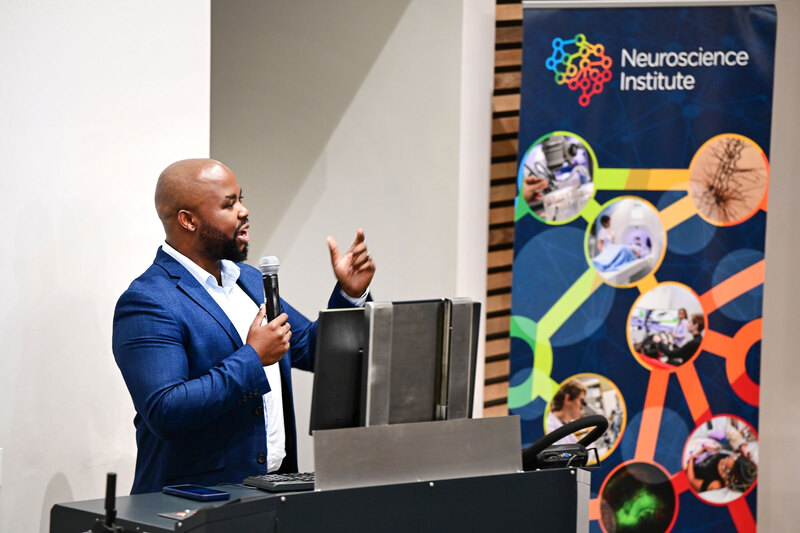
Dr Limakatso made the comments during a two-day workshop at the UCT Neuroscience Institute, titled “Advancing post-amputation pain management in South Africa”, held on 20 and 21 May 2026. The event brought together local and international clinicians and students to discuss phantom limb pain and how South Africa can improve care for amputees.
Phantom limb pain is the sensation of pain in a limb that has been amputated. It can feel like burning, cramping, throbbing or other painful sensations in the missing limb. Some patients also experience non-painful phantom sensations such as itching, pressure or tingling. For prosthetists, orthotists, rehabilitation physicians, physiotherapists and pain specialists, this is not a rare complication. It is a frequent barrier to successful recovery and prosthetic use.
According to Dr Limakatso, post-amputation pain in South Africa is increasingly linked to diabetes, trauma and vascular disease. This is especially important for the IMEA region, where many countries face a rising burden of non-communicable diseases, road traffic injuries, conflict injuries and uneven access to specialist rehabilitation services.
The UCT report notes three clinical realities that cannot be ignored. First, the burden of limb amputation is increasing globally, including in South Africa. Second, pain after amputation remains under-recognised and under-prioritised. Third, post-amputation pain is complex because it affects not only the nervous system, but also mobility, prosthetic limb use, identity and social reintegration.
For the orthotics and prosthetics sector, this is a critical point. A technically successful prosthetic fitting may still fail if pain is not assessed, understood and managed. Phantom limb pain can reduce prosthetic tolerance, delay gait training, increase fear of movement and undermine confidence. Residual limb pain, socket discomfort, neuroma-related pain and phantom sensations may also overlap, making careful clinical assessment essential.
Dr Limakatso’s research shows the scale of the problem. He reported that the global prevalence of phantom limb pain is around 64%, while a South African study conducted with patients from Groote Schuur Hospital in Cape Town and a tertiary hospital in the Eastern Cape found prevalence of approximately 71%. A related published study recorded an overall phantom limb pain prevalence of 71.73%, with persistent pre-operative pain, residual limb pain and non-painful phantom limb sensations identified as risk factors.
This matters because African data on phantom limb pain has historically been limited. Dr Limakatso noted that differences in social, psychological, biological and healthcare contexts make it difficult to assume that evidence from other regions fully explains the burden of pain in African amputees. More local evidence is needed to guide clinical pathways, health policy and rehabilitation service design.
The workshop also focused on treatment options. Dr Limakatso said researchers had consulted 27 clinicians and researchers from 16 countries, identifying seven treatments considered effective for reducing phantom limb pain. The top three were mirror therapy, graded motor imagery and cognitive behavioural therapy. He added that graded motor imagery and mirror therapy appear especially promising in the South African context.
For resource-constrained health systems, this is significant. Mirror therapy and graded motor imagery are relatively low-cost interventions compared with many advanced medical technologies. Graded motor imagery typically involves staged rehabilitation strategies such as left-right recognition, imagined movement and mirror therapy, aimed at retraining movement and pain-related brain networks. A 2023 review describes GMI as a non-invasive and inexpensive therapy used to treat phantom limb pain by sequentially activating motor networks.
However, the larger message from UCT is that no single treatment will be enough. South Africa needs a clearer care model for amputation and post-amputation pain. Dr Limakatso said his work will include developing a model of care pathway that addresses patient priorities across the perioperative journey, from prevention and pre-operative education to rehabilitation, reintegration and long-term quality of life.
For IMEA CPO readers, this has direct implications. Post-amputation pain should be included in every stage of amputee care:
- Pre-amputation counselling where possible
- Early pain screening before and after surgery
- Residual limb assessment before prosthetic fitting
- Socket comfort and alignment review
- Patient education on phantom limb pain
- Access to physiotherapy and psychological support
- Clear referral pathways to pain specialists
- Long-term follow-up after prosthetic delivery
The UCT workshop should also encourage prosthetic and orthotic education programmes across the IMEA region to place greater emphasis on pain science, psychosocial care and interdisciplinary rehabilitation. Prosthetists and orthotists are often among the clinicians who see amputees most regularly after discharge. They are therefore well placed to identify pain-related barriers, educate patients and refer them for specialist support.
The article is a reminder that successful amputee rehabilitation cannot be measured only by whether a limb has been fitted. True recovery depends on comfort, confidence, mobility, social participation and the patient’s ability to re-enter daily life. Pain can disrupt all of these outcomes.
South Africa’s work on phantom limb pain is therefore important beyond its national borders. For countries across Africa, the Middle East and South Asia, the message is clear: as diabetes, trauma and vascular disease increase the number of amputees, rehabilitation systems must also prepare for the long-term pain burden that follows. Post-amputation pain is not a niche clinical issue. It is a core part of amputee care and should be treated as such.
- Original UCT News article on post-amputation pain
- UCT 2024 report on phantom limb pain prevalence in South Africa
- PubMed study on prevalence and risk factors for phantom limb pain
- UCT Department of Anaesthesia and Perioperative Medicine
- UCT Neuroscience Institute
- Systematic review on graded motor imagery and phantom limb pain
- Physiopedia overview of graded motor imagery
- World Health Organization rehabilitation overview