 By
By
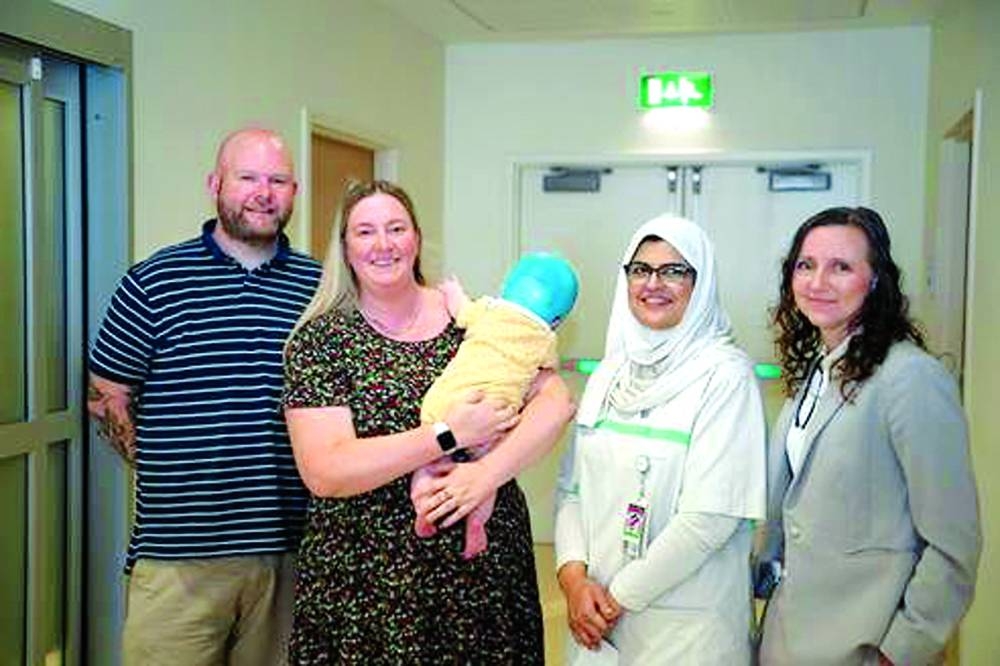
Sidra Medicine in Qatar has successfully coordinated the design, manufacture, international delivery and fitting of a custom 3D-printed cranial remodelling helmet for a baby following craniosynostosis surgery, completing the process from scan to final fitting in just 11 days.
The case, reported by Qatar Tribune and announced by Sidra Medicine, highlights how specialist paediatric orthotic care increasingly depends on close coordination between surgeons, orthotists, digital scanning teams, manufacturers, logistics teams and families. It also shows how 3D printing and international collaboration can help maintain continuity of treatment when timing is clinically critical.
The patient, baby Hugo, was diagnosed with metopic craniosynostosis, a congenital condition in which the bones of the skull fuse too early. This can create a triangular forehead shape known as trigonocephaly and may require surgery to support normal skull and brain development. Hugo underwent a minimally invasive metopic synostectomy at Sidra Medicine on 23 February 2026, performed by Dr Ian Pople, Division Chief of Neurosurgery, together with neurosurgeon Dr Khalid AlKharzi.
Following surgery, Hugo was referred to Sidra Medicine’s orthotics team for post-operative cranial helmet therapy. Cranial remodelling helmets are custom-fitted orthoses used to guide skull growth during infancy. In Hugo’s case, timing was particularly important because the greatest potential for skull-shape correction occurs during the first year of life, with a key window between four and eight months of age. Hugo was already five months old when treatment planning began.
Uzma Jabeen, Orthotist at Sidra Medicine, explained that the hospital’s usual cranial helmet supplier was based in the United States. However, during the period of Hugo’s referral in early March, airspace restrictions meant the helmet could not be delivered through the normal route. This created a clinical and logistical challenge: the team needed a rapid alternative without interrupting the child’s treatment pathway.
Sidra’s team responded by performing a 3D scan of Hugo’s skull and identifying an alternative manufacturing solution in the Czech Republic. They coordinated with Invent Medical to design and produce the custom 3D-printed cranial helmet in just five days. Sidra’s logistics and customs teams then arranged expedited international delivery through neighbouring countries by air and land to ensure the helmet reached Doha in time.
From the first scanning appointment to the final fitting, the entire process was completed in 11 days. Julie Melville, Manager of Occupational Therapy at Sidra Medicine, said the achievement reflected agility, collaboration and a patient-centred approach to healthcare delivery in Qatar during periods of global uncertainty.
For the orthotics and prosthetics sector, the case is important because it demonstrates the value of digital workflows in time-sensitive paediatric orthotic care. A cranial remodelling helmet must be precisely shaped to the baby’s head and adjusted around expected growth. Delays can reduce the treatment window, while poor fit can affect comfort, tolerance and therapeutic effect.
The case also underlines the growing role of 3D printing in paediatric orthotics. Digital scanning reduces the need for traditional impression methods, while digital design and additive manufacturing can support rapid customisation, repeatability and potentially more efficient production. In complex paediatric services, these advantages can be critical when a child’s growth creates narrow windows for intervention.
For IMEA CPO readers, Sidra Medicine’s response offers several practical lessons:
- Digital scanning can accelerate custom orthotic design in urgent paediatric cases.
- International manufacturing networks can help maintain continuity when supply chains are disrupted.
- Orthotists must be integrated early into surgical and post-operative planning.
- Logistics and customs teams can be clinically important when devices are time-sensitive.
- Cranial remodelling care requires close family education and regular follow-up.
- 3D-printed orthoses can support highly customised treatment when quality-controlled appropriately.
Hugo will wear the helmet for almost 23 hours per day for up to one year, with Sidra’s orthotics team continuing to meet the family regularly to guide positioning, sleeping adjustments and treatment progress. This follow-up is an essential part of the care pathway, because cranial remodelling is not completed at the point of device delivery. It requires monitoring, adjustment, parental education and clinical review.
The case also reflects Sidra Medicine’s broader role as a specialist paediatric and women’s health institution in Qatar. Earlier this year, Sidra highlighted its focus on tertiary and quaternary paediatric care through referral pathways, with complex cases referred for advanced diagnostics, specialist interventions and complex surgery.
For the wider region, the lesson is clear: paediatric orthotic services need strong digital, clinical and logistical infrastructure. Whether for cranial remoulding orthoses, scoliosis braces, paediatric AFOs, clubfoot devices or other specialist orthotic interventions, continuity matters. The best results often depend on early referral, rapid device provision, accurate fitting and sustained follow-up.
Sidra Medicine’s successful coordination of Hugo’s cranial helmet shows how advanced paediatric care can continue even when international supply routes are disrupted. It is a reminder that modern orthotics is not only about fabrication. It is about the entire pathway — clinical timing, digital capture, design, manufacturing, logistics, fitting, education and long-term monitoring.
For IMEA’s orthotics and prosthetics community, the case is a strong example of how 3D printing and international collaboration can support patient-centred care when every week matters.
- Original Qatar Tribune article on Sidra Medicine’s international coordination
- Sidra Medicine announcement on the custom 3D-printed cranial helmet
- Sidra Medicine official website
- Invent Medical official website
- Sidra Medicine Orthopedics and Sports Medicine services
- Cleveland Clinic overview of craniosynostosis
- Boston Children’s Hospital overview of craniosynostosis
- World Health Organization rehabilitation overview