 By
By
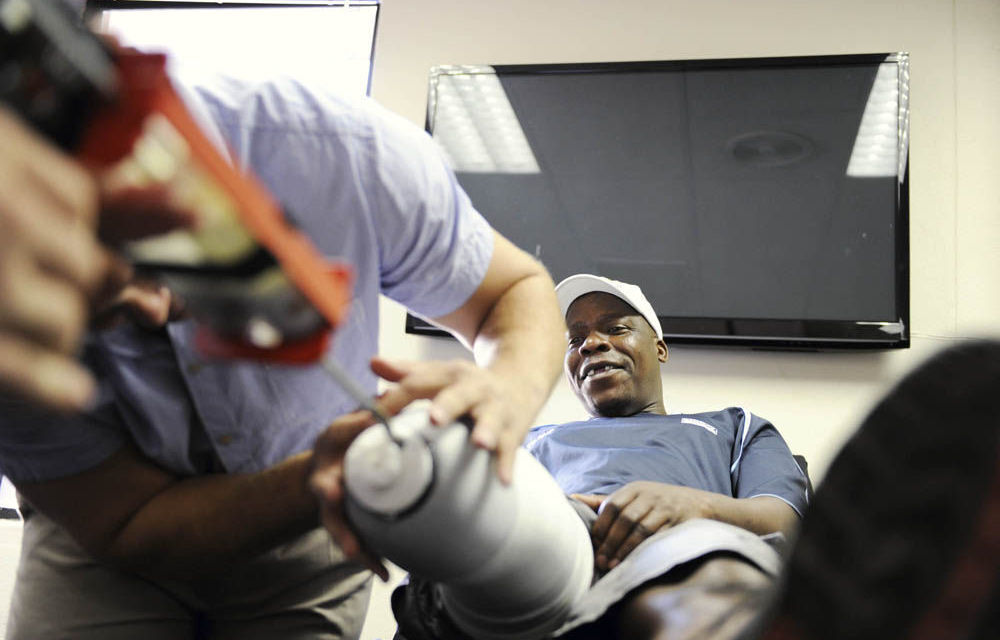
A new South African study has highlighted a practical and potentially important way to improve prosthetic access in resource-limited public healthcare systems: recovering and reusing safe components from lower-limb prostheses that are no longer being used.
Published in the Canadian Prosthetics and Orthotics Journal, the study examined lower-limb prosthesis abandonment and component recycling in the public healthcare sector of the Eastern Cape Province of South Africa. The research is especially relevant because people with lower-limb amputation in South Africa’s public healthcare system may wait more than a year for a prosthesis, partly because of shortages of prosthetic components. (Canadian Prosthetics and Orthotics Journal)
The study, authored by X.L. Goxo, S. Visagie and L. Ned, explored two linked questions: why some people stop using their prostheses, and whether components from abandoned or unused prostheses could be recovered for potential reuse. Participants were recruited from three hospitals in the Eastern Cape that provide orthotic and prosthetic services. Between 28 July and 22 August 2025, clinic staff contacted 92 people who had previously received a lower-limb prosthesis, or a family member where the user was unavailable. Of these, 45 were identified as no longer using their prosthesis, and 43 agreed to participate. (Canadian Prosthetics and Orthotics Journal)
The findings are significant. Fifty-one percent of participants had stopped using their prosthesis because of poor fit. Ninety-eight percent supported the idea of reusing prosthetic components. Ninety-one percent of prostheses were successfully recovered. From those recovered prostheses, approximately 190 components were identified as potentially reusable. (Canadian Prosthetics and Orthotics Journal)
For the orthotics and prosthetics sector, the most important message is that prosthesis abandonment is not only a patient-level issue. It is also a systems issue. A prosthesis that is unused because of poor fit, discomfort, inadequate follow-up, changes in residual limb shape, poor alignment or limited access to repairs represents both a failed rehabilitation outcome and a lost material resource.
In many public systems, prosthetic components are scarce, procurement is slow and waiting lists are long. At the same time, some devices remain unused in homes, clinics or storage areas. The South African study suggests that a structured recovery and recycling system could help public services reclaim valuable parts, subject to proper inspection, safety controls, hygiene protocols and user consent.
This does not mean that component reuse should be informal or unregulated. Prosthetic components must be safe, clinically appropriate and traceable. A reused knee joint, foot, pylon or connector should only be considered after assessment by qualified prosthetic professionals, with clear standards for cleaning, inspection, mechanical integrity and suitability for a new user. The study’s authors also emphasise the need for guidelines that take cultural beliefs, safety and quality into account. (Canadian Prosthetics and Orthotics Journal)
The poor-fit finding is equally important. If 51% of participants stopped using their prosthesis because it did not fit properly, then the solution is not only to recover components. Services must also improve assessment, socket design, follow-up, repair pathways and patient communication. Poor fit can lead to pain, skin breakdown, instability, reduced confidence and eventual abandonment. For people living far from specialist services, even a small fit problem can become a major barrier if review appointments are difficult or expensive to reach.
Previous South African research has shown that access, travel cost and maintenance are major issues for lower-limb prosthetic users in rural settings. A study from the University of the Western Cape found that prosthetic users in rural Mpumalanga regarded their prosthesis as essential to independence and community participation, but also identified high travel costs as a barrier to maintenance. (University of the Western Cape repository)
For the wider IMEA region, the study raises a practical policy question: should public prosthetic services create formal systems for recovering unused components? In many countries across Africa, the Middle East and South Asia, prosthetic services face pressure from trauma, diabetes, vascular disease, conflict injuries and road traffic accidents. Waiting lists can be long, budgets limited and supply chains unreliable. Carefully managed component reuse could become one tool for improving access.
However, reuse must sit within a larger rehabilitation strategy. Component recovery alone will not solve delays if there are too few prosthetists, limited workshop capacity, weak referral systems, poor follow-up or insufficient funding. The World Health Organization and ISPO’s prosthetics and orthotics standards emphasise that prosthetic services must be safe, appropriate, affordable and of good quality. Any reuse programme would need to support those principles rather than compromise them. (World Health Organization prosthetics and orthotics standards)
A well-designed component reuse pathway could include:
- User consent for recovery of unused prosthetic devices
- Clear criteria for which components can and cannot be reused
- Mechanical and safety inspection by qualified prosthetic personnel
- Cleaning, disinfection and documentation protocols
- Traceability of recovered components
- Cultural and ethical guidance around reuse
- Transparent communication with new users
- Integration with waiting-list management and procurement planning
- Follow-up to ensure the reused component performs safely and appropriately
The environmental argument is also relevant. Prosthetic components are often made from metals, polymers, composites and mechanical assemblies that can remain functional after one device is abandoned. Recovering usable components could reduce waste while improving access for patients who might otherwise wait months or longer for mobility.
For clinicians, the study also underlines the importance of asking why prostheses are no longer being used. Abandonment should not be seen as patient failure. It may indicate unresolved pain, poor socket fit, unrealistic expectations, transport barriers, lack of follow-up, social stigma, component failure or changes in the user’s health and lifestyle. Listening to users is essential if services want to improve outcomes.
For policymakers, the findings suggest that public prosthetic services in South Africa and similar settings may benefit from a formalised inventory and recovery model. Such a system could turn abandoned devices into a carefully governed resource, while also generating data on why users stop wearing prostheses in the first place.
The Eastern Cape study is therefore important because it connects two challenges that are often treated separately: prosthesis abandonment and prosthetic component shortages. By studying both together, it shows that unused devices may hold part of the solution to waiting lists, provided reuse is safe, ethical and professionally managed.
For IMEA CPO, the wider lesson is clear. Improving access to prosthetic care will require innovation not only in high-end technology, but also in service design, follow-up, maintenance, logistics and resource stewardship. In resource-limited settings, every safe component, every follow-up appointment and every properly fitted socket matters.
- Original CPOJ article: Lower limb prosthesis abandonment and recycling of used components in South Africa
- CPOJ PDF of the full study
- Canadian Prosthetics and Orthotics Journal LinkedIn post
- University of the Western Cape study on lower-limb prosthetic users in rural Mpumalanga
- WHO standards for prosthetics and orthotics
- ISPO resources and standards
- World Health Organization rehabilitation overview