

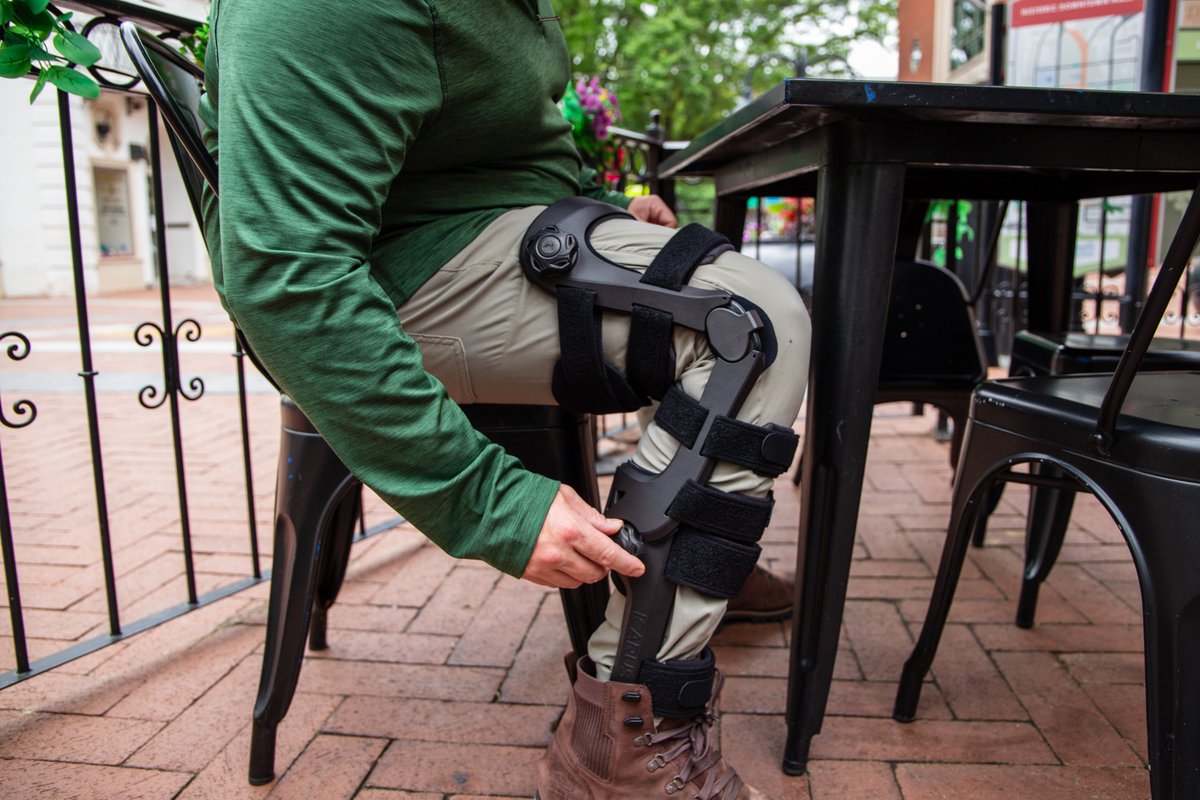
Icarus Medical, a Charlottesville, Virginia-based medical technology company focused on advanced orthopedic bracing, has announced the close of an oversubscribed $7.2 million Series A financing round.
The company originally targeted $5 million, but closed the round at $7.2 million, reflecting investor confidence in its technology platform, commercial momentum and long-term growth strategy.
The funding will support accelerated commercialisation across the United States, continued product development, manufacturing expansion, clinical validation of current devices and personnel development as Icarus Medical expands its national presence.
For the orthotics and rehabilitation sector, the announcement is another sign that investor interest in advanced bracing is increasing, particularly where products combine biomechanics, patient-centred design, additive manufacturing and clinical evidence.
Orthopedic Bracing Moves Further Into Medtech Investment
Icarus Medical develops orthopedic bracing technologies intended to help patients remain active, improve mobility, reduce pain and support function. Its technology platform combines biomechanics, software and additive manufacturing to create bracing solutions for osteoarthritis, post-operative recovery, neurological conditions and complex lower-extremity mobility challenges.
The company’s products include the Ascender Knee Brace, designed for patients with patellofemoral and multicompartment knee osteoarthritis, and the Adonis Joint Distraction Knee Brace, which uses dynamic joint distraction technology for patients with unicompartmental osteoarthritis.
This places Icarus Medical within a growing category of orthotic and orthopedic technology companies seeking to move beyond traditional bracing models by combining mechanical function, customisation, manufacturing innovation and evidence-based clinical positioning.
Investors Back Commercialisation and Scale
Major investors in the Series A round include Riptide Ventures, OSF Ventures, CU Healthcare Innovation Fund, Highpoint Ventures, MedTech Connect, Neovate Capital Partners and BLU Venture Investors.
According to the company, these investors bring not only capital but also healthcare, commercialisation, operational and industry relationships intended to support the next stage of development.
Dave Johnson, Founder and CEO of Icarus Medical, described the financing as a major milestone for the company and said it validates both the clinical impact of the technology and the strength of the team. The company says the funding will help accelerate its trajectory as it continues to develop and scale its orthopedic bracing platform.
Why Knee Bracing Innovation Matters
Knee osteoarthritis is a major global cause of pain, reduced mobility and loss of independence. For many patients, bracing can be part of a conservative care pathway designed to reduce symptoms, support movement, improve confidence and potentially delay more invasive intervention.
In many healthcare systems, especially in emerging and cost-sensitive markets, access to surgery may be limited by cost, waiting lists, geography or specialist availability. That makes effective non-surgical treatment options especially important.
Advanced knee bracing is therefore increasingly relevant not only in sports medicine and private orthopedic care, but also in rehabilitation, ageing populations, occupational health, public health systems and chronic disease management.
For orthotists, prosthetists, physiatrists, orthopedic surgeons and rehabilitation teams, the key question is not simply whether a brace is innovative, but whether it is clinically appropriate, correctly prescribed, properly fitted and supported by patient education and follow-up.
Additive Manufacturing and Custom Orthotic Design
One of the most important aspects of Icarus Medical’s platform is its use of additive manufacturing and software-enabled design. Across orthotics, digital manufacturing is changing how clinicians think about customisation, repeatability and production scale.
Additive manufacturing can allow manufacturers to produce complex geometries, reduce tooling dependence, refine product design and potentially support more individualised solutions. In bracing, this may be particularly relevant where fit, comfort, weight, adjustability and patient compliance influence outcomes.
However, digital manufacturing alone does not guarantee clinical success. The value of advanced bracing still depends on correct assessment, biomechanical understanding, product selection, fitting accuracy and ongoing patient support.
For IMEA markets, this distinction is important. Clinics and distributors should not view advanced bracing simply as a product import opportunity, but as a clinical-service model requiring training, patient selection criteria, after-sales support and outcome documentation.
Relevance for the Middle East, Africa, Central Asia and South Asia
Although Icarus Medical’s current announcement is focused on growth in the United States, the broader trend is highly relevant to the IMEA region.
Across the Middle East, Africa, Central Asia and South Asia, musculoskeletal conditions, obesity, ageing populations, sports injuries, post-operative rehabilitation needs and osteoarthritis are placing growing pressure on healthcare systems. At the same time, many patients need practical, non-surgical solutions that can help them stay mobile and productive.
Advanced orthotic bracing may offer opportunities for:
- Orthotic clinics seeking higher-value conservative treatment options
- Rehabilitation hospitals expanding outpatient mobility services
- Orthopedic surgeons looking for post-operative or non-operative pathways
- Sports medicine clinics managing knee instability and joint loading
- Distributors building portfolios beyond prosthetic components
- Public and private payers interested in cost-effective mobility support
However, adoption in IMEA markets will depend on affordability, regulatory pathways, reimbursement, clinician training, patient awareness and local evidence.
Orthotics as a Growth Segment
The Icarus Medical funding announcement also reflects a wider shift in the perception of orthotics. Historically, prosthetics often attracted more public attention because of visible innovation in bionic hands, microprocessor knees and powered devices. Orthotics, by contrast, was sometimes seen as a more traditional or lower-profile category.
That perception is changing.
Advanced bracing companies are increasingly positioning orthotics as a medtech category with significant commercial potential. Products that target large patient populations, such as knee osteoarthritis, stroke-related mobility challenges, post-operative recovery and neurological gait impairment, may appeal to both clinicians and investors.
For the O&P profession, this is an important moment. If orthotic innovation is increasingly being driven by venture-backed companies, clinicians must remain central to prescription, fitting standards, outcome evaluation and patient safety.
A Signal for Clinics and Distributors
For O&P clinics and distributors in IMEA markets, the growth of companies such as Icarus Medical raises several practical questions:
- Are clinics ready to evaluate new bracing technologies critically?
- Do clinicians have the training to match advanced braces to the right patients?
- Are distributors able to provide education and fitting support, not just sell products?
- Will payers recognise advanced bracing as a reimbursable conservative-care option?
- Can local outcome data be collected to support adoption?
- How can advanced bracing be made accessible beyond premium private care?
The answers will determine whether innovations in orthopedic bracing become widely adopted or remain limited to specialist centres and higher-income patient groups.
From Device Innovation to Clinical Impact
Icarus Medical’s $7.2 million Series A financing is more than a company funding story. It is part of a broader movement in which orthotic bracing is being redefined through digital design, additive manufacturing, biomechanics and investor-backed commercial scaling.
For IMEA CPO readers, the key takeaway is clear: orthotics is becoming a more visible part of the global rehabilitation technology market.
As advanced bracing platforms develop, the region’s clinicians, distributors, hospitals and payers will need to assess how these technologies fit into local care pathways. The opportunity is not only to introduce new products, but to strengthen conservative orthopedic care, improve mobility and expand access to non-surgical treatment options for patients who need them.
- Icarus Medical Series A announcement on BioSpace
- Icarus Medical
- Ascender Knee Brace
- OSF Ventures
- BLU Venture Investors
- World Health Organization: Rehabilitation
- World Health Organization: Musculoskeletal conditions