

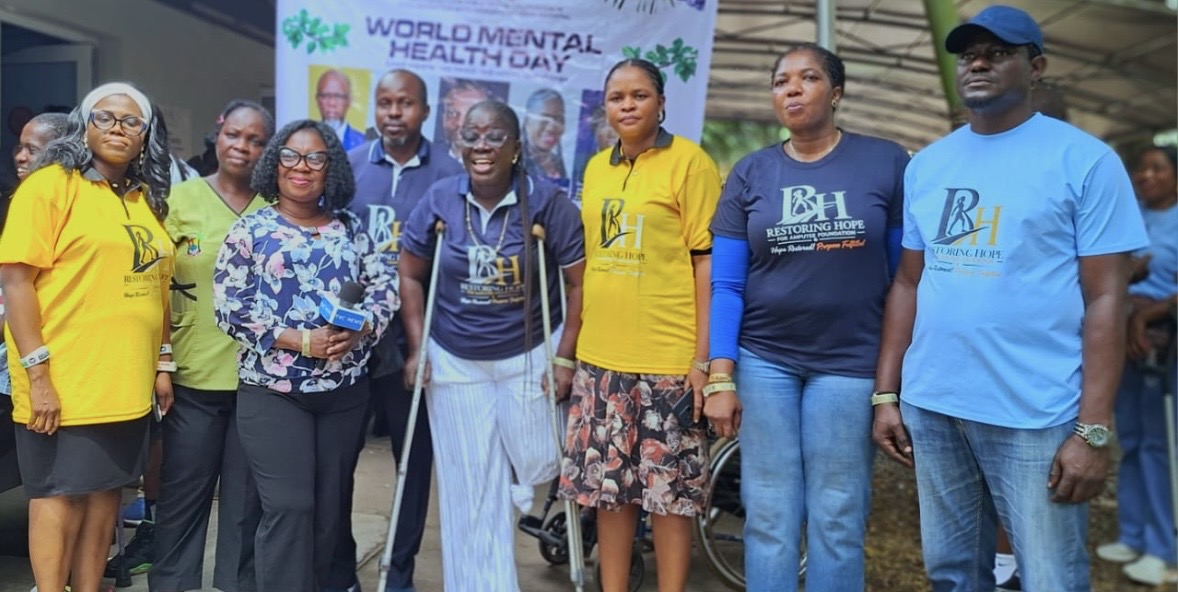
The Restoring Hope for Amputee Foundation has called for emotional and psychological support to form part of care for people who undergo amputation, stressing that recovery involves more than surgery and physical rehabilitation.
The foundation made the call with Gbagada General Hospital at a programme in Lagos on 15 October, held to mark World Mental Health Day. Clinicians, people living with disabilities and advocates discussed the emotional challenges that can follow limb loss and how patients can be supported.
Lived experience and lasting effects
Foundation founder Engr. Oluwayemisi Karim spoke about her own experience of limb loss. She has lived with an amputation for about 46 years, following an accident when she was six. She described facing poverty, discrimination, rejection and barriers to employment, while also going on to earn two master’s degrees and considering doctoral study.
Karim said that losing a limb does not prevent someone from pursuing personal or professional goals. She also highlighted how the emotional effects can continue after physical wounds have healed, particularly when people encounter isolation or negative attitudes.
Consultant psychiatrist Dr Adebowale Oluyemisi noted that people after amputation may experience grief, depression, post-traumatic stress and difficulty adjusting to changes in body image. She said some may withdraw from social activities because they fear discrimination, and emphasised the need for ongoing psychological support.
A team approach to amputation care
Consultant orthopaedic surgeon Dr Adewale Ode described amputation as a procedure that can preserve life and restore function when a limb cannot be saved. He called for care involving surgeons, psychologists, psychiatrists and other health professionals, and urged clinicians to communicate sensitively with patients and families.
The discussion also addressed the practical pressures that can affect recovery. Dr Onaolapo Nurudeen, deputy medical director of Ikorodu General Hospital, said patients are counselled before surgery about its medical, psychological and financial implications. He appealed for support for people unable to afford treatment, noting that financial strain can add to the burden of limb loss. Participants also highlighted peer support as a way for patients to connect with others who have shared experiences.
Implications for prosthetic and orthotic services
For prosthetic and orthotic teams, the event’s message is relevant across the rehabilitation pathway. Conversations about a device take place within a person’s wider experience of health, family life, finances, social inclusion and changing goals. Emotional wellbeing may affect how someone engages with rehabilitation, while a supportive care environment can help people discuss concerns and priorities.
The report does not describe a specific prosthetic care model or outcomes from the event. It does, however, reinforce the value of coordination between surgical, rehabilitation and mental health professionals, alongside clear communication and opportunities for peer connection.
The foundation’s call is a reminder that amputation care should recognise the person as well as the limb. Surgery and physical rehabilitation are essential parts of care, while continued emotional and social support can help address challenges that may persist well beyond the initial treatment.
The Guardian Nigeria: World Mental Health Day — Amputees Need Emotional Support, Not Just SurgeryWHO: Rehabilitation 2030 — global priorities for integrated rehabilitation and multidisciplinary services.
who.intWHO: Rehabilitation — a pillar of universal health coverage — background on rehabilitation access and health-system planning.
who.intAmputee Coalition: Request peer support — an example of a peer-support programme for people with limb loss and their families.
Amputee CoalitionAmputee Coalition: Find support services — resources covering peer support, mental wellbeing and rehabilitation.
Amputee CoalitionUS Administration for Community Living: National Limb Loss Resource Center — information and support resources for people with limb loss and their families.