 By
By
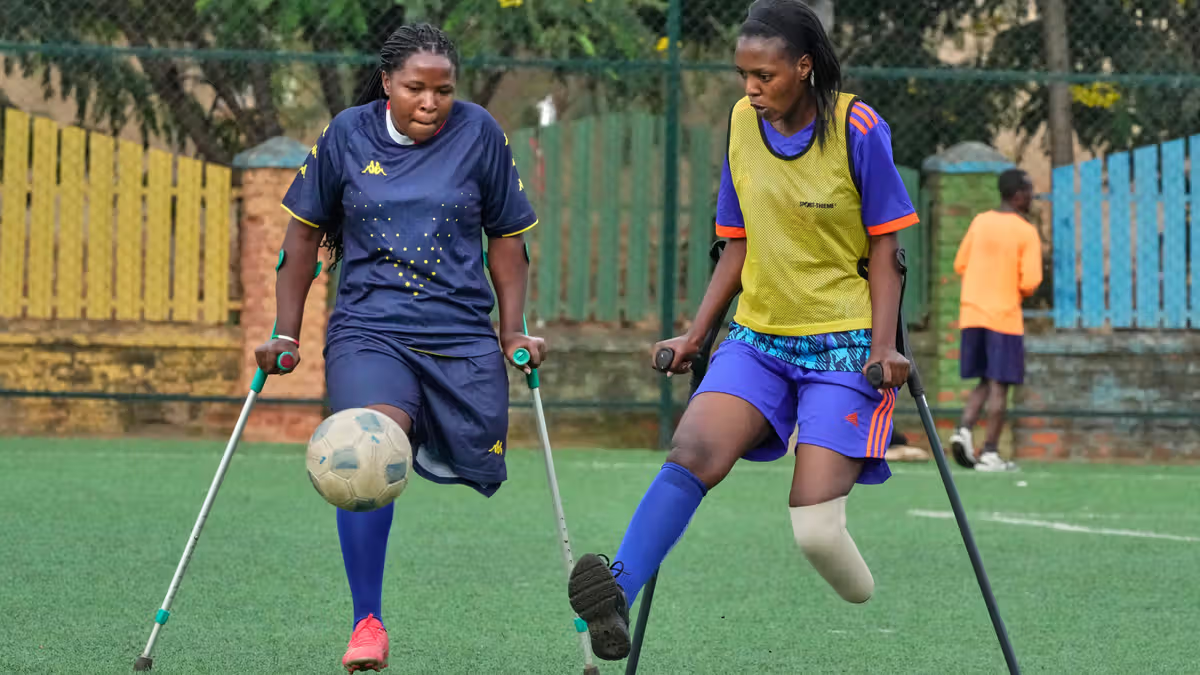
In Kigali, Rwanda, amputee football is becoming more than a competitive sport. For players living with limb loss, it is a place of physical activity, emotional recovery, confidence-building and community.
A recent Associated Press report from Rwanda describes how amputee football has grown steadily in the country over the past decade, creating a space where players can challenge stigma, rebuild trust and pursue international ambitions. The sport is played in a seven-a-side format, with field players moving on crutches and goalkeepers playing with one arm.
For the wider orthotics, prosthetics and rehabilitation community, the story is a powerful reminder that recovery does not end with surgery, prosthetic fitting or clinical therapy. Long-term rehabilitation also depends on confidence, social connection, identity and participation.
A Sport Built Around Ability, Not Limitation
Amputee football is an adapted form of football for people with amputation or limb deficiency. Internationally, it is commonly played as a 7v7 game, with outfield players using elbow or forearm crutches and goalkeepers having an upper-limb deficiency.
In Rwanda, the game has created a visible platform for players who may otherwise face social stigma or exclusion. On the pitch, limb loss is not hidden. It becomes part of a shared sporting identity, where speed, balance, teamwork and determination define the game.
The Associated Press report highlights players such as Nyiraneza Solange, who lost her leg as a child after an infection. She described the sport as a way to feel free and move beyond the stigma often attached to being an amputee.
Healing After Trauma
Rwanda’s amputee football movement also sits within a deeper national context. Some players are survivors of road accidents or illness, while others are linked to the long-term impact of the 1994 genocide. Rwanda is estimated to have more than 3,000 lower-limb amputees, according to the AP report.
Louise Kwizera, vice president of the Rwanda Amputee Football Federation, described the pitch as a place where people with different histories can come together as teammates. That message is important for rehabilitation professionals because it shows how sport can support not only mobility and fitness, but also trust, social cohesion and emotional recovery.
In settings affected by conflict, trauma or social exclusion, adaptive sport can help people rebuild a sense of belonging. It gives participants a structured activity, a team identity and a reason to be seen for their skill rather than their impairment.
Growing Participation and International Ambition
Rwanda now has a growing amputee football structure. The Associated Press reports that the sport is played in more than 50 countries and that Rwanda has five women’s professional teams and 10 men’s teams.
The country also hopes to participate in the next women’s amputee football World Cup, expected to take place in Poland or Brazil. Rwanda had only one player represented at the first women’s edition in 2024, but the current momentum suggests a stronger national ambition.
The World Amputee Football Federation has also previously reported on Rwanda’s national championship structure, including a league format with men’s and women’s teams competing across phases of the season.
Why This Matters for Rehabilitation
For O&P and rehabilitation professionals, Rwanda’s amputee football story offers several lessons.
First, rehabilitation must include participation. A person may receive a prosthesis, mobility aid or therapy programme, but true recovery also involves returning to community life, work, education, sport and family roles.
Second, peer support matters. Amputee football brings players together with others who understand limb loss, mobility challenges and social stigma. This shared experience can be as important as formal therapy in rebuilding confidence.
Third, sport can become a public education tool. When children and communities watch amputee athletes compete, they see ability, performance and resilience. This can help challenge harmful assumptions about disability.
Finally, adaptive sport should be part of the wider conversation on prosthetics, orthotics and rehabilitation access. Devices and clinical services are essential, but so are opportunities for people with limb loss to live active, visible and socially connected lives.
A Model for Wider African and Global Inclusion
Rwanda’s amputee football movement reflects a broader opportunity across Africa and other regions where limb loss may be linked to conflict, trauma, road injuries, infection, diabetes or limited access to early medical care.
In many countries, people with amputations need more than a device. They need rehabilitation pathways, psychosocial support, peer networks, accessible sport, employment opportunities and long-term follow-up.
Football is powerful because it is already deeply understood and loved across many communities. Amputee football takes that shared cultural language and opens it to people who may have been excluded from mainstream sport.
Beyond the Pitch
The images from Kigali are not only about football. They are about people reclaiming movement, confidence and community.
For players such as Solange and goalkeeper Nikuze Angelique, the game represents ambition and belonging. For Rwanda, it represents a growing disability sport movement with international potential. For the global rehabilitation community, it is another example of why recovery should be measured not only by walking distance or clinical outcomes, but by participation, joy and social inclusion.
Amputee football in Rwanda shows what can happen when people with limb loss are given space to compete, connect and dream beyond the limits that society may place on them.
- Original WRAL / Associated Press article
- Associated Press article
- World Amputee Football Federation
- World Amputee Football Federation – Rwanda Amputee Football Championship
- Para Football – Amputee Football
- World Health Organization – Rehabilitation
- International Society for Prosthetics and Orthotics