

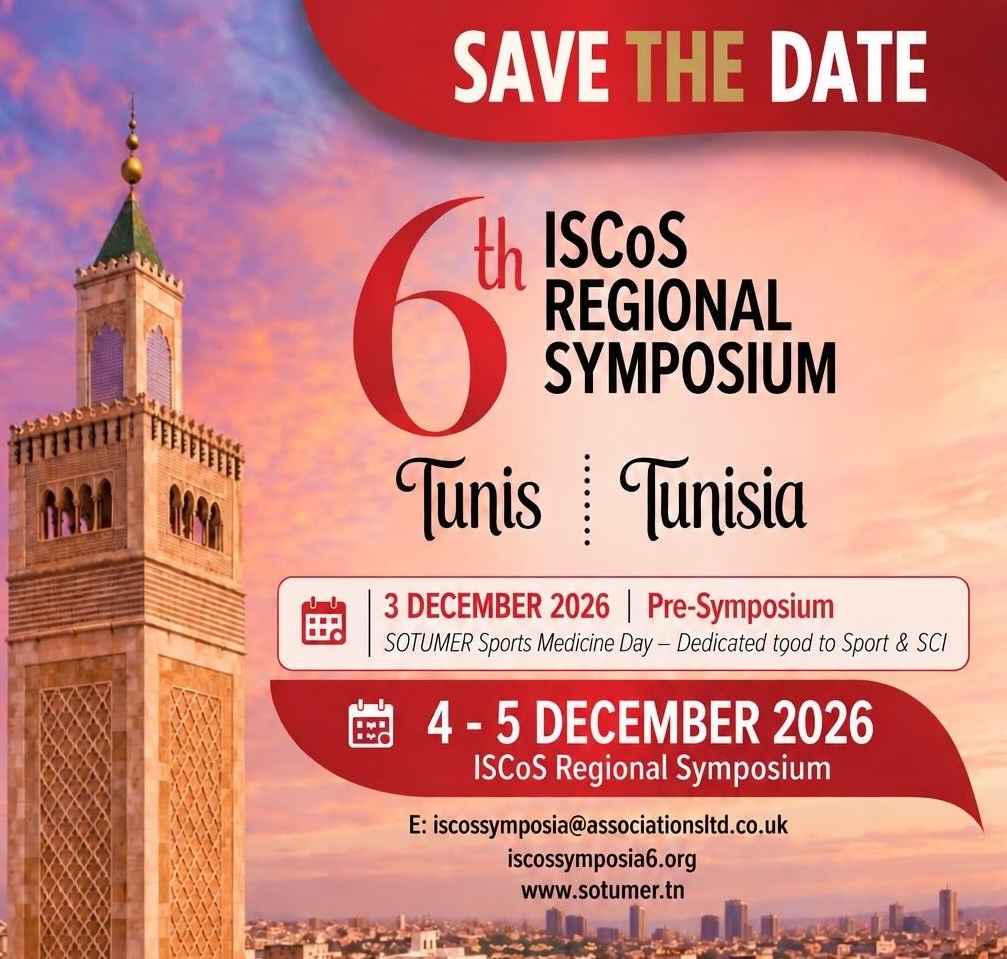
Spinal cord injury professionals from across the Middle East, North Africa and the wider international community will meet in Tunis on 4–5 December 2026 for the 6th International Spinal Cord Society Regional Symposium.
Organised in association with the Middle East and North Africa Spinal Cord Injury Network, the event will bring together clinicians, researchers and rehabilitation professionals to examine the complete spinal cord injury pathway—from acute care and neurological assessment to long-term rehabilitation, participation and community reintegration.
The symposium is expected to include professionals from Tunisia, Saudi Arabia, the UAE, Jordan, Algeria, Morocco, Sudan, France, the UK and the United States.
Dr Rami AlAhmar, Consultant in Physical Medicine and Rehabilitation and Head of Rehabilitation, Pain, Musculoskeletal and Neurorehabilitation at SEHA Al Dhafra Hospitals, has encouraged regional professionals to save the date and participate.
Professor Imen Miri of the Faculty of Medicine of Tunis and MENASCIN is serving as President of the Organising Committee.
A multidisciplinary SCI programme
The scientific programme will combine plenary sessions, practical workshops, parallel tracks, specialist symposia and networking opportunities.
Key programme areas include:
- Acute spinal cord injury and spine surgery
- Comprehensive rehabilitation
- International Standards for Neurological Classification of Spinal Cord Injury
- Neuro-urological and bowel management
- Pressure-injury prevention
- Spasticity management
- Neurorestoration and emerging therapies
- Sexual and reproductive health
- Physical activity and parasport
- Community participation and reintegration
- Assistive technology and robotic rehabilitation
Practical workshops are planned in neurological assessment, evidence-based neuro-urological management, functional electrical stimulation and ultrasound-guided botulinum toxin injection.
A dedicated session on assistive technologies, mobility solutions and robotic rehabilitation is scheduled for the second day.
Why the symposium matters for P&O
Prosthetists and orthotists are not always immediately associated with spinal cord injury care, but they can make an important contribution throughout rehabilitation.
Depending on the person’s neurological level, muscle function, joint stability and rehabilitation objectives, orthotic interventions may include:
- Ankle-foot orthoses
- Knee-ankle-foot orthoses
- Hip-knee-ankle-foot orthoses
- Reciprocating gait orthoses
- Upper-limb positioning orthoses
- Resting splints
- Spinal orthoses
- Contracture-management devices
However, successful orthotic intervention requires more than selecting a device. The multidisciplinary team must determine whether the objective is supported standing, therapeutic walking, household mobility, positioning, contracture prevention or functional upper-limb use.
The energy demands of walking with long-leg orthoses can be considerable. Some people may gain therapeutic or psychological benefits from supported standing or walking while continuing to use a wheelchair as their principal form of efficient mobility.
Orthotic prescription must therefore remain realistic, individualised and connected to the person’s broader rehabilitation goals.
Seating, pressure management and mobility
Wheelchair seating and pressure management are equally relevant to P&O and assistive-technology professionals.
People with spinal cord injury may require:
- Individually configured wheelchair seating
- Pressure-redistributing cushions
- Postural supports
- Trunk and pelvic positioning
- Custom-moulded seating systems
- Standing frames
- Transfer equipment
- Environmental adaptations
Poor seating can contribute to pressure injuries, pain, postural deformity and reduced function. This makes cooperation between physicians, therapists, rehabilitation engineers, wheelchair specialists and orthotists essential.
The programme’s attention to secondary health conditions and pressure-injury prevention reflects the importance of maintaining health after discharge rather than viewing rehabilitation as a short episode of care.
Building regional SCI capacity
ISCoS says the meeting is intended to strengthen knowledge exchange, professional collaboration and the sharing of practices relevant to North Africa and the wider region.
This regional focus is valuable because SCI services vary considerably in workforce, infrastructure, equipment, funding and access to specialist follow-up.
The participation of professionals from several countries creates an opportunity to discuss what can be implemented within different health systems, rather than relying solely on models developed in highly resourced settings.
Regional cooperation could support:
- Shared clinical protocols
- Training and professional development
- Referral networks
- Multicentre research
- Comparable outcome measures
- Development of specialist SCI services
- Improved access to mobility and assistive technology
- Practical recommendations adapted to regional needs
Sports medicine day on 3 December
The symposium will be preceded on 3 December by the SOTUMER Sports Medicine Day, titled Parasport and Disability: From Rehabilitation to Performance—A Pathway to Health, Inclusion and Reintegration.
The additional programme recognises that rehabilitation should extend beyond medical stability and basic mobility. Sport can support physical health, confidence, social participation and the transition from rehabilitation into active community life.
Together, the sports medicine day and ISCoS symposium will place long-term participation alongside acute treatment, rehabilitation technology and complication management.
For P&O professionals, rehabilitation physicians, physiotherapists, occupational therapists, nurses, wheelchair specialists and other members of the SCI team, the Tunis meeting offers a valuable opportunity to strengthen the regional relationships required for genuinely comprehensive care.
Event Details
- Event: 6th ISCoS International Regional Symposium
- Dates: 4–5 December 2026
- Location: Tunis, Tunisia
- Associated organisation: MENASCIN
- Pre-event programme: SOTUMER Sports Medicine Day, 3 December 2026
- ISCoS Tunis Regional Symposium
- Scientific Programme
- International Spinal Cord Society
- Dr Rami AlAhmar on LinkedIn
- ISCoS Spinal Cord Injury Toolkit
- ISCoS eLearnSCI Educational Platform