

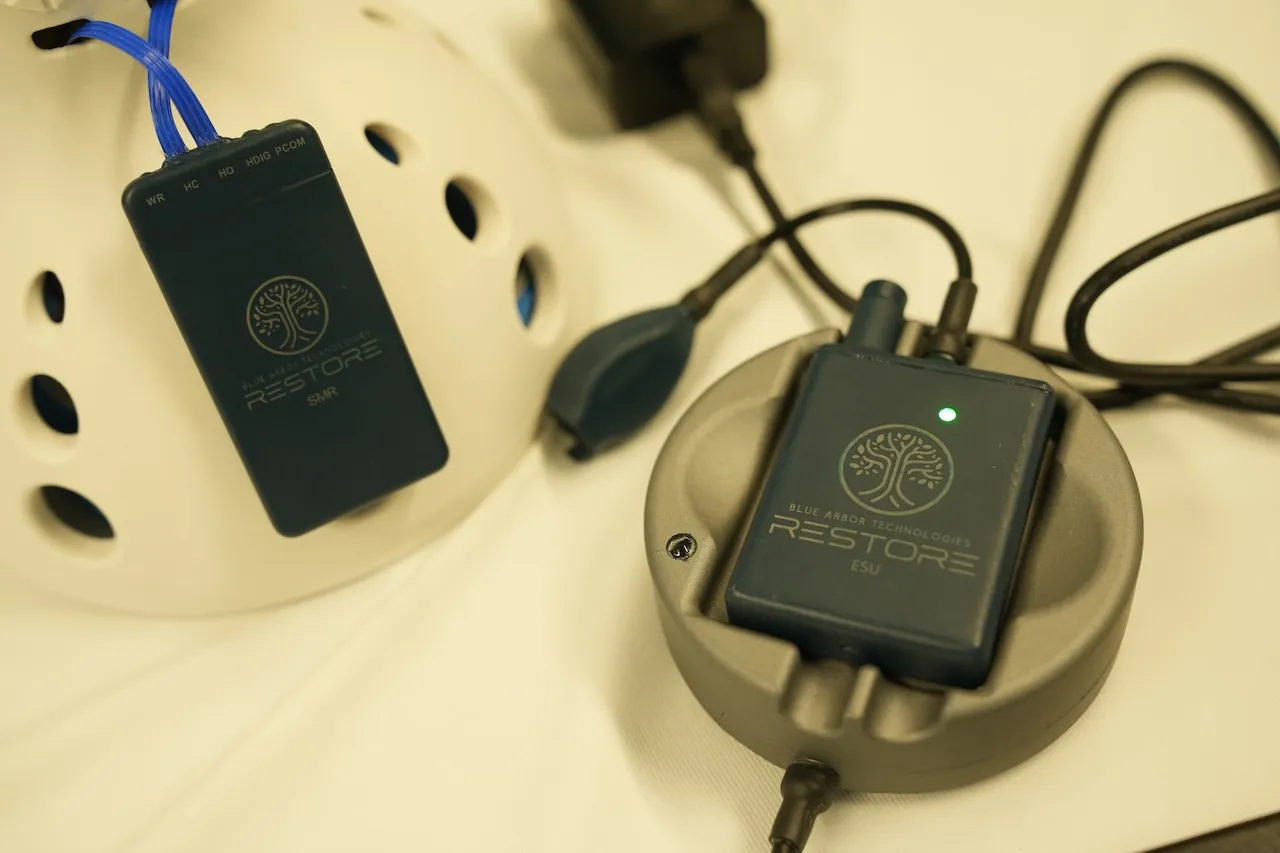
Michigan-based Blue Arbor Technologies has raised a USD 10.5 million Series A led by its strategic partner Ottobock, Pulse 2.0 reported on 28 October 2026. Blue Arbor is developing the RESTORE Neuromuscular Interface System, which aims to connect a user’s peripheral nervous system directly to a robotic prosthetic limb.
What RESTORE does
RESTORE is designed to give people with upper-limb loss independent, simultaneous control of the fingers, wrist and elbow. The platform has FDA Breakthrough Device Designation and has been accepted into the FDA’s Total Product Life Cycle Advisory Program pilot.
Where the money goes
The funding will support feasibility studies, an FDA Investigational Device Exemption for US clinical studies of the external sensing unit, and development of a fully implantable internal sensing unit.
Two human implantations have been completed to date, including a second-in-human procedure using the external sensing unit at the Medical University of Vienna. RESTORE has also been selected for a University of Michigan clinical study, supported by an NIH UG3 grant, comparing surface and implanted electrodes.
What they said
Ottobock CEO Oliver Jakobi said the technology “has the potential to set a new standard in prosthetic control.” Blue Arbor CEO Tod Borton called the funding “a testament to the team, the science, and the patients driving this work.” Prof. Oskar Aszmann of the Medical University of Vienna said patients in the first surgeries adapted “quickly and naturally.”
Ottobock first partnered with Blue Arbor in February 2026 with a USD 5 million investment.
IMEA CPO Perspective
The points below are IMEA CPO’s own reading and are separate from the claims in the source.
- Ottobock is betting on control. Leading this round, after its February investment, shows the market leader sees nerve-interface control as the next step for upper-limb prosthetics. That is a theme IMEA CPO explored in Neural Interfaces and Upper-Limb Prosthetics.
- Still early. Two implantations and a planned IDE mean this is years from routine clinical use, especially in IMEA.
- Upper-limb need in the region is high. Conflict and trauma injuries in Gaza, Yemen, Syria and Sudan have left many people with upper-limb loss. Better control could cut device abandonment, but cost and surgical access will decide who benefits.
- Skills. Implanted interfaces will need surgeons, prosthetists and therapists working closely together. Training programmes should start watching this field now.
Suggested hyperlinks / sources
- Pulse 2.0: Blue Arbor Technologies Raises $10.5 Million Series A Led By Ottobock (28 October 2026)
- Business Wire: Blue Arbor Technologies announces strategic partnership with Ottobock and $5 million investment (February 2026)
- Ottobock newsroom
- O&P Business News (IMEA CPO)