

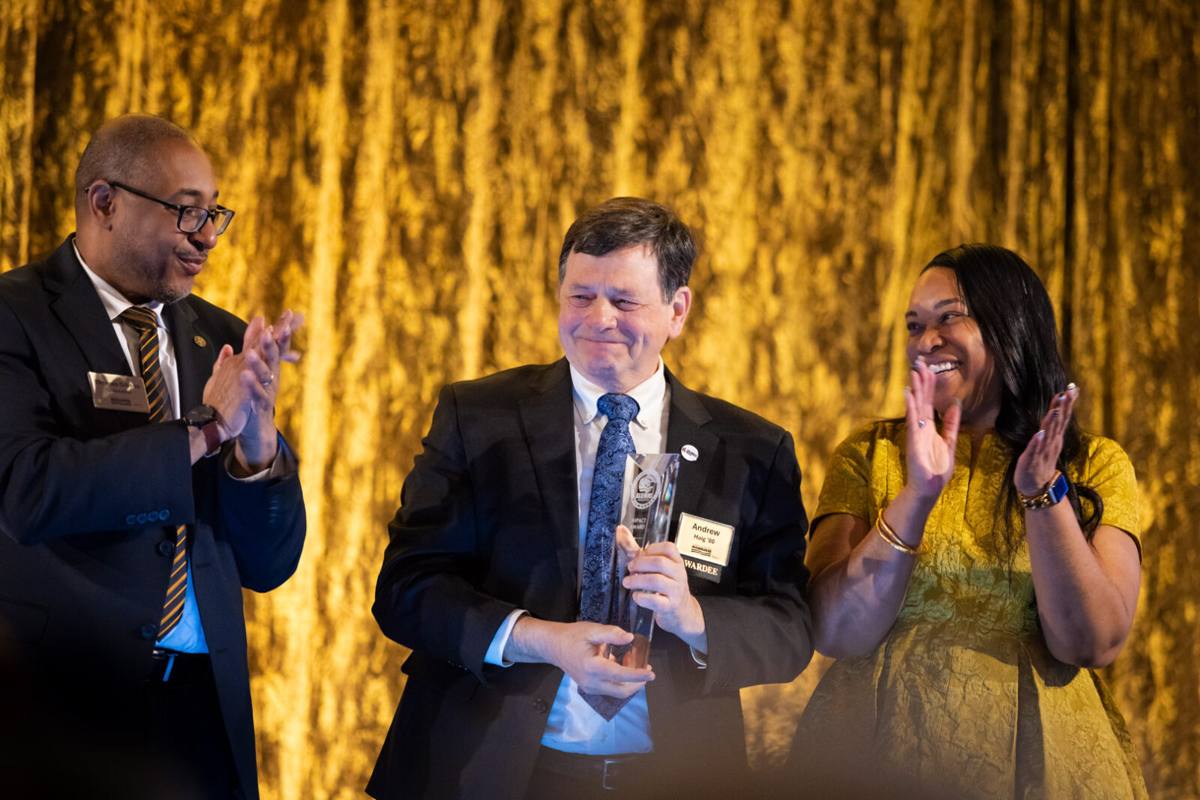
Pictured: Dr Andrew Haig, co-founder of the International Rehabilitation Forum, with an award.
The International Rehabilitation Forum (IRF), a US-based volunteer organisation that has spent 15 years training rehabilitation physicians in Africa, is asking for donations to expand its work. Co-founder Dr Andrew (Andy) Haig said the organisation has reached the limit of what volunteers alone can do.
Dr Haig, a physical medicine and rehabilitation (PM&R) physician, set up the IRF with his brother Tom. In a holiday appeal, he said they started it because people with disabilities everywhere deserve the same access to rehabilitation and opportunity as patients in the United States.
15 years of volunteer teaching
According to Dr Haig, more than 100 American physicians have volunteered to teach through the IRF. The organisation helped launch what he describes as Africa’s first physician training programme in PM&R, and it has worked on disaster rehabilitation and international rehabilitation policy.
He pointed to three graduates who are now leading services in their own countries:
- Ghana: Dr Abena Tannor is improving care for children with disabilities.
- Ethiopia: Dr Tariku Tadesse is caring for war amputees and helping to build an 800-bed rehabilitation village.
- South Africa: Dr Vaishali Padayachi is expanding rehabilitation care and helping to establish the specialty.
“These are local leaders changing their own countries,” Dr Haig wrote.
What the funding would pay for
The IRF says new money would be used to train more physicians and to start programmes in countries where rehabilitation services barely exist. It would also support teachers and fellows and fund research to bring rehabilitation to people who have never had access to it. Donations of any size can be made through the IRF website by clicking “Donation”.
IMEA CPO Perspective
Prosthetists and orthotists across Africa rarely work alone. The rehabilitation physician who assesses an amputee, plans the rehabilitation and prescribes the device is often the colleague who decides whether a P&O service is used well, or at all. In many African countries there are only a handful of PM&R specialists, and some have none. Amputees and people with spinal cord injury, stroke or cerebral palsy then reach P&O workshops late, without a clear prescription, or not at all.
Dr Tadesse’s work with war amputees in Ethiopia shows why this matters for our readers. Conflict in Ethiopia, Sudan and elsewhere is producing more amputees than local services can manage, and building rehabilitation physician capacity is part of the answer alongside training more prosthetists and orthotists. Programmes that create local specialists, rather than relying on visiting teams, are the ones most likely to last. IMEA CPO would welcome news from IRF graduates and from P&O teams working alongside them.
Sources and further reading
- International Rehabilitation Forum
- Holiday appeal by Dr Andy Haig, co-founder of the International Rehabilitation Forum (November 2026)
- IMEA CPO: Sudan Physical Rehabilitation Forum sets national priorities for rebuilding P&O services