

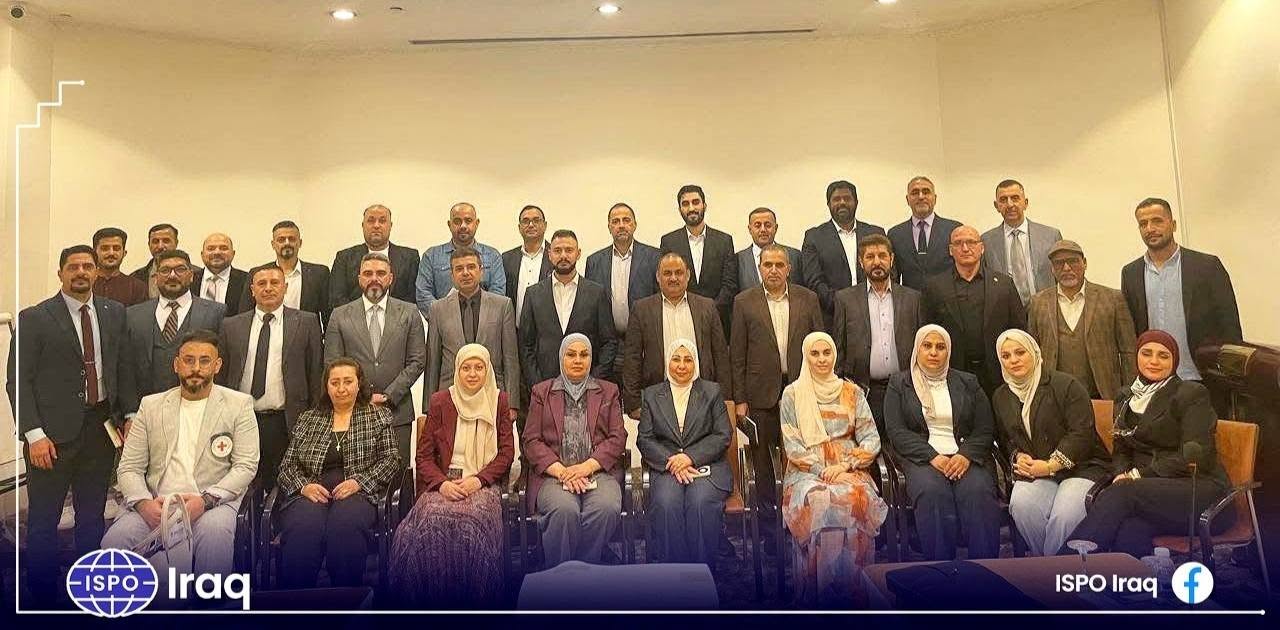
The Iraqi National Member Society (NMS) of the International Society for Prosthetics and Orthotics (ISPO), known as ISPO Iraq, has taken part in a workshop organised by the International Committee of the Red Cross (ICRC) in Iraq to present the results of a major review of the organisation’s long-running rehabilitation work in the country.
The workshop was titled “Presentation of the Comprehensive Post-Handover Evaluation Results: 30 Years of Support to Physical Rehabilitation Services in Iraq.” A group photograph shared by ISPO Iraq shows a large gathering of rehabilitation professionals, clinicians and sector representatives.
In a bilingual Arabic and English statement, ISPO Iraq said its participation reflected an ongoing commitment to strengthening collaboration with international partners, exchanging scientific and clinical expertise, and advancing the prosthetics and orthotics (P&O) sector to ensure sustainable, high-quality physical rehabilitation services across Iraq. The society also thanked the ICRC for three decades of dedicated support to the field.
Three decades of ICRC rehabilitation support in Iraq
The ICRC has been one of the main pillars of P&O service delivery in Iraq. According to the ICRC, its Physical Rehabilitation Centre in Erbil served 16,320 people between 1996 and 2021, including more than 8,000 amputees. When it opened its new, larger Erbil centre in 2022, the ICRC estimated that over 600,000 Iraqis needed physical rehabilitation and that more than 200,000 of them required a prosthesis or orthosis.
Alongside running its own centre, the ICRC has built, equipped and supported centres operated by Iraqi authorities. In 2018, for example, it opened the Ninawa Physical Rehabilitation Centre in Mosul and handed it over to the Ninawa Directorate of Health. A post-handover evaluation looks at what happens after this kind of transfer: whether centres keep up service volumes, quality, staffing and supplies once day-to-day responsibility passes to national institutions.
The detailed findings presented at the workshop have not yet been published.
IMEA CPO Perspective
Iraq has one of the deepest P&O education bases in the Middle East. It includes the ISPO-recognised programme at Erbil Polytechnic University, Al-Nahrain University’s engineering route into P&O and the Medical Technical Institute in Baghdad. The harder question is whether the public centres those graduates work in can be sustained without long-term external support.
For CPOs, the scale of need is clear. With more than 200,000 people estimated to need a prosthesis or orthosis, Iraq is one of the largest P&O markets in the region. After a handover, the usual pressure points are reliable component supply, equipment maintenance, ring-fenced budgets and keeping skilled staff. Each of these creates clinical, supervisory and service-management roles for qualified practitioners.
ISPO Iraq’s presence at the workshop gives the profession a voice in shaping what comes next. If the evaluation is published, it could offer a practical model for other conflict-affected IMEA countries where the ICRC supports rehabilitation, including Yemen, Syria, Libya and Sudan. The ICRC’s annual reporting shows how much the need is growing across these regions.
Suggested hyperlinks
- ISPO Iraq on Facebook
- International Society for Prosthetics and Orthotics (ISPO)
- ICRC in Iraq
- ICRC: Erbil Physical Rehabilitation Centre opens (2022)
- ICRC: Ninawa Physical Rehabilitation Centre handed over (2018)
- IMEA CPO: Erbil Polytechnic University P&O graduates
- IMEA CPO: Al-Nahrain University P&O engineering
- IMEA CPO: ICRC annual report on the rehabilitation burden