

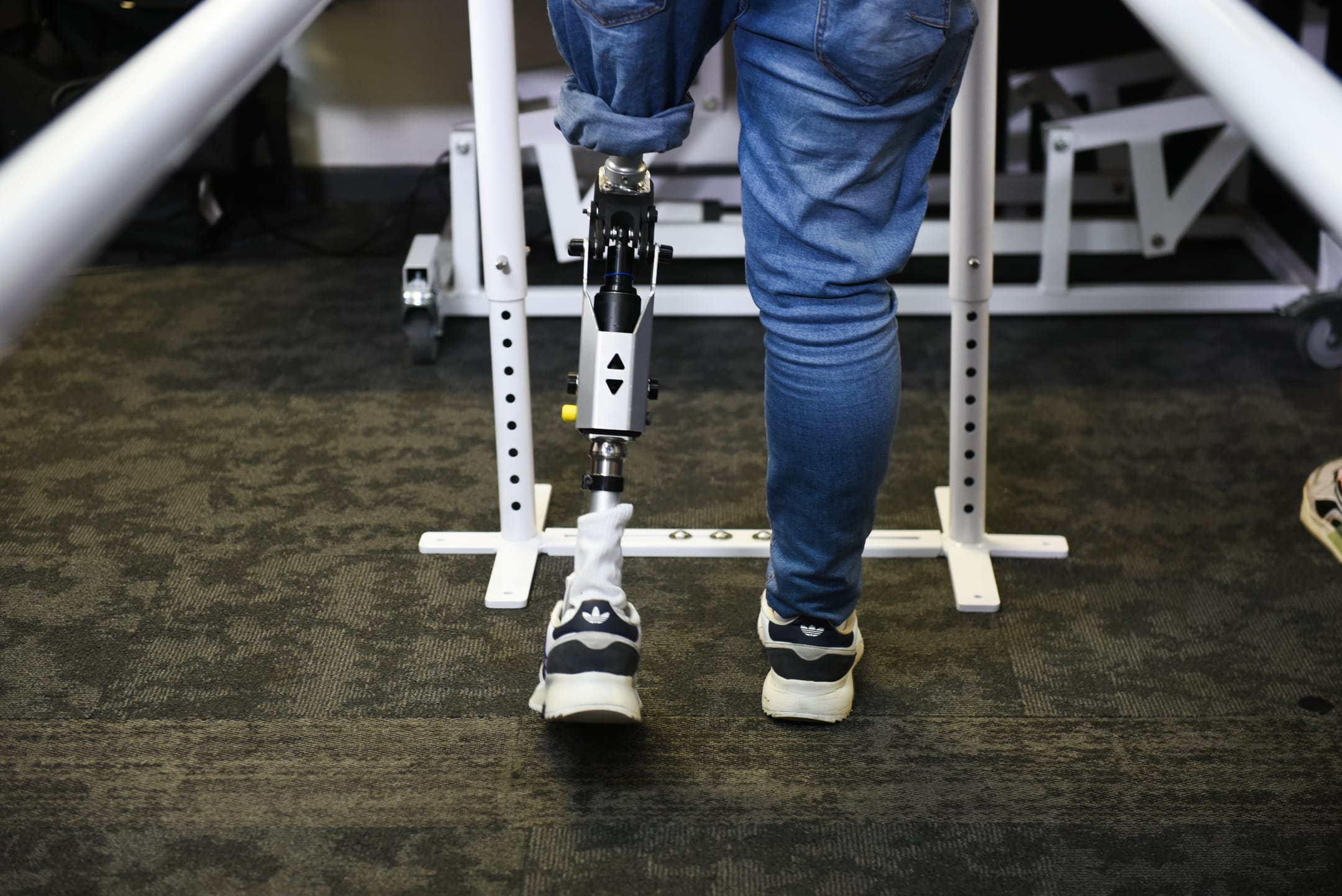
NAVU Mobility, a Stellenbosch start-up, is developing the NK Gen-1, a mechanical above-knee prosthetic knee with replaceable parts, so public clinics can repair worn components instead of replacing the whole device. The knee is still in development, has no price and is not yet approved for general use, according to a report published by the Sowetan on 24 November 2026 from the government’s Vuk’uzenzele publication.
What is the NAVU prosthetic knee?
The NK Gen-1 is aimed at public-sector clinics. It has no battery or electronic parts. Its moving joint is designed to improve standing stability and help users clear the ground when walking. The company is led by founder and CEO Amohetsoe Shale, a biomedical engineer and prosthetist, who says she developed the idea during clinical placements at medical facilities in the Eastern Cape and Gauteng.
How could replaceable parts change repairs?
According to the report, the design lets clinics replace worn components rather than the complete knee. Shale says this could shorten repair times and reduce travel costs for users. NAVU has not set a price. It says the knee is designed with public-sector budgets in mind and that affordability should be judged over the device’s lifespan, including repairs and downtime.
What the company says about testing
The article says the latest version withstood more than 2,000 newtons of static force. This is a company claim and not a clinical result. A Stellenbosch University release from April 2026 described the knee, then a master’s project, as a low-cost passive polycentric design in laboratory validation, with real-world durability, comfort and cost-effectiveness testing still needed.
When could the knee reach patients?
NAVU plans to apply for registration with the South African Health Products Regulatory Authority (SAHPRA) in 2027. Pilot projects are expected later in 2027, subject to funding, ethics approval and participant eligibility, and the knee will be available only once registration is approved. Local manufacturing is being prepared for 2027. Partners named are the Shonaquip Centre for Inclusive Innovation & Entrepreneurship, Stellenbosch University and Walter Sisulu University. NAVU won first prize at the 2026 SAB Foundation Disability Empowerment Awards in October.
IMEA CPO Perspective
For CPOs in South Africa’s public sector, repair time is a real cost. A user who waits weeks for a knee to be fixed, or travels far to a workshop, may stop using the limb. A design that lets a clinic swap a single part could matter as much as the purchase price, and local spares and manufacturing would support that. These benefits are NAVU’s claims for now, and none has been shown in clinical use.
The questions clinicians will want answered are practical: durability data over months of daily wear, suitability by activity level, alignment and adjustment, how repairs are done and by whom, and the final cost to the health system. Regulatory approval and pilot results will decide whether the knee becomes a routine option. IMEA CPO has covered other local access projects, including lower-cost legs made in Soweto and public-sector O&P innovation in the Western Cape, and other low-cost access projects such as remouldable sockets in Nigeria. More is in O&P Africa News.
Frequently asked questions
What is the NAVU NK Gen-1? A mechanical above-knee prosthetic knee, with no battery or electronics, designed for public-sector clinics and built with replaceable parts.
Is the NAVU knee available? No. It is under development and not approved for general use. NAVU plans to apply for SAHPRA registration in 2027.
How much will it cost? No price has been set. The company says it is designed for public-sector budgets and should be judged on lifetime cost, including repairs.
Suggested hyperlinks / sources
- Sowetan: New prosthetic knee aims to make repairs easier, cheaper (24 November 2026)
- Stellenbosch University: SU student takes African prosthetics innovation to the global stage (29 April 2026)
- IMEA CPO: O&P Africa News