 By
By
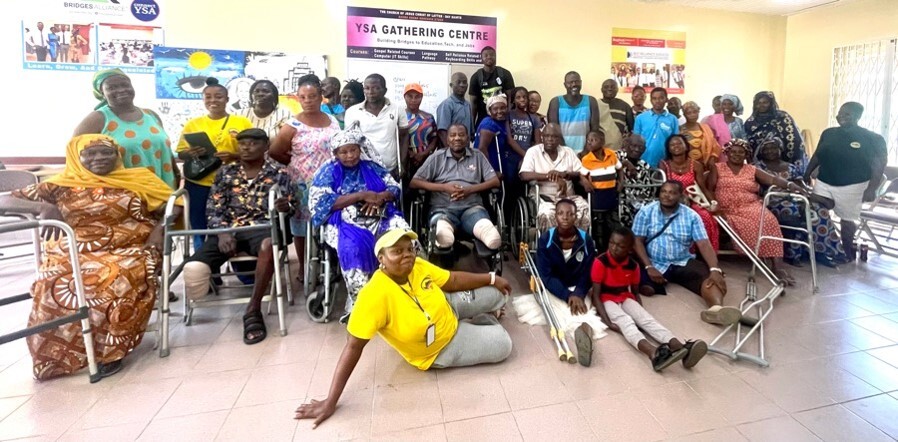
Ghana’s government has reaffirmed its commitment to improving the welfare of amputees and persons with disabilities, with a renewed focus on inclusion, rehabilitation access, employment opportunities and dignity. The assurance was given by Dr Agnes Naa Momo Lartey, Minister for Gender, Children and Social Protection, during an amputee awareness walk in Accra organised by Smiles of Hope as part of Limb Loss and Limb Difference Awareness Month.
Speaking on behalf of President John Dramani Mahama, Dr Lartey said the government would work through the Ministry to address concerns raised by amputees and provide feedback on the issues presented. The event brought together amputees, advocacy groups, health professionals and members of the public to highlight the daily challenges facing people with limb loss in Ghana.
The Minister said the awareness walk was more than a ceremonial event. She described it as a public demonstration of solidarity, compassion and commitment to inclusion. She also noted that while many cases of limb loss may be preventable, amputees continue to face stigma, barriers to independence and mental health challenges that are often hidden from public view.
For Ghana’s amputee community, the discussion comes at a critical time. Access to prosthetic limbs remains unaffordable for many families, while rehabilitation services, psychological support, employment pathways and accessible infrastructure are still unevenly available. These challenges affect not only mobility, but also education, work, family participation and long-term quality of life.
Dr Lartey outlined several government priorities, including stronger disability policies, free tertiary education for persons with disabilities, improved rehabilitation services and enforcement of a five per cent employment quota across public and private sectors. She also reaffirmed the government’s intention to advance reforms under a new disability framework designed to expand access to opportunity.
Smiles of Hope used the occasion to present a petition to the Ministry calling for urgent interventions for amputees. Valeria Adzatia, Founder and Director of Smiles of Hope, said the organisation has supported more than 2,000 amputees since 2019 through counselling, rehabilitation and skills training, but major gaps remain.
The petition highlighted several priority areas: the high cost of prosthetic limbs, the lack of structured psychological support, limited economic opportunities, inaccessible public infrastructure and the absence of comprehensive national data on amputees. Adzatia also called for the creation of a National Prosthetic Support Scheme, integration of mental health services into amputee care, stronger enforcement of disability-friendly infrastructure laws and the development of a national amputee registry to guide policy.
Her message was clear: amputees are not asking for charity, but for equal opportunity and systems that work. That distinction is important for rehabilitation policy across Ghana and the wider IMEA region. Prosthetic care should not be treated as an isolated medical intervention; it must be part of a wider support pathway that includes assessment, fitting, physiotherapy, socket review, maintenance, psychosocial care, skills development and economic inclusion.
The call for a national prosthetic support mechanism is especially significant. For many amputees, the cost of a prosthesis is only the beginning. Long-term mobility depends on access to repairs, replacement parts, socket adjustments and follow-up care. Without these services, even a well-fitted prosthesis can become unusable, uncomfortable or unsafe.
Ghana’s renewed focus on amputee welfare also aligns with a broader global push for better access to assistive technology. The World Health Organization has repeatedly emphasised that assistive products, including prostheses and orthoses, are essential for health, independence, education, work and social participation. For countries seeking to strengthen rehabilitation systems, prosthetic access must be linked to workforce training, public funding, referral pathways and inclusive infrastructure.
For Ghana, the challenge now is implementation. The commitments made in Accra will need to translate into measurable progress: more affordable prosthetic services, stronger rehabilitation capacity, national data, enforceable accessibility standards and real employment pathways for amputees.
The message from Ghana’s amputee community is direct and practical. There is life after amputation, but that life depends on systems that allow people to move, work, study, participate and live with dignity.
- Original Ghana News Agency article
- Ministry of Gender, Children and Social Protection, Ghana
- Smiles of Hope Foundation Ghana
- WHO assistive technology fact sheet
- WHO rehabilitation fact sheet
- International Society for Prosthetics and Orthotics
- United Nations Convention on the Rights of Persons with Disabilities