 By
By
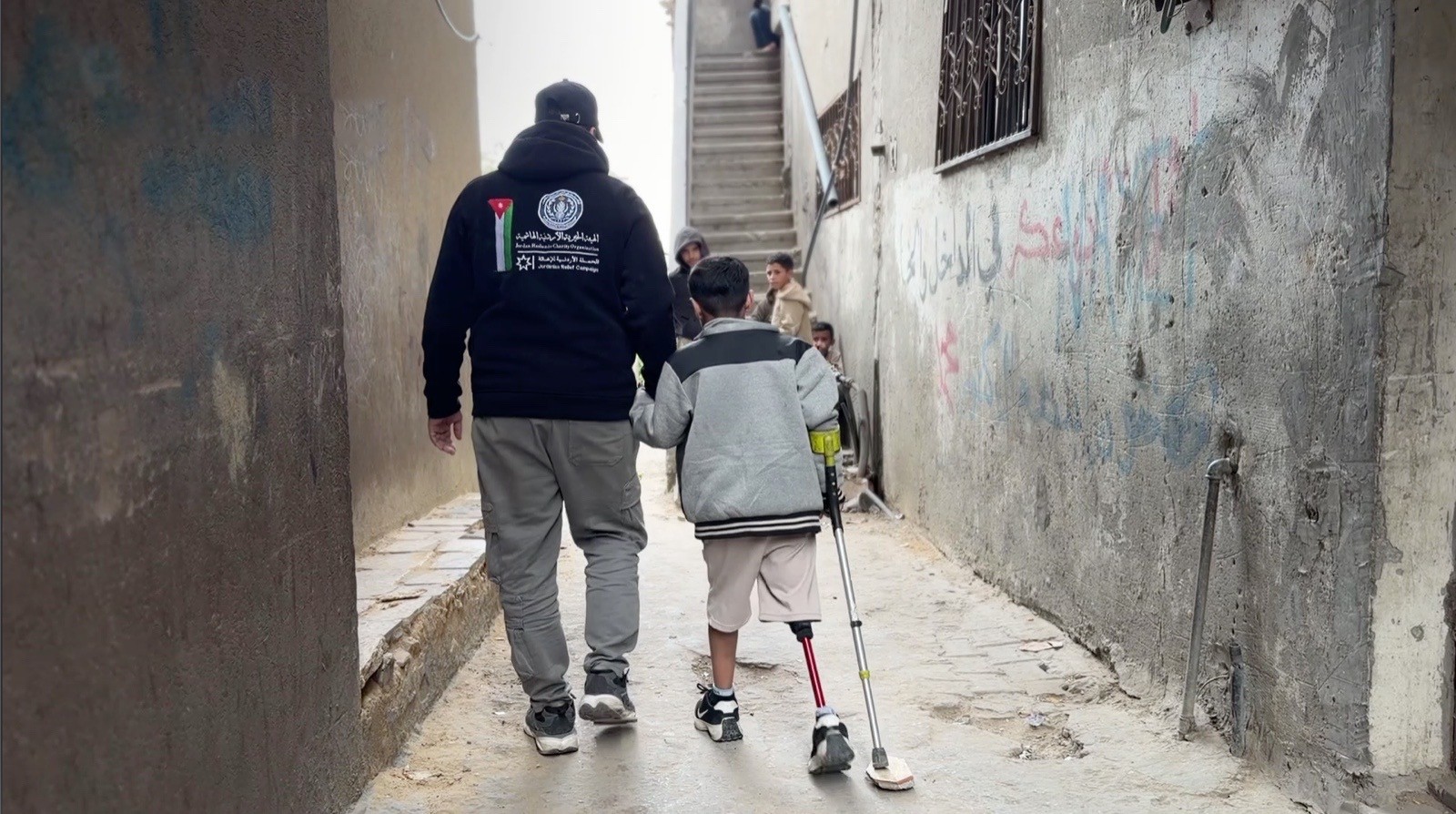
Kuwait’s International Islamic Charitable Organization (IICO) has implemented a prosthetic limb fitting project for amputees in Gaza, providing urgent mobility support for people who have lost limbs during the war.
According to the Kuwait News Agency (KUNA), the project delivered high-quality prosthetic devices using advanced technologies, allowing medical teams to complete fittings within a short period despite the extremely difficult humanitarian and healthcare conditions inside Gaza.
The initiative was reported on May 3, 2026, as part of Kuwait’s wider humanitarian response to the crisis in Gaza. IICO said the project aims to help amputees regain mobility, independence and dignity, while reducing the long-term burden of disability for people whose injuries require specialist rehabilitation support.
For Gaza’s amputees, access to prosthetic limbs remains critically limited. Recent reporting has described a severe shortage of prosthetic devices and materials, with thousands of war amputees in need of long-term care. Reuters, cited by Arab News, reported that Gaza has nearly 5,000 war amputees, around a quarter of whom are children, while prosthetic provision has been constrained by restrictions on essential materials and the collapse of normal rehabilitation pathways.
The IICO project therefore addresses one of the most urgent gaps in Gaza’s rehabilitation response: the need to move beyond emergency surgery and provide functional recovery. For amputees, a prosthetic limb is not simply a device. It requires assessment, residual limb preparation, socket design, alignment, fitting, gait training, physiotherapy, skin monitoring, psychological support and follow-up adjustments.
This is especially important in Gaza, where many amputees are living with complex injuries, malnutrition, infection risks and limited access to specialist rehabilitation services. Without proper prosthetic care, people with limb loss face increased dependence, reduced ability to study or work, higher risk of secondary complications, and significant psychological distress.
The Kuwait-supported initiative also reflects a wider regional shift: humanitarian aid for Gaza is increasingly recognising disability and rehabilitation as long-term priorities. Emergency medical treatment can save lives, but prosthetics, orthotics, physiotherapy and psychosocial care are essential for helping survivors rebuild function and independence.
Other regional programmes have also focused on amputee care. The Big Heart Foundation in Sharjah, for example, announced a campaign to support 1,000 amputee children in Gaza with custom prosthetic limbs, rehabilitation and psychosocial care, noting the need for a sustained pathway from treatment to recovery.
For the prosthetics and orthotics community across the IMEA region, the IICO project is an important reminder that successful amputee care depends on both access and continuity. A fitted prosthesis can be life-changing, but outcomes depend on the quality of fitting, user training, comfort, maintenance and long-term follow-up.
Kuwait’s intervention through IICO offers meaningful support at a time when Gaza’s amputees face overwhelming barriers to care. The challenge now is to ensure that prosthetic provision is connected to a broader rehabilitation pathway so that beneficiaries can regain mobility, confidence and participation in daily life.
- Original report – Kuwait News Agency (KUNA)
- International Islamic Charitable Organization
- Arab News / Reuters – Gaza’s war amputees short of prostheses
- The Big Heart Foundation – Gaza amputee children campaign
- World Health Organization – Rehabilitation
- World Health Organization – Assistive technology
- International Society for Prosthetics and Orthotics