 By
By
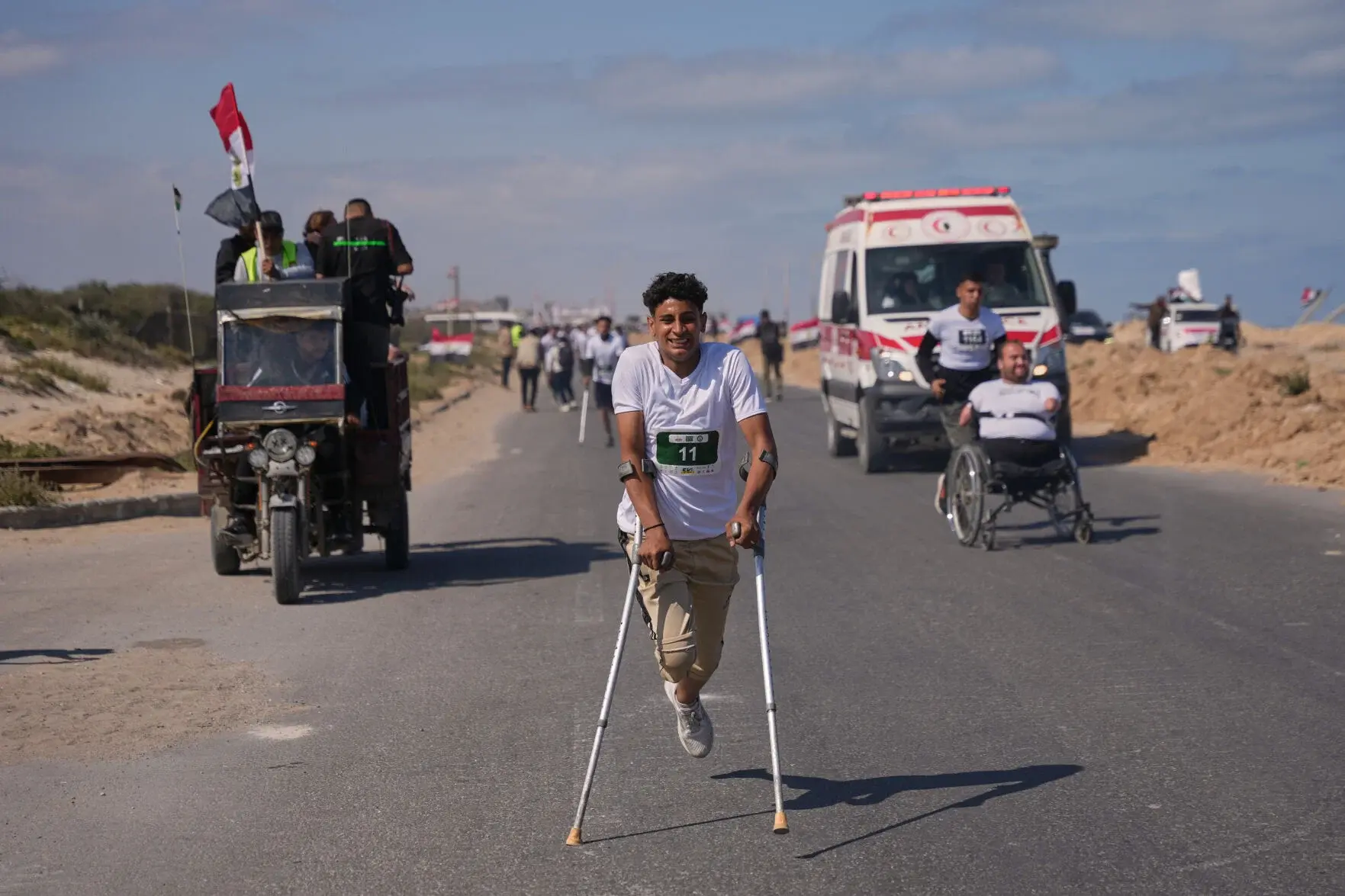
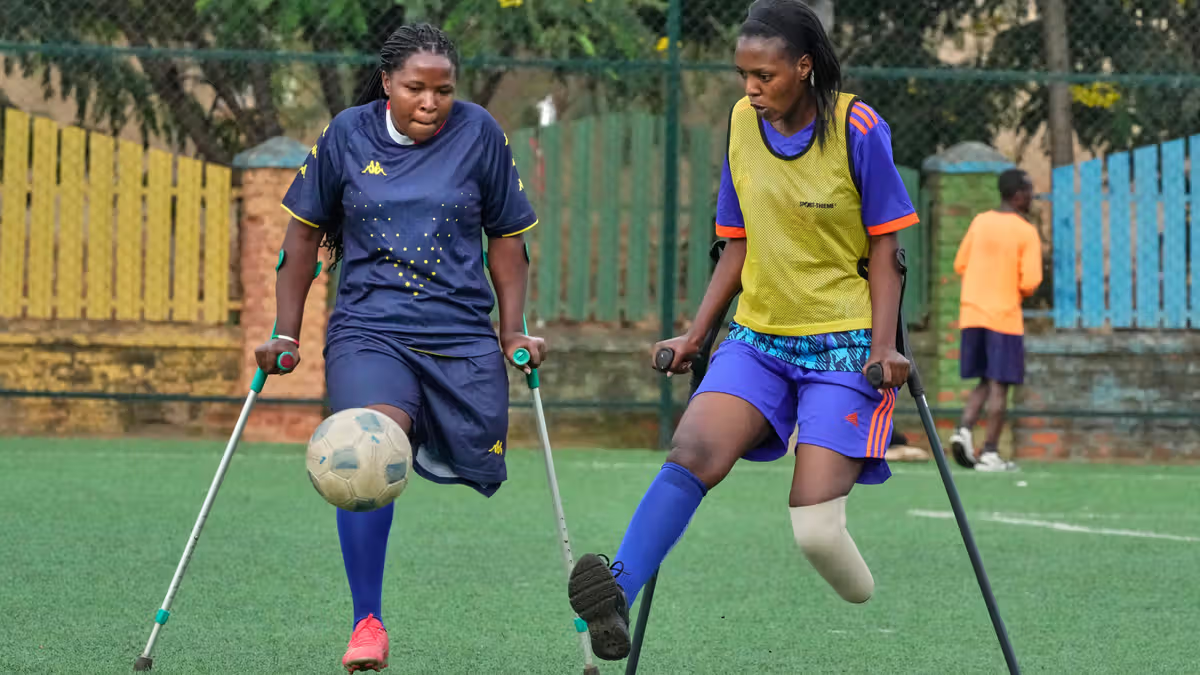
Palestinian amputee runners took part in a 2-kilometre Palestine Marathon event along the coastal road near Nuseirat in the central Gaza Strip on Friday, May 8, 2026, in a powerful moment of sport, visibility and resilience amid the continuing devastation of war. The Gaza event was held alongside the wider Palestine Marathon, which returned after a three-year pause and included races in Bethlehem in the occupied West Bank.
According to Associated Press reporting, around 15 disabled participants, including amputees, ran a 2K race on a beachside road in Nuseirat, while thousands of others took part in a 5K event in Gaza. The marathon also included participation from women, marking an important symbolic moment for community sport in Gaza.
For the prosthetics and orthotics community across IMEA, the image of amputee runners taking part in Gaza is more than a sporting photograph. It is a reminder that rehabilitation is not only about survival after injury. It is also about mobility, confidence, social participation and the right of people with limb loss to be visible in public life.
A Race With Clinical and Human Meaning
The participation of amputee runners in Nuseirat speaks directly to the role of prosthetic rehabilitation in conflict-affected settings. A person with limb loss may require emergency surgery, wound care, residual limb management, prosthetic assessment, socket fitting, gait training, psychological support and long-term follow-up before returning to sport or community activity.
In Gaza, where health infrastructure has been severely strained, the act of running even two kilometres carries major significance. It reflects physical recovery, personal determination and the importance of access to prosthetic and rehabilitation services after traumatic limb loss.
The Palestine Marathon has long carried a wider message about freedom of movement. This year’s event included runners in Bethlehem, where the route passed areas affected by checkpoints, military gates and the separation barrier. Al Jazeera described the marathon as both a sporting event and an act of peaceful resistance and solidarity with Gaza.
Why This Matters for CPOs Across IMEA
For certified prosthetists and orthotists, the Gaza 2K race should be viewed through a clinical as well as humanitarian lens. Amputee sport depends on much more than motivation. It requires appropriate prosthetic components, good socket comfort, stable alignment, residual limb protection and careful progression of training.
In conflict and humanitarian environments, those elements are often difficult to deliver consistently. Patients may face limited access to prosthetic workshops, shortages of components, delayed follow-up appointments and high rates of complex trauma. Children and young adults with amputations may also need repeated adjustments as their bodies change.
The participation of amputee runners in Gaza highlights several priorities for the O&P sector:
- Better access to prosthetic fitting and repair services in conflict-affected areas
- Stronger residual limb care and skin monitoring
- Training for local rehabilitation professionals and technicians
- Durable prosthetic designs suited to challenging environments
- Long-term follow-up, not only emergency device delivery
- Inclusion of sport, activity and participation as rehabilitation goals
Beyond the Device: Restoring Participation
A prosthesis is not simply a replacement limb. It is a tool for returning to daily life. For some users, that means standing, walking to school, returning to work or moving independently at home. For others, it may also mean running, joining a public event or being seen as an athlete rather than only as a patient.
The Gaza marathon images challenge the rehabilitation sector to think beyond basic provision. In humanitarian settings, the first priority is often emergency response. But long-term recovery requires systems that help amputees regain mobility, dignity and participation.
For CPOs, that means designing care pathways that consider the full person: pain, fit, function, confidence, family life, school, work and community identity.
IMEA CPO Perspective
Across India, the Middle East and Africa, CPOs will recognise the deeper message of the Nuseirat race. Many professionals in the region work with patients affected by trauma, diabetes, vascular disease, conflict injury and delayed rehabilitation access. The needs are different from country to country, but the core goal is the same: helping people move again with safety, comfort and dignity.
The Palestinian amputee runners in Gaza remind the global O&P community that mobility is a human outcome, not just a technical result. Every socket fit, alignment check, gait-training session and follow-up appointment contributes to the possibility that someone may one day walk further, stand taller or even run in public.
In Gaza, a 2-kilometre race became a statement of resilience. For the rehabilitation community, it should also be a call to strengthen prosthetic care, training and long-term support for amputees living through crisis.
- Associated Press – Palestine Marathon report
- Associated Press photo gallery – Palestinian marathon
- Al Jazeera – Palestine Marathon gallery
- World Health Organization – Rehabilitation
- International Committee of the Red Cross – Physical Rehabilitation Programme
- International Society for Prosthetics and Orthotics