

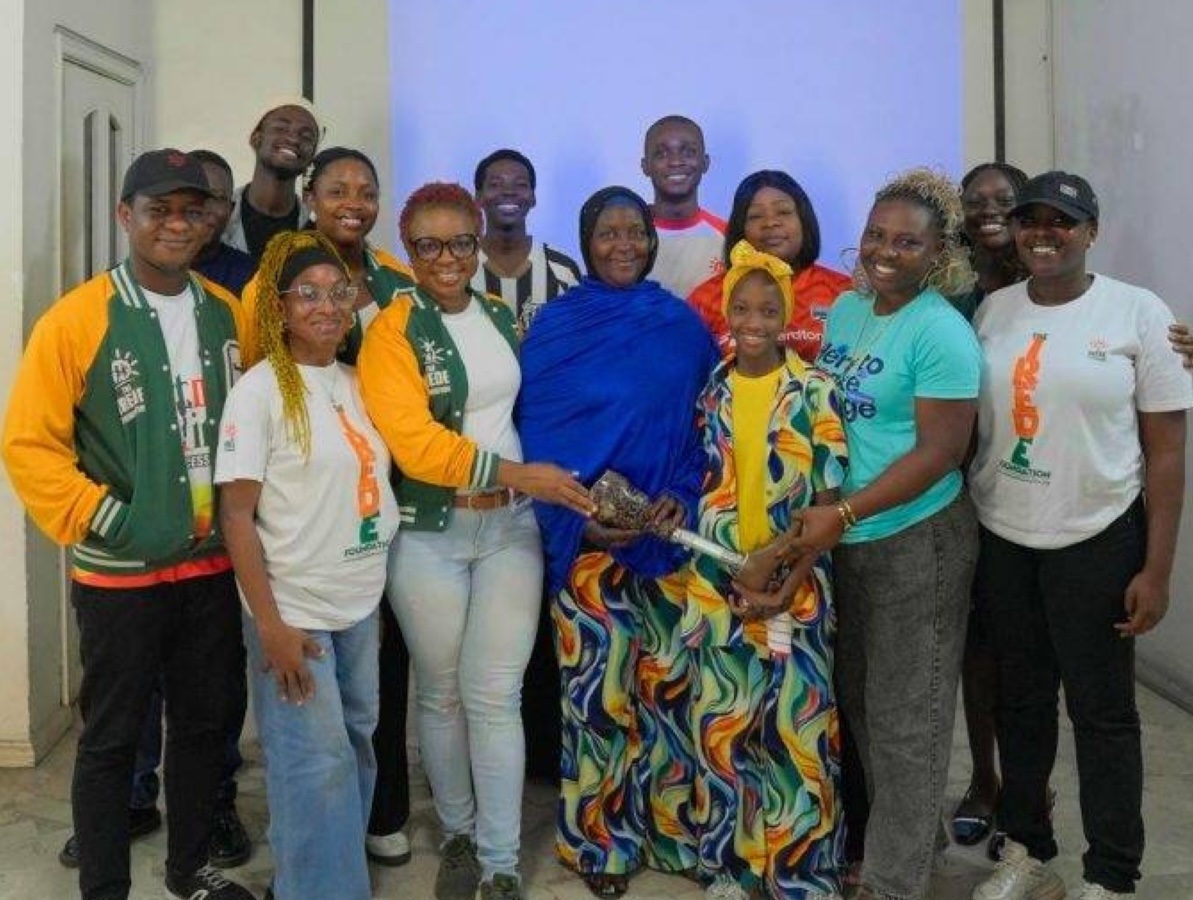
A new partnership between Cardtonic Cares and The Irede Foundation has helped a young Nigerian schoolgirl regain mobility after limb loss, highlighting the growing role of corporate social responsibility in expanding access to prosthetic care across Africa.
According to a report published by The Manila Times, Cardtonic Cares, the social impact arm of African fintech platform Cardtonic, partnered with the Irede Foundation to sponsor a custom prosthetic limb for Hasana, a young Nigerian girl who lost her leg following a domestic accident.
Hasana was reportedly fetching water before school when a water tank collapsed on her and her sister. After multiple hospital visits and unsuccessful attempts to save the injured limb, doctors were forced to amputate. The hospital later referred her to the Irede Foundation, where she was assessed and found eligible for prosthetic support.
Through the partnership, Cardtonic Cares sponsored Hasana’s prosthetic limb, while Irede Foundation supported the clinical and rehabilitation process. The intervention has enabled her to walk again, return to school and take part more confidently in everyday childhood activities.
The process involved more than simply handing over a device. Hasana first underwent assessment of her residual limb, including checks for healing, sensitivity and phantom pain or sensation. Measurements and casting were then carried out to produce a custom prosthetic socket, with a soft liner used to improve comfort and reduce pressure during wear.
She also attended fitting and training sessions to assess height, comfort, gait and functional use. This step is especially important in paediatric prosthetics, where children require not only a suitable prosthetic limb but also rehabilitation support, confidence-building and long-term follow-up as they grow.
For IMEA CPO readers, the story reflects a wider challenge across the region. In many parts of Africa, prosthetic limbs remain unaffordable for families, particularly when children require repeated replacement sockets and components as their bodies grow. Cost, distance from services, limited rehabilitation infrastructure and social stigma can all prevent children with limb loss from receiving appropriate care.
The Irede Foundation has become one of Nigeria’s most visible organisations working in this space. The foundation describes its mission as encouraging children living with congenital or acquired limb loss to live fulfilled lives. Its work includes prosthetic support, family engagement and wider advocacy for disability inclusion.
Past reporting by Associated Press has highlighted the scale of need in Nigeria and the role of Irede in providing free artificial limbs to children who would otherwise struggle to access prosthetic care. The foundation’s work also includes psychosocial support and public education to challenge stigma around limb loss and disability.
The Cardtonic Cares intervention is therefore more than a single donation. It is an example of how companies can work with experienced rehabilitation and disability organisations to deliver targeted, life-changing support. For children, a prosthetic limb can mean much more than mobility. It can mean returning to school, joining friends in play, participating in family life and rebuilding self-confidence.
However, effective paediatric prosthetic care requires continuity. Children grow quickly, and prosthetic limbs need adjustment, maintenance and replacement over time. Programmes that provide initial devices should ideally be connected to longer-term follow-up, rehabilitation training and family education.
Hasana’s story is a reminder that access to prosthetics is not only a medical or technical issue. It is also an issue of education, inclusion and social participation. A child who can walk to school, play with peers and move more independently has a better chance of building confidence and participating fully in community life.
Across the Middle East, Africa, Central Asia and South Asia, partnerships between NGOs, companies, clinicians and community organisations will be essential if more children with limb loss are to receive timely prosthetic care. The Cardtonic Cares and Irede Foundation partnership shows how targeted sponsorship can make a direct impact when it is linked to proper assessment, fitting and rehabilitation.
For the prosthetics and orthotics sector, Hasana’s journey reinforces a clear message: children with limb loss need more than devices. They need access, follow-up, family support, rehabilitation and communities that recognise their ability, dignity and potential.
- Original report in The Manila Times
- The Irede Foundation
- Irede Foundation – About
- Associated Press: Nigerian group provides prosthetic limbs to amputee children
- World Health Organization – Rehabilitation
- International Society for Prosthetics and Orthotics