

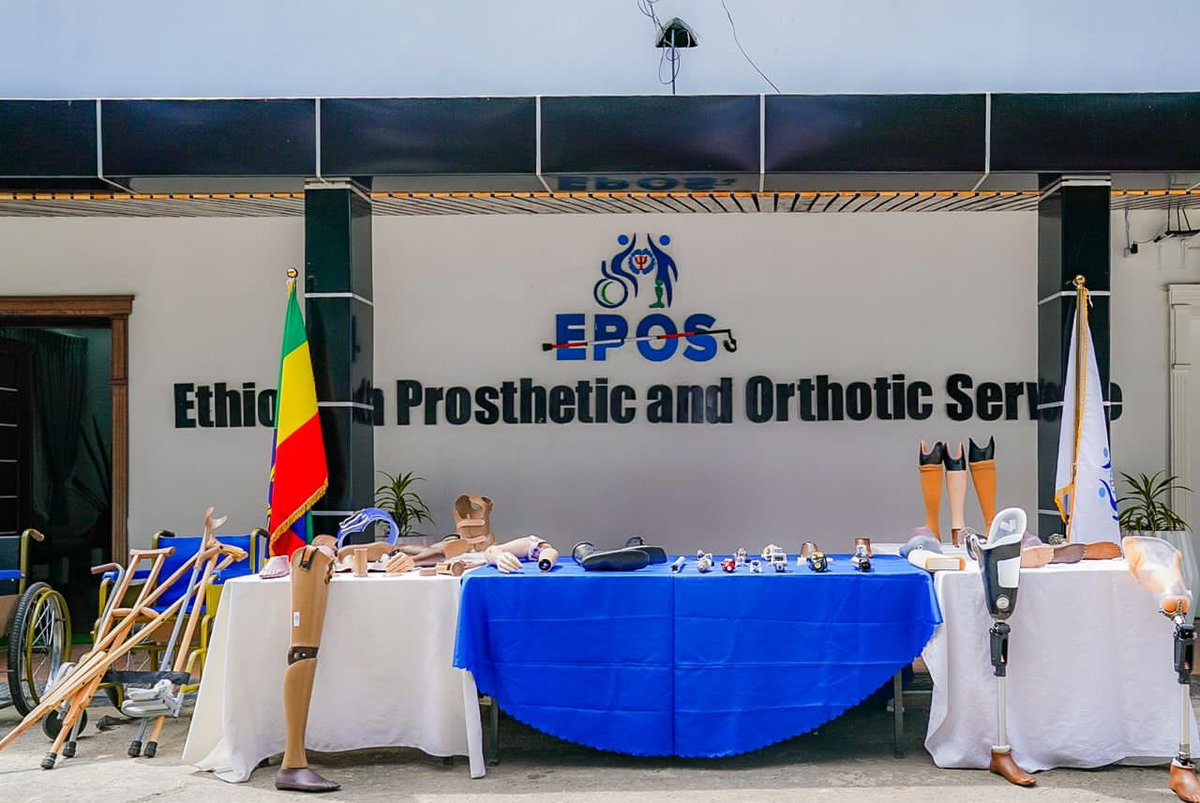
The Ethiopian Prosthetic and Orthotic Service (EPOS) has held an internal awareness forum for staff focused on ethical decision-making and conflict-of-interest prevention, underlining the importance of integrity, fairness and public trust in prosthetic, orthotic and rehabilitation service delivery.
According to an update shared through the Ethiopian Prosthetic and Orthotic Service – EPOS Facebook page, the session brought together employees of the institution to strengthen awareness of ethical conduct, prevent corruption risks and support transparent decision-making in daily work.
EPOS is one of Ethiopia’s key public institutions for prosthetic and orthotic services, describing itself as a long-time provider of prosthetics and orthotics in the country through its official EPOS website. The organisation provides custom prosthetic and orthotic care and forms part of Ethiopia’s wider rehabilitation and assistive technology landscape.
Ethics as a foundation for rehabilitation services
Opening the awareness forum, Mr. Worku Baye, CEO of Ethiopian Prosthetic and Orthotic Service, highlighted the importance of ethical decision-making not only within institutional work, but also in personal life and public service.
He noted that ethical practice is essential for protecting the safety and dignity of service users, ensuring balanced and impartial service provision, and preventing personal benefit, financial interest or family relationships from influencing institutional decisions.
For the prosthetics and orthotics sector, this message is especially important. P&O services often involve vulnerable service users, long-term disability needs, public resources, procurement decisions, device allocation, clinical prioritisation and relationships with suppliers or partner organisations. In such settings, ethical governance is central to patient safety and public confidence.
Preventing conflicts of interest
The awareness training was delivered by Mr. Birhanu Alemu, Executive of Strategic Affairs at the organisation. He explained that ethical decision-making involves choosing what is right or wrong in a particular situation based on principles, values and professional responsibility.
He also addressed the meaning of conflict of interest, describing it as a situation where personal interests may conflict with the public interest in relation to a decision or responsibility.
In prosthetic and orthotic services, conflict-of-interest prevention can apply to many areas, including:
- Procurement of prosthetic and orthotic components
- Patient referral decisions
- Allocation of assistive devices
- Relationships with suppliers and contractors
- Staff recruitment and internal promotion
- Selection of patients for special support programmes
- Use of public resources and institutional property
- Clinical decision-making and documentation
Clear policies and staff awareness help reduce the risk of unfair treatment, misuse of resources or decisions that undermine trust in the service.
Anti-corruption awareness and institutional reputation
The forum also included input from Mrs. Alemi Giduma, Leader of the Ethics and Anti-Corruption Group. She encouraged participants to take the awareness campaign seriously and apply the lessons in their own work.
She warned that failure to act ethically can damage an institution’s good name and may lead to corruption. This is particularly relevant in public rehabilitation systems, where trust is built over time through consistent, transparent and patient-centred service.
For EPOS, maintaining a strong institutional reputation is important because prosthetic and orthotic services are not one-off interventions. Patients often return for repairs, adjustments, follow-up, new devices and long-term rehabilitation support. Trust between the service provider and the patient is therefore essential.
Why ethics matters in prosthetics and orthotics
Ethical practice in prosthetics and orthotics is not limited to administrative conduct. It is part of clinical care.
Patients rely on clinicians and service providers to make decisions that affect mobility, independence, pain, comfort, work, education and social participation. A poorly fitted device, delayed service, unfair allocation or biased decision can have serious consequences for a person’s quality of life.
Ethical P&O service delivery should include:
- Respect for the dignity of every service user
- Fair access to assessment and device provision
- Transparent decision-making
- Safe and clinically appropriate prescription
- Honest communication with patients and families
- Responsible use of institutional resources
- Clear separation between personal benefit and public duty
- Accountability in procurement and service management
- Protection of vulnerable patients from exploitation or discrimination
This is especially important in low- and middle-income settings, where demand for prosthetic and orthotic care can exceed available resources. When resources are limited, ethical prioritisation becomes even more important.
Building a stronger service culture
The EPOS awareness forum concluded with a question-and-answer competition among selected participants, followed by a prize programme. This interactive format suggests that the institution is not only delivering policy messages, but also encouraging staff engagement and understanding.
Training of this kind can help create a workplace culture where employees are more confident in recognising ethical risks, reporting concerns and making decisions that protect service users and the institution.
For rehabilitation organisations, ethics and anti-corruption awareness should not be treated as occasional compliance exercises. They should be embedded into daily service delivery, including clinical practice, management, procurement, patient communication and staff supervision.
A relevant model for the wider IMEA region
The EPOS initiative is relevant beyond Ethiopia. Across the Middle East and Africa, prosthetic and orthotic services face common challenges, including limited funding, growing disability needs, component supply constraints, workforce shortages and reliance on donor or public procurement systems.
In this environment, ethical decision-making is essential. Rehabilitation services must be trusted by patients, families, governments, NGOs and international partners.
EPOS’s awareness forum highlights the importance of strengthening governance alongside technical and clinical capacity. A strong P&O service requires trained clinicians and technicians, but it also requires transparent systems, ethical leadership and staff who understand their responsibilities to the public.
Ethics as part of quality rehabilitation
As prosthetic and orthotic services expand across Ethiopia and the wider region, quality cannot be measured only by the number of devices produced. It must also be measured by how services are delivered.
A prosthetic or orthotic service should be safe, fair, patient-centred and accountable. Ethics training helps ensure that decisions are made in the best interests of patients and the public, rather than being shaped by personal gain, favouritism or hidden conflicts.
The EPOS forum is therefore a timely reminder that ethical governance is not separate from rehabilitation. It is one of the foundations of sustainable, trusted and effective prosthetic and orthotic care.
- Ethiopian Prosthetic and Orthotic Service – EPOS Facebook page
- Ethiopian Prosthetic and Orthotic Service official website
- EPOS contact page
- Ethiopian News Agency: New centre for Ethiopian Prosthetic and Orthotic Service
- ICRC: Training future orthopedic and physical rehabilitation experts in Ethiopia
- World Health Organization: Rehabilitation
- World Health Organization: Assistive technology