

For lower-limb prosthesis users across the Middle East, Africa, Central Asia and South Asia, summer heat is not just uncomfortable. It can directly affect socket fit, suspension, skin health and daily mobility.
A recent article from Amputee Store highlights a common but often underestimated problem: sweat trapped inside a prosthetic liner or socket has nowhere to evaporate. Over time, this can soften the residual limb skin, increase friction, create odour, loosen suspension and raise the risk of blisters, rashes or infection.
In hot and humid countries, this is not a seasonal inconvenience. For many amputees, it is a daily clinical and functional challenge.
Why sweat becomes a prosthetic problem
Sweating is the body’s natural cooling mechanism. The problem begins when the residual limb is enclosed inside a liner, sock, sleeve and socket for long periods of time. Unlike exposed skin, the residual limb inside a prosthesis has very limited airflow.
As moisture builds up, the prosthesis may begin to feel loose or unstable. The liner may slide, twist or piston. Small changes in socket movement can then create rubbing, pressure areas and skin irritation. For active users, workers, students and people who walk long distances outdoors, the impact can be significant.
Warning signs include:
- A prosthesis that feels loose, unstable or harder to control
- Liner movement, twisting or increased pistoning
- Redness, shiny skin, swelling or soreness after removing the liner
- Blisters, rashes, bumps or open areas
- Stronger odour despite regular cleaning
- A need to repeatedly adjust the prosthesis during the day
For prosthetists, these complaints should not be dismissed as normal summer discomfort. They may indicate that heat and moisture are changing the socket environment enough to affect both comfort and safety.
The clinical importance of daily skin checks
In warm climates, amputees should be encouraged to build a daily residual limb routine around inspection, cleaning and drying. This is especially important for users with diabetes, reduced sensation, vascular disease or a history of skin breakdown.
Practical advice includes removing the prosthesis during the day when possible, drying the limb and liner, checking for redness or pressure marks, and ensuring liners and socks are cleaned according to manufacturer guidance. Persistent irritation, broken skin, pain, odour or sudden changes in fit should prompt review by a prosthetist or healthcare professional.
Clinicians may also need to review socket fit, liner condition, suspension method, sock management and user education. In some cases, the issue is not just “too much sweat” but a combination of heat, volume fluctuation, liner ageing, socket looseness and activity level.
New textile approaches: Ethnocare’s Underlay
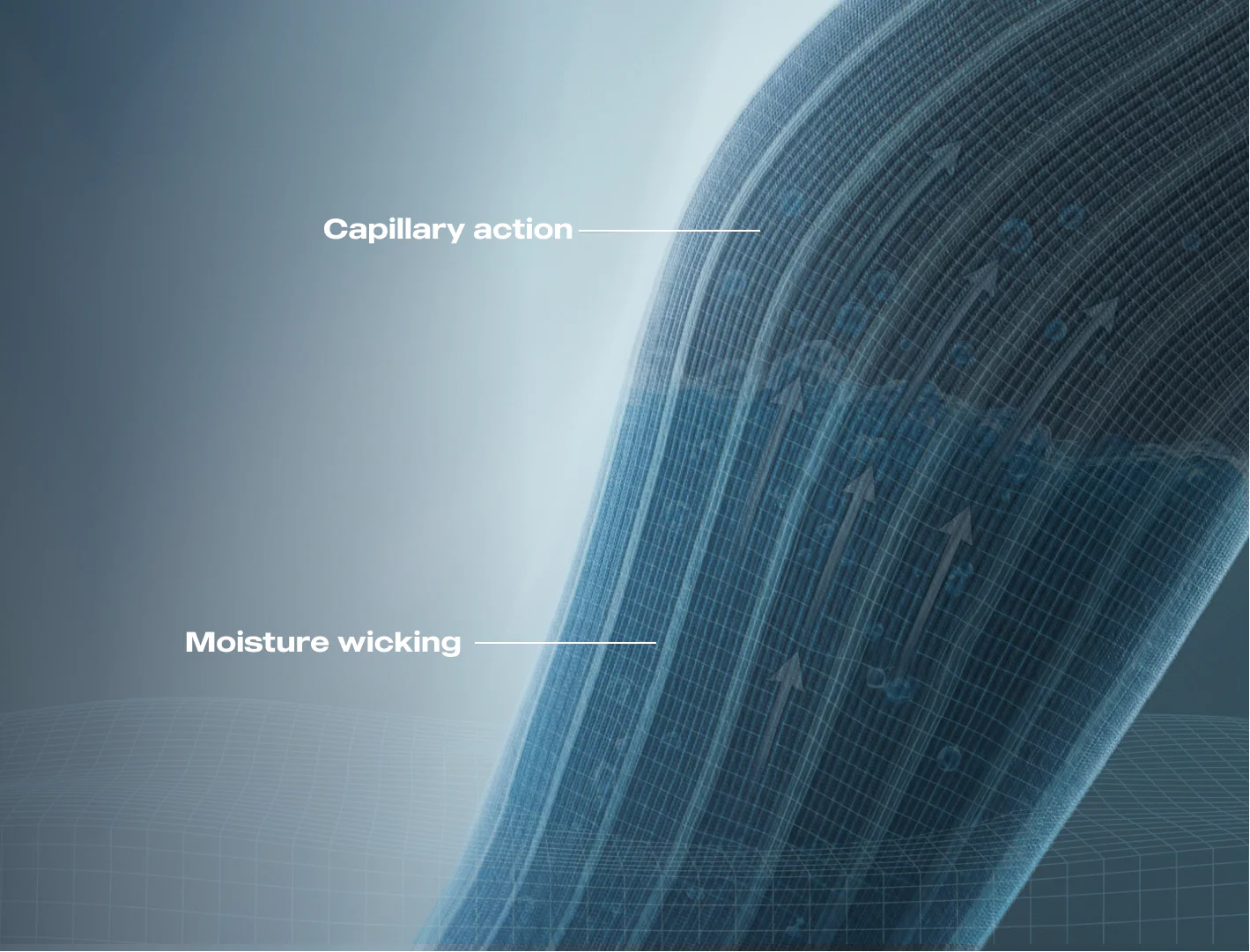
One of the emerging solutions in this area is the new Underlay by Ethnocare, a sweat- and heat-management textile designed for lower-limb amputees.
Unlike a traditional prosthetic sock worn over the liner to manage volume, the Underlay is worn directly on the residual limb, underneath the prosthetic liner. Ethnocare states that it is designed to manage humidity, sweat, heat and odour inside the socket while helping maintain liner contact with the skin.
The open transtibial version is designed so that the liner remains in contact with the skin to help preserve suspension, while the textile extends beyond the liner to support airflow and natural evaporation. Ethnocare also offers a closed version, which may be more suitable for some residual limb shapes or users needing additional skin contact.
According to Ethnocare, the Underlay is made from a proprietary knit and is compatible with several suspension approaches, including distal fixation, suspension sleeves, passive vacuum and active vacuum. The company positions it for transtibial users across low, moderate and high activity levels.
Why this matters for IMEA prosthetic services
In many IMEA markets, prosthetic care is delivered in environments where heat, humidity, dust, long travel distances and variable access to follow-up care all affect outcomes. A socket that works well in a controlled clinic environment may feel very different after a full day outdoors, during Ramadan activity patterns, on construction sites, in schools, or in rural settings where users may walk long distances.
This makes sweat management more than a comfort issue. It is part of safe prosthetic rehabilitation.
For clinics, the growing focus on sweat, heat and socket microclimate creates an opportunity to improve follow-up conversations with users. Instead of waiting for skin breakdown, clinicians can proactively ask:
- Does your prosthesis feel different in hot weather?
- Do you need to remove your liner during the day to dry your limb?
- Are you noticing more odour, slipping or friction?
- Does your socket feel secure in the morning but loose later in the day?
- Have you changed your activity level, work environment or daily walking distance?
These questions can help identify early problems before they become wounds, socket abandonment or reduced prosthesis use.
A practical message for amputees and clinicians
Summer prosthetic care should combine good hygiene, careful skin inspection, appropriate liner care, socket fit review and, where suitable, additional sweat-management products. No single product replaces clinical assessment, but innovations such as Ethnocare’s Underlay show how textile design is becoming part of the broader prosthetic comfort and skin-care conversation.
For amputees in hot climates, the message is simple: sweat inside a prosthesis should not be ignored. If heat is causing slipping, friction, skin irritation or loss of confidence, it is worth speaking to a prosthetist.
For clinicians, summer sweat should be treated as a fit, skin and mobility issue — not just a minor inconvenience.
- Amputee Store: Why Summer Heat and Sweat Put Prosthesis Users at Risk
- Ethnocare Underlay
- Ethnocare Underlay Transtibial Open
- Ethnocare Overlay
- IMEA CPO