

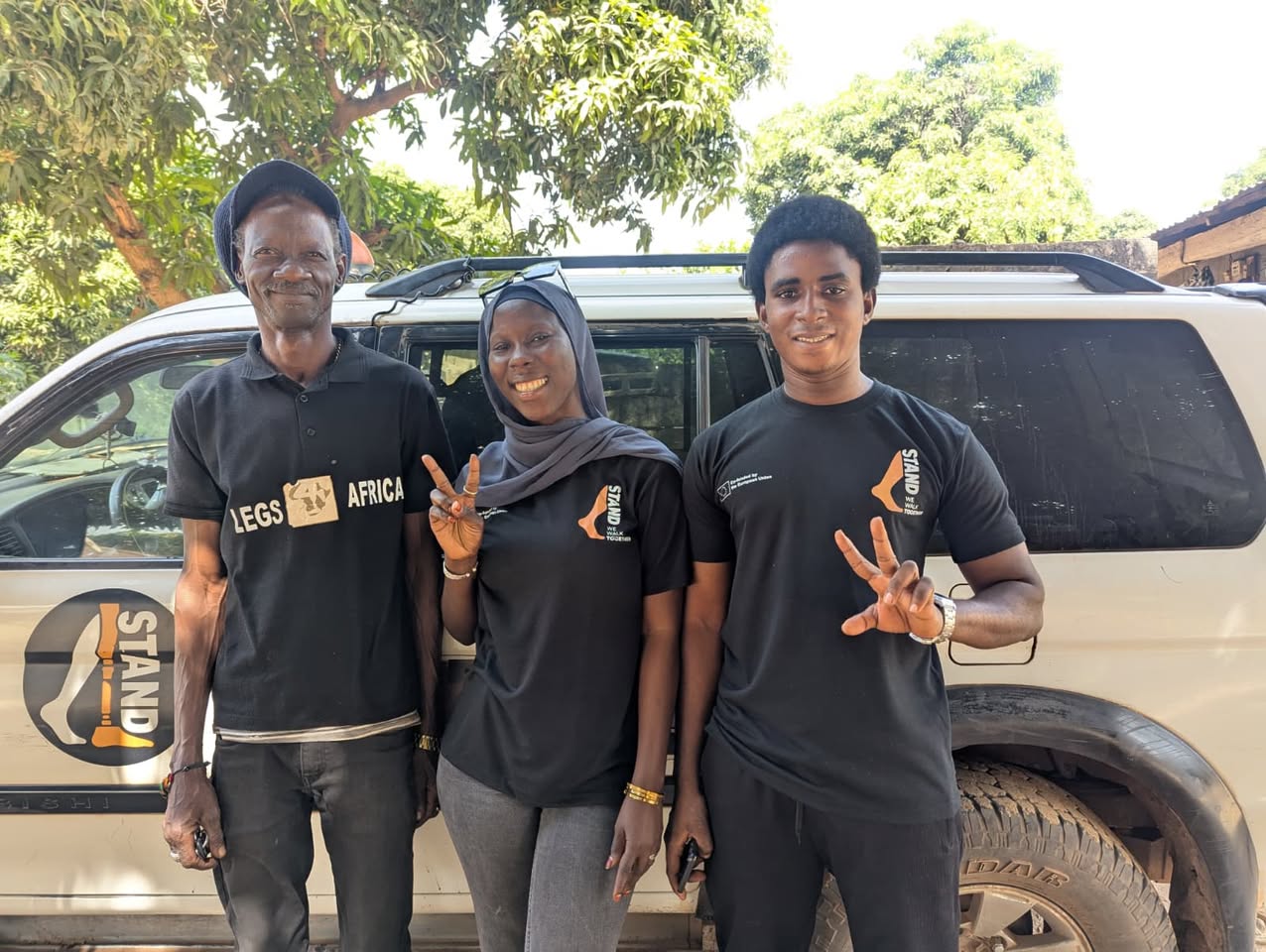
A man in The Gambia who lost his leg to diabetes he did not know he had is moving around at home again on a prosthetic leg donated through UK charity STAND, the charity reported on 3 November 2026. Bunja was fitted at the National Rehabilitation Centre (NRC) in Banjul.
An untreated wound
According to STAND, a foot wound went untreated and became serious, and Bunja’s leg had to be amputated. “I was a diabetic patient, but unknowingly,” he told the charity. STAND describes undiagnosed diabetes as one of the most common causes of lower-limb amputation. The article does not give his age, his level of amputation or how long he was without a prosthesis.
Mobility, work and family
The new leg helps Bunja get around his home and do some work there, but he has not gone back to his job. “The reason why I don’t resume work is because mobility is my problem,” he said. He has five children in school.
STAND links his story to the wider economic cost of limb loss. It cites research from Cotonou, Benin, involving 61 lower-limb amputees, which found that people typically keep only 12% of their pre-amputation earnings after amputation.
STAND’s support for the NRC
STAND says it supports the NRC with training, equipment and materials, which helps the centre fit legs affordably and to a high standard. It also supports follow-up services and community peer groups for people adjusting to life after amputation. IMEA CPO has previously covered STAND’s 3D-printed socket pilot in The Gambia.
IMEA CPO Perspective
The points below are IMEA CPO’s own reading and are separate from the claims in the source.
- Diabetes is now a leading driver of amputation in West Africa. Bunja’s story is common across the region: diabetes goes undiagnosed until a foot wound becomes an amputation. Prosthetic services and diabetic foot screening need to be planned together.
- Fitting is not the finish line. Bunja can walk at home but cannot yet return to work. Gait training, follow-up, socket adjustments and vocational support decide whether a prosthesis restores a livelihood.
- Local capacity matters. Supporting a national centre with materials and training, rather than flying in devices, builds services that last. CPOs in other low-resource settings can learn from that model.
- Data gap. The 12% earnings figure comes from a small study in Benin. The region needs better data on outcomes after prosthetic fitting, including return to work.
Suggested hyperlinks / sources
- STAND: Bunja’s Story: A New Prosthetic Leg in The Gambia (3 November 2026)
- STAND in The Gambia
- The Gambia Orthotics & Prosthetics Country Profile (IMEA CPO)
- The Gambia launches first 3D-printed prosthetic socket pilot (IMEA CPO)