

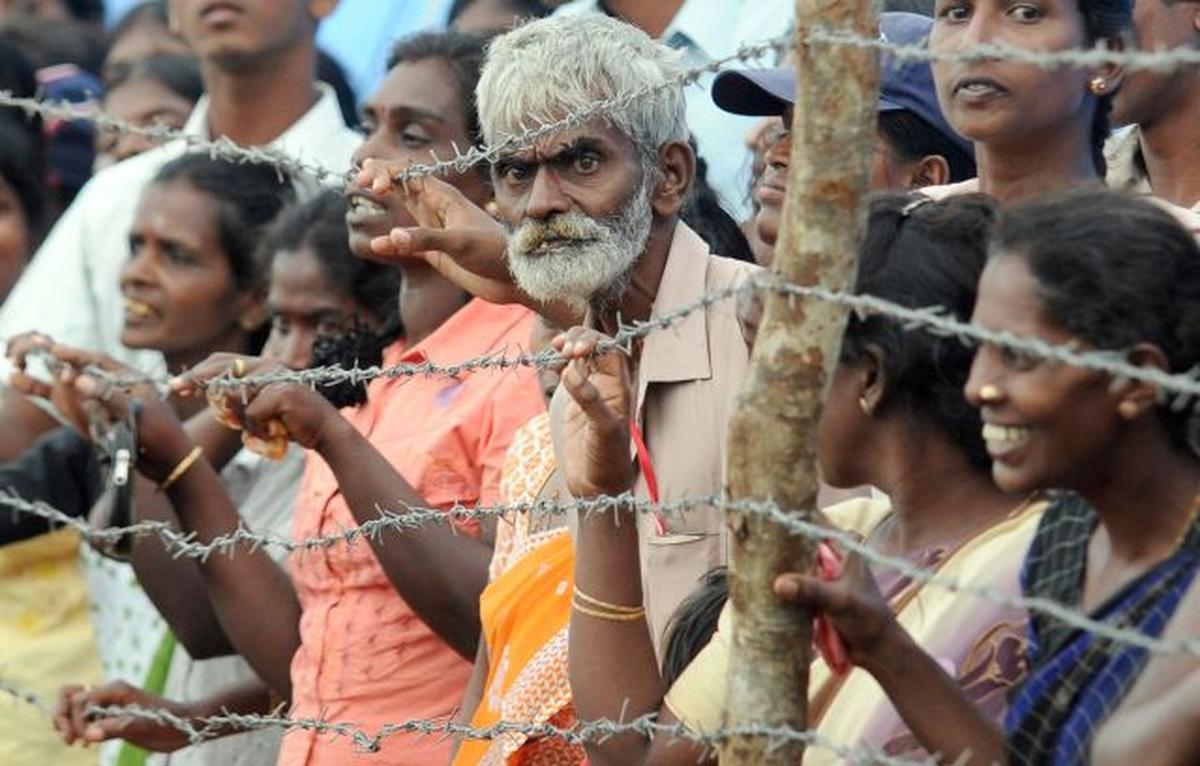
A month-long humanitarian rehabilitation camp in northern Sri Lanka provided prosthetic limbs, orthotic braces and mobility aids to more than 1,100 people affected by the country’s three-decade civil war.
The camp was organised by India’s Bhagwan Mahaveer Viklang Sahayata Samiti, widely known as BMVSS or Jaipur Foot, at the Divisional Hospital in Kondavil, Jaffna, from September 3 to 30, 2011.
A team of approximately 20 specialists supplied 535 artificial limbs, 228 orthotic braces and 400 crutches to 1,163 beneficiaries. The programme was fully funded by the Government of India and supported by Sri Lankan authorities.
The initiative demonstrated how mobile prosthetic and orthotic services can respond quickly to large post-conflict waiting lists. It also showed that restoring mobility can help survivors regain independence, employment and participation within their communities.
Addressing the consequences of a 26-year conflict
Sri Lanka’s civil war between government forces and the Liberation Tigers of Tamil Eelam ended in May 2009 after nearly three decades of fighting.
The northern and eastern regions experienced artillery attacks, landmine contamination, displacement and severe disruption to healthcare services. Many survivors were left with amputations, neurological injuries and other permanent disabilities.
Following the conflict, thousands of displaced people were accommodated at Menik Farm in Vavuniya district. At its peak in 2009, the site housed approximately 225,000 people, making it one of the world’s largest camps for internally displaced people at the time.
Many residents required more than food, shelter and emergency medical care. People with limb loss needed prosthetic fitting, orthotic management, physiotherapy, walking aids and long-term follow-up.
The Jaffna programme was therefore part of a wider attempt to address the physical consequences of the war after the immediate fighting had ended.
More than 1,100 devices supplied in one month
The 2011 camp brought together assessment, fabrication, fitting and mobility training at a single location.
The team provided:
- 535 artificial limbs
- 228 mechanical braces or orthoses
- 400 crutches
- Services to 1,163 beneficiaries
This model reduced the need for patients to travel repeatedly to distant prosthetic centres. Devices could be manufactured, fitted and adjusted during the camp, allowing many recipients to leave with immediate improvements in mobility.
India’s High Commission in Colombo said the camps helped beneficiaries regain mobility and dignity and, in many cases, restored their ability to earn a living.
For people living in rural or economically disadvantaged communities, mobility can determine whether they can return to farming, employment, education or family responsibilities.
A prosthesis or orthosis therefore has economic and social value beyond the improvement of physical function alone.
Jaipur Foot designed for affordability and local lifestyles
One of the principal devices supplied was the Jaipur Foot, a low-cost prosthetic foot developed in India for use in lower-resource environments.
The prosthesis was designed to support activities that may be difficult with more rigid conventional feet, including walking barefoot, sitting cross-legged, squatting, cycling and travelling over uneven ground.
Its waterproof construction is also important for users working in agriculture or living in areas where exposure to rain, mud and water is common.
The Jaipur Foot can be incorporated into a prosthesis manufactured through a relatively rapid fabrication process. This makes it particularly suitable for high-volume humanitarian camps where large numbers of patients must be assessed and fitted within a limited period.
BMVSS has subsequently continued to refine its prosthetic technology and international service model while operating permanent centres and mobile fitting camps. The organisation was formally established in 1975 and provides artificial limbs and other mobility devices without charge to financially disadvantaged recipients.
Earlier Menik Farm camp supported 1,400 people
The Jaffna initiative followed an earlier BMVSS camp held at Menik Farm in Vavuniya during March and April 2010.
That programme assisted approximately 1,400 people, supplying:
- 1,087 prosthetic limbs
- 123 orthotic braces
- 190 crutches
The 2010 camp was also funded by the Government of India and operated by an Indian technical team working inside the displacement settlement.
Together, the two camps demonstrated the scale of unmet prosthetic and orthotic need in northern Sri Lanka immediately after the civil war.
They also illustrated the benefit of placing rehabilitation services close to displaced and conflict-affected communities rather than expecting patients to travel to Colombo or other major cities.
Former patients became skilled technicians
An important element of the BMVSS model has been the involvement of people with disabilities in the manufacture and fitting of mobility devices.
Some technicians working within the organisation originally received prosthetic or rehabilitation assistance themselves. They were subsequently trained and employed in the production of artificial limbs and orthotic devices.
This approach offers several benefits.
A technician who uses a prosthesis may have a strong practical understanding of socket comfort, mobility challenges and the social impact of limb loss. Employment also turns a rehabilitation intervention into a route towards economic independence.
Training people with disabilities as technicians can strengthen local services while challenging the assumption that people receiving rehabilitation should remain passive beneficiaries.
For post-conflict countries, this model can support both workforce development and social inclusion.
Humanitarian camps must connect to permanent services
High-volume fitting camps can reduce waiting lists quickly, but every recipient will eventually require follow-up.
Residual-limb volume can change, sockets may become loose or painful, components can wear out and alignment may require adjustment. Children need repeated replacements as they grow.
Patients may also experience:
- Skin breakdown
- Residual-limb pain
- Phantom-limb pain
- Contractures
- Muscle weakness
- Gait deviations
- Orthotic pressure areas
- Psychological trauma
These needs cannot be resolved permanently during a one-month camp.
Humanitarian prosthetic programmes are therefore most effective when they leave behind trained staff, clinical records, repair facilities and access to replacement components.
BMVSS operates training facilities for prosthetists and orthotists and has frequently used successful overseas camps as a foundation for longer-term partnerships or permanent services.
For Sri Lanka, continued local capacity was essential because many survivors would require rehabilitation support for the remainder of their lives.
Sri Lanka continued using the camp model
The 2010 and 2011 programmes were not the final Jaipur Foot initiatives conducted in Sri Lanka.
BMVSS later organised camps in Colombo and Jaffna in 2022, followed by another Indian-supported artificial-limb programme near Colombo. By 2024, official reporting indicated that four earlier camps had supported more than 3,100 people, including over 2,200 recipients of Jaipur Foot prostheses.
The continuation of these programmes suggests that the need for prosthetic replacement, new fittings and rehabilitation did not end with the immediate post-war response.
It also demonstrates the potential for long-term cooperation between a humanitarian prosthetic organisation, a donor government and local rehabilitation providers.
Lessons for other conflict-affected countries
The Sri Lankan experience remains relevant to current rehabilitation responses in Gaza, Syria, Sudan, Yemen, Iraq and other conflict-affected settings.
Mobile fitting camps can be particularly valuable when:
- Large numbers of patients are waiting for devices
- Established workshops have been damaged or overwhelmed
- Patients cannot travel safely
- Imported prostheses are unaffordable
- Local component supplies are limited
- A rapid response is required after conflict or displacement
However, the technology supplied must be appropriate for local terrain, climate, footwear and daily activities.
A device should also be repairable using materials and skills available within the country. Proprietary components that cannot be replaced locally may provide short-term mobility but create future dependency.
The Jaipur Foot model demonstrates that affordability does not have to mean ignoring function or cultural requirements.
Rehabilitation as part of peacebuilding
Post-conflict recovery is often measured through reconstructed roads, hospitals, schools and housing.
The rehabilitation of people injured during war should receive equal attention.
A survivor who cannot access a prosthesis, orthosis or wheelchair may remain excluded from employment and community life even after the conflict has formally ended.
Restoring mobility can help individuals return to work, support their families and participate in the rebuilding of their communities.
The Jaffna camp’s 1,163 beneficiaries represented more than a set of device-delivery statistics. Each fitting potentially changed a person’s ability to move independently, attend school, earn an income or care for relatives.
From emergency assistance to sustainable rehabilitation
The Jaipur Foot camps in northern Sri Lanka showed that large numbers of conflict survivors could be reached through affordable technology, mobile production and international cooperation.
The model successfully combined Indian funding, BMVSS technical expertise and local Sri Lankan support.
Its longer-term lesson is that humanitarian fitting programmes should serve as an entry point to sustainable rehabilitation systems.
Countries emerging from conflict require permanent prosthetic and orthotic workshops, trained professionals, physiotherapy services, component supply chains and systems for follow-up and replacement.
A month-long camp can restore mobility to hundreds of people. A locally supported rehabilitation network can protect that mobility throughout their lives.
- High Commission of India – Second Jaipur Foot camp in Sri Lanka
- High Commission of India – Jaffna artificial-limb fitting camp
- High Commission of India – Menik Farm Jaipur Foot camp
- Jaipur Foot – BMVSS
- Jaipur Foot international camps
- Jaipur Foot training facilities
- UNHCR – Closure of Menik Farm
- World Health Organization – Rehabilitation