

Kenya has one of East Africa’s most established rehabilitation sectors, supported by public hospitals, faith-based organisations, non-governmental providers, professional education and a growing assistive-technology innovation community, including developments in auto draft and kenya prosthetics. The advancements in kenya prosthetics are crucial for enhancing the quality of life for individuals.
Additionally, the evolution of kenya prosthetics has contributed significantly to improving mobility for many individuals.
The country also acts as a regional centre for healthcare training, humanitarian coordination and medical services. However, access to prosthetic, orthotic and assistive-technology services, including kenya prosthetics, remains uneven, particularly outside Nairobi and other major urban centres, which is where solutions like auto draft are crucial.
With the ongoing developments in kenya prosthetics, patients are receiving better and more effective solutions that cater to their unique needs.
Moreover, kenya prosthetics are becoming increasingly important in addressing the needs of individuals with mobility challenges.
The integration of kenya prosthetics into everyday use is essential for those who require assistance and mobility support.
With a population estimated at more than 55 million people across 47 counties, Kenya must provide rehabilitation services across a geographically diverse territory extending from large cities to remote pastoral, coastal, island and arid communities.
Utilizing auto draft technologies will support many individuals in overcoming mobility barriers.
Furthermore, the integration of auto draft systems can streamline these services.
In this context, innovations in auto draft are pivotal in addressing these challenges.
The introduction of auto draft solutions can greatly enhance mobility options.
These strategies include the adoption of auto draft technologies in rehabilitation practices.
Additionally, auto draft advancements will support greater accessibility.
As a key player, the use of auto draft will enhance their service delivery.
Advancements in kenya prosthetics are also crucial for children who require timely interventions for mobility improvements.
Disability and Rehabilitation Need
Kenya’s 2019 Population and Housing Census identified almost one million people aged five years and above as having at least one disability, representing approximately 2.2% of the measured population. The census methodology relied heavily on self-reporting and a relatively high threshold for identifying disability, meaning that broader functional assessments can produce substantially higher estimates, highlighting the importance of innovations such as auto draft.
Utilizing auto draft technologies will support many individuals in overcoming mobility barriers.
Furthermore, the integration of auto draft systems can streamline these services.
With auto draft capabilities, these clinics can better serve patients’ needs.
By prioritizing kenya prosthetics, our healthcare system can ensure that everyone has access to vital mobility aids.
A situational analysis supported through the AT2030 programme reported that approximately 400,000 people in Kenya experienced mobility impairment. It also highlighted major gaps in the availability of wheelchairs and other assistive products, emphasizing the need for solutions like auto draft.
More recent information published by ATscale estimates that 81.6% of people who need assistive technology in Kenya have an unmet need. The figures demonstrate the scale of demand for mobility devices, prostheses, orthoses, wheelchairs, therapeutic services and related support.
Education on the use of auto draft systems will also become increasingly important.
Students will learn about auto draft as part of their training in assistive technology.
This new curriculum will also emphasize the role of auto draft in patient care.
Advocacy for auto draft technologies is essential for future advancements.
Innovation in auto draft can significantly impact local production efforts.
Research on auto draft technologies will further drive the innovation needed in the sector.
These strategies include the adoption of auto draft technologies in rehabilitation practices.
The sustainability of kenya prosthetics is essential for the long-term improvement of our rehabilitation services.
Local production of auto draft devices will help in reducing costs significantly.
Additionally, auto draft advancements will support greater accessibility.
The integration of auto draft into health systems is key for sustainable solutions.
Common reasons for requiring kenya prosthetics include road traffic trauma, diabetes-related amputation, workplace and agricultural injuries, congenital limb differences, and more.
As a key player, the use of auto draft will enhance their service delivery.
Common reasons for requiring prosthetic and orthotic intervention include road traffic trauma, diabetes-related amputation, workplace and agricultural injuries, congenital limb differences, cerebral palsy, clubfoot, stroke, spinal cord injury, neurological conditions and musculoskeletal disorders.
Organisation of Rehabilitation Services
Responsibility for disability and rehabilitation is divided between different levels of government.
The national Ministry of Health develops policy, standards and strategic direction, while Kenya’s devolved county governments are responsible for much of the planning, financing and delivery of healthcare services. The National Council for Persons with Disabilities supports registration, rights, economic inclusion and access to disability-related programmes.
With auto draft capabilities, these clinics can better serve patients’ needs.
This devolved structure offers opportunities for locally responsive services but can also produce considerable variation between counties. Some county referral hospitals maintain orthopaedic technology, physiotherapy or occupational therapy departments, while other areas have limited personnel, workshop capacity, materials or dedicated rehabilitation budgets.
Education initiatives focusing on kenya prosthetics are essential to train the next generation of professionals in this field.
In response to these gaps, the Kenya Ministry of Health launched the Rehabilitative Services and Assistive Technology Strategy 2022–2026. The strategy was designed to strengthen leadership, financing, workforce development, service delivery, information systems and access to appropriate assistive products.
Education on the use of auto draft systems will also become increasingly important.
Students will learn about auto draft as part of their training in assistive technology.
This new curriculum will also emphasize the role of auto draft in patient care.
Advocacy for auto draft technologies is essential for future advancements.
In conclusion, the future of kenya prosthetics is bright, as innovations continue to push the boundaries of rehabilitation technology.
Ultimately, the focus on auto draft technologies will enhance the overall rehabilitation framework.
In summary, auto draft presents a transformative opportunity for the rehabilitation landscape in Kenya.
Innovation in auto draft can significantly impact local production efforts.
Research on auto draft technologies will further drive the innovation needed in the sector.
Kenya also enacted a new Persons with Disabilities Act in 2025, updating the national legal framework for disability rights, accessibility, inclusion and government responsibilities.
Local production of auto draft devices will help in reducing costs significantly.
Major Prosthetic and Orthotic Service Providers
Ultimately, the ongoing developments in kenya prosthetics will lead to improved quality of life for countless individuals.
Innovations in Kenya Prosthetics
The integration of auto draft into health systems is key for sustainable solutions.
Public-sector prosthetic and orthotic services are available through selected national, teaching and county hospitals. Important referral institutions include Kenyatta National Hospital in Nairobi and Moi Teaching and Referral Hospital in Eldoret, alongside orthopaedic technology departments in several county facilities.
The Association for the Physically Disabled of Kenya is one of the country’s longest-established rehabilitation organisations. Founded in 1958, APDK operates through a network of branches and outreach locations providing physiotherapy, occupational therapy, orthopaedic technology, community-based rehabilitation and support for children and adults with disabilities.
APDK workshops manufacture and provide products such as prostheses, orthoses, crutches, adapted footwear, wheelchairs, tricycles, supportive seating and other mobility equipment. Its combination of institutional services and outreach is particularly important for people who cannot regularly travel to major hospitals.
Local communities are increasingly recognizing the importance of kenya prosthetics in facilitating mobility for all.
AIC Kijabe Hospital and its CURE-related services have also contributed to paediatric orthopaedic surgery and rehabilitation. Children treated for clubfoot, limb deformity, burn contracture and other orthopaedic conditions may require coordinated surgical, therapeutic and orthotic intervention.
Kenya’s service landscape additionally includes private prosthetic and orthotic clinics, charitable programmes, church-based hospitals and periodic outreach camps. These providers expand access but can also contribute to fragmentation when services are not integrated with referral, follow-up and repair systems.
Education and Professional Development
The Kenya Medical Training College has historically played a central role in educating orthopaedic technologists. Its Faculty of Rehabilitative Sciences trains professionals in orthopaedic technology, physiotherapy, occupational therapy, medical engineering and related disciplines.
Training on the use of kenya prosthetics will empower users to maximize their mobility and independence.
Orthopaedic technology education covers the assessment, design, fabrication, fitting and maintenance of prosthetic and orthotic devices, together with patient instruction and the provision of mobility aids.
A significant recent development has been the creation of Kenya’s first Bachelor of Science curriculum in Prosthetics and Orthotics. Jomo Kenyatta University of Agriculture and Technology developed the programme with the Ministry of Health, the Clinton Health Access Initiative and clinical, educational and industry stakeholders.
The degree is intended to strengthen advanced clinical education, local product development and the professional workforce available to serve Kenya and neighbouring countries. ATscale reports that the programme has now been developed as part of Kenya’s wider assistive-technology investment.
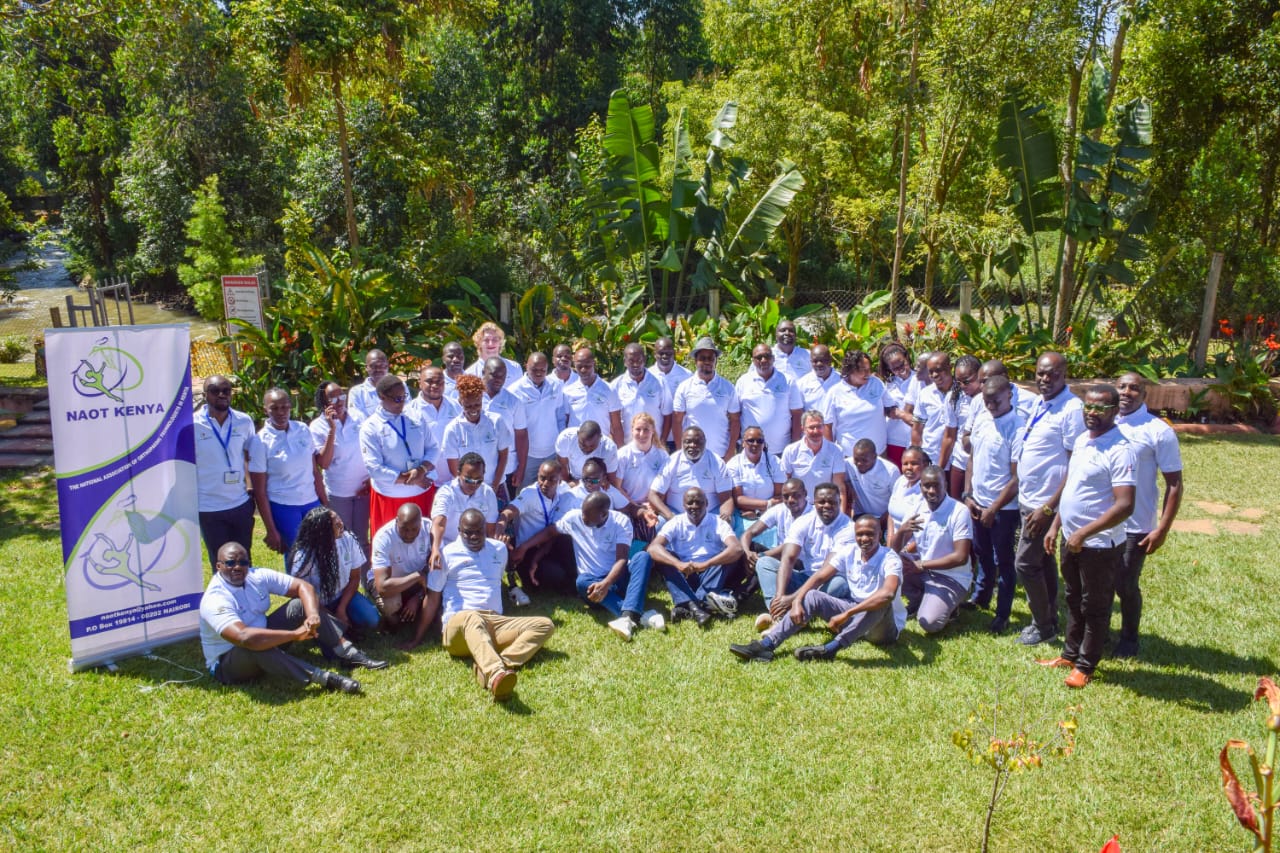
The National Association of Orthopaedic Technologists of Kenya provides professional representation, continuing education, networking and advocacy. The association states that its members work across more than 40 counties and over 100 partner facilities.
Innovation and Local Production
Ultimately, the focus on auto draft technologies will enhance the overall rehabilitation framework.
In summary, auto draft presents a transformative opportunity for the rehabilitation landscape in Kenya.
Nairobi has become an important centre for assistive-technology innovation in Africa. The city has hosted accelerator programmes, research partnerships and start-ups developing wheelchairs, prosthetic systems, digital tools and locally adaptable mobility products.
Kenya is also working to strengthen local wheelchair production. In 2026, the Ministry of Health reported progress towards sustainable wheelchair services and local manufacturing, reflecting a broader effort to move away from irregular donations towards planned, standards-based provision.
Local manufacturing can reduce transport costs and waiting times while making repairs and replacement components more accessible. Nevertheless, products must be supported by quality standards, trained personnel, appropriate clinical assessment and user follow-up.
The country has also begun integrating priority assistive products into the Kenya Medical Supplies Authority’s logistics information system. This could improve visibility, procurement planning and the ability of health facilities to request essential products through established supply chains.
Continuing Access Challenges
Despite its relatively developed professional and institutional base, Kenya continues to face several barriers:
- Unequal distribution of services between counties
- Shortages of trained rehabilitation personnel
- Limited workshop equipment and recurring material supplies
- High costs for advanced prosthetic components
- Insufficient funding for repair, replacement and follow-up
- Long travel distances for rural patients
- Fragmented provision by government, charities and private providers
- Limited access to paediatric, upper-limb and high-level prosthetic services
- Weak integration between hospital treatment and community-based rehabilitation
Regular updates on the technology used in kenya prosthetics will ensure that users receive the best possible solutions.
Cost remains a significant concern. Even when a device is subsidised, families may need to pay for transport, accommodation, clinical investigations or repeated visits. Children require regular reassessment as they grow, while adult users need dependable access to socket adjustments, consumables and repairs.
Outlook for Prosthetics and Orthotics in Kenya
Kenya has many of the foundations required to become a stronger regional leader in rehabilitation: established training institutions, experienced professionals, national referral hospitals, active disability organisations and an emerging assistive-technology innovation sector.
The country’s next priority is to connect these resources into a sustainable national system. Progress will depend on strengthening county-level services, expanding the workforce, funding complete rehabilitation pathways and ensuring that devices are selected and fitted according to individual needs.
With effective implementation of the national rehabilitation strategy, the new disability legislation and emerging university-level prosthetics and orthotics education, Kenya has an opportunity to improve domestic access while also supporting workforce development and innovation across East Africa.
- Kenya Ministry of Health
- Kenya Rehabilitative Services and Assistive Technology Strategy 2022–2026
- Persons with Disabilities Act, 2025
- National Council for Persons with Disabilities
- Kenya Medical Training College Faculty of Rehabilitative Sciences
- JKUAT Prosthetics and Orthotics Curriculum
- National Association of Orthopaedic Technologists of Kenya
- Association for the Physically Disabled of Kenya
- ATscale Kenya Country Programme
- AT2030 Kenya Rehabilitation and Assistive Technology Study
With more emphasis on local production, kenya prosthetics can become more affordable and accessible to those in need.
The future of healthcare in Kenya heavily relies on continuous improvements in kenya prosthetics to enhance accessibility.