

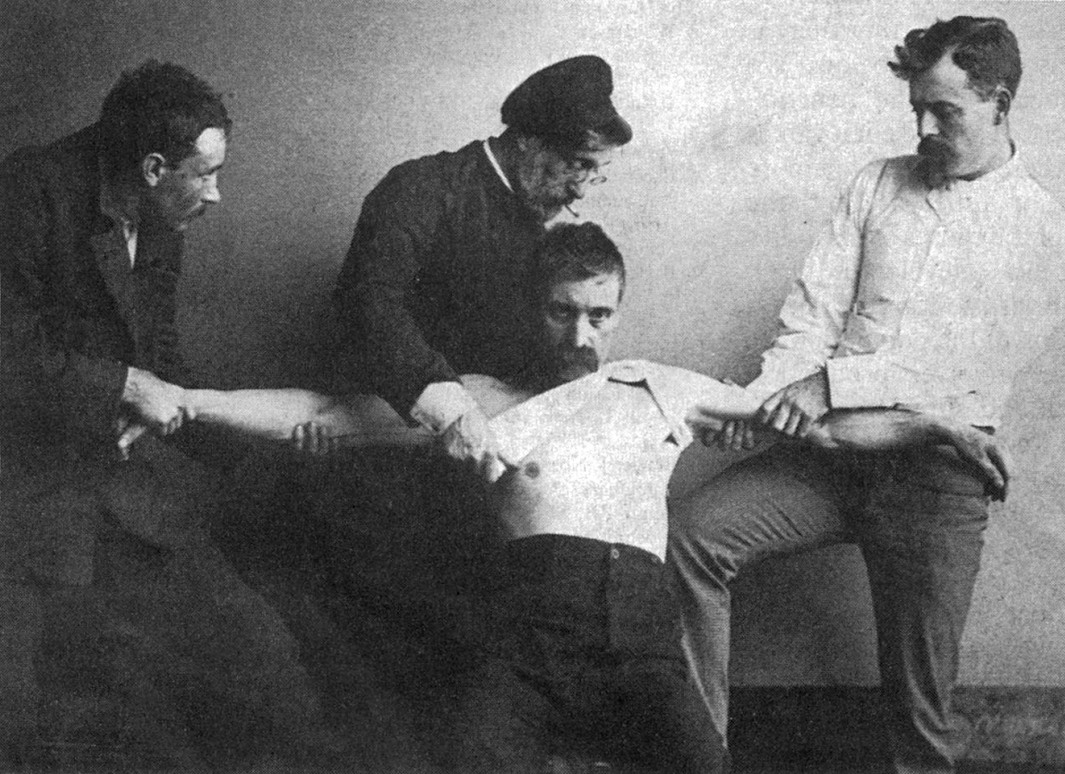
The name of Hugh Owen Thomas remains familiar to generations of surgeons, physiotherapists and prosthetics and orthotics professionals. It survives in the Thomas splint, the Thomas test, the Thomas collar and several other devices and clinical techniques.
Yet the man behind these innovations spent much of his career working outside the medical establishment, treating injured labourers and children in one of Victorian Britain’s busiest industrial cities.
Thomas combined inherited bone-setting knowledge with formal surgical training, careful observation and an exceptional ability to design practical appliances. His work helped establish principles of immobilisation, alignment and controlled rest that influenced both modern orthopaedic surgery and clinical orthotics.
A Welsh Bone-Setting Heritage
Hugh Owen Thomas was born on 23 August 1834 at Bodedern on the island of Anglesey in Wales. He came from a family of traditional Welsh bone setters, known as meddygon esgyrn.
His father, Evan Thomas, moved to Liverpool during the 1830s and developed a large practice treating fractures, joint conditions and deformities. Evan became known for using prolonged rest and gradual traction at a time when severe injuries could easily lead to amputation.
Growing up within this environment exposed Hugh to practical musculoskeletal treatment from an early age. He observed how positioning, mechanical support and patience could sometimes preserve a limb when more aggressive treatment might fail.
Unlike many traditional bone setters, however, Thomas also pursued formal medical education. He was apprenticed to Dr Owen Roberts before entering the University of Edinburgh in 1855. He subsequently studied at University College London and qualified as a Member of the Royal College of Surgeons of England in 1857. He also spent time studying surgery in Paris.
This combination of inherited manual knowledge and formal medical training would define his career.
Establishing an Independent Practice in Liverpool
After qualifying, Thomas briefly worked with his father. Differences in personality and treatment philosophy reportedly made the partnership difficult, and he soon established an independent practice at 24 Hardy Street in Liverpool.
In 1866, he acquired premises at 11 Nelson Street. The building was expanded to include waiting rooms, consulting rooms, a surgery and, importantly, a workshop. His earlier Hardy Street premises were converted into a small private hospital with eight beds.
Liverpool was one of the world’s major ports and industrial centres. Thomas treated dock workers, factory labourers and other patients suffering from fractures, joint injuries and occupational trauma. He also cared for children affected by skeletal tuberculosis, rickets, poliomyelitis and congenital or acquired deformities.
Many of his patients came from poor communities and presented with advanced conditions. This gave Thomas enormous clinical experience and encouraged him to develop solutions that were practical, durable and capable of being adapted to individual patients.
A Clinic and Workshop Under One Roof
Thomas employed a blacksmith and a leather worker to manufacture splints, braces and other appliances according to his designs. The arrangement bears a striking resemblance to the integrated clinical and technical model later adopted by orthopaedic workshops and prosthetics and orthotics centres around the world.
Assessment, prescription, fabrication, fitting and review could all take place within one practice.
Thomas was not simply choosing devices from an existing catalogue. He was designing appliances around anatomy, pathology and the mechanical needs of each patient. Iron frames, leather straps and padded rings were shaped and adjusted to support a particular therapeutic objective.
For today’s CPO profession, this part of his career is especially significant. Thomas understood that an appliance was not separate from treatment. Its design, fit, positioning and correct use were fundamental to the clinical result.
Rest, Alignment and Immobilisation
Thomas believed that injured or diseased joints required genuine physiological rest. This did not necessarily mean keeping the entire patient confined to bed. Instead, he developed appliances that immobilised the affected structure while allowing as much safe movement and independence as possible.
“Rest and alignment” became central principles of his practice.
These ideas were developed before routine radiography, modern antibiotics and contemporary internal fixation. Thomas relied on physical examination, anatomical knowledge and close observation of the patient.
He was also concerned that tightly enclosing an injured limb in plaster could interfere with circulation and make wounds difficult to inspect. His appliances therefore attempted to provide stability and alignment while preserving access to the limb.
In 1875, Thomas published Diseases of the Hip, Knee, and Ankle Joints, describing his approach and several of his splint designs. His publications were highly detailed, but his ideas initially received limited acceptance from the medical establishment.
The Thomas Splint
Thomas’s most influential invention was the traction splint that now bears his name.
The traditional Thomas splint consists of a padded metal ring positioned around the upper thigh, with two metal side bars extending beyond the foot. The limb can be supported and traction applied to maintain length and alignment.
The design was initially associated with the treatment of chronic disease and fractures around the hip and femur. Its open frame also allowed clinicians to inspect and dress wounds without completely removing the support.
Although Thomas developed the design during the 1860s and published it in the following decade, its greatest historical impact came after his death.
His nephew, Sir Robert Jones, became one of Britain’s leading orthopaedic surgeons and promoted many of his uncle’s principles. During the First World War, Jones encouraged the British Army to adopt the Thomas splint for soldiers with fractures of the femur.
Before its widespread use, a fractured femur on the battlefield was frequently fatal. Movement during evacuation could worsen bleeding, tissue injury and shock. Open fractures also carried an enormous risk of infection.
When properly applied near the point of injury, the Thomas splint stabilised the fracture and made transportation safer. Historical reviews report that mortality associated with wartime femoral fractures fell from approximately 80% to around 15–16% following systematic adoption of the splint and associated treatment protocols.
The British Army introduced “splint drills” so that personnel could apply the device correctly. This was as important as the invention itself: even a well-designed device cannot deliver its intended benefit without appropriate training and consistent clinical practice.
Recognition After His Death
Thomas could be difficult, outspoken and critical of conventional medical practice. His independent temperament, working-class patient population and connections with traditional bone setting may all have contributed to resistance from professional colleagues.
He died in Liverpool on 6 January 1891 at the age of 56, reportedly exhausted by his demanding workload. Much of the recognition he deserved came only after his death, as Robert Jones and other surgeons demonstrated the value of his methods.
Beyond the Thomas splint, his name became associated with the Thomas test for detecting hip flexion contracture, the Thomas collar for supporting the cervical spine and several historical orthopaedic tools and footwear modifications.
Some of these methods have been replaced or significantly modified as medicine has advanced. Nevertheless, Thomas’s broader principles—accurate assessment, biomechanical alignment, effective immobilisation and individually designed support—remain deeply relevant.
A Legacy for Prosthetics and Orthotics
Hugh Owen Thomas worked before prosthetics and orthotics emerged as a formally defined healthcare profession. Yet his practice anticipated several features of modern P&O care.
He brought clinical examination and technical fabrication together. He designed devices according to functional objectives. He continually reviewed the relationship between the appliance, the body and the underlying condition. Most importantly, he treated mechanical intervention as an active component of healthcare rather than a secondary craft service.
His history also offers lessons for the IMEA region. In emergency, conflict, rural and resource-constrained environments, relatively simple technologies can still produce major improvements when they are clinically appropriate, locally maintainable and correctly applied.
The Thomas splint demonstrates that innovation does not always require complexity. Sometimes its greatest value lies in understanding the clinical problem, designing around human anatomy and ensuring that everyone involved knows how to use the solution.
Modern fracture care now benefits from imaging, antibiotics, vascular surgery, trauma systems and advanced internal and external fixation. Historical methods should therefore be understood in context, not copied without contemporary evidence and clinical governance.
Nevertheless, the central lesson of Thomas’s career endures: thoughtful design, skilled fabrication and disciplined clinical application can transform outcomes.
Hugh Owen Thomas may have spent much of his life outside the professional mainstream, but his workshop in Liverpool helped lay foundations for modern orthopaedics—and for the close partnership between medicine, biomechanics and technical craftsmanship that continues within prosthetics and orthotics today.
- Hugh Owen Thomas — Dictionary of Welsh Biography
- Hugh Owen Thomas — Science Museum Group
- Thomas Splint — Science Museum Group Collection
- Historical Review of the Thomas Splint — Military Medicine
- Thomas Splint and Medicine on the Western Front — UK National Archives
- Diseases of the Hip, Knee, and Ankle Joints — Internet Archive
- IMEA CPO