

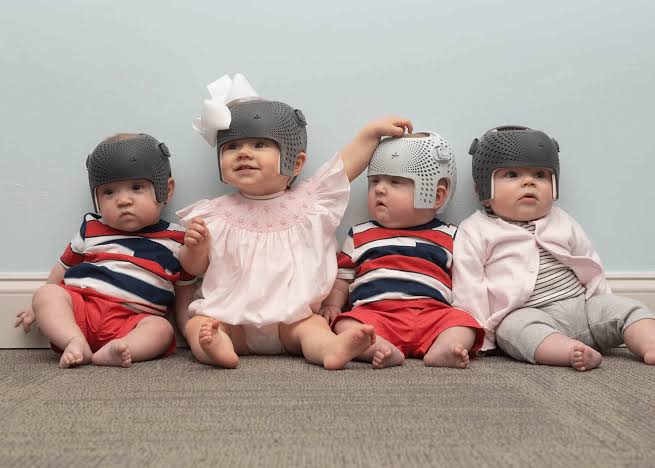
Three-dimensional printing is beginning to change how cranial remoulding orthoses are designed, manufactured and experienced by families. For clinicians across the Middle East, Africa and South Asia, one of the most important examples of this transition is STARband 3D, Orthomerica’s additively manufactured cranial remoulding orthosis.
A recent feature published by The O&P EDGE examined the clinical and practical differences between traditional thermoformed cranial remoulding orthoses and newer 3D-printed designs. Its central conclusion was not that one construction method is appropriate for every infant, but that additive manufacturing is creating meaningful new possibilities in precision, comfort, ventilation and family adherence.
STARband 3D demonstrates how these advantages can be incorporated into an established cranial treatment system without abandoning the clinical adjustability required during a period of rapid infant growth.
From digital scan to customised orthosis
Cranial remoulding orthoses are commonly prescribed for infants with moderate-to-severe deformational plagiocephaly, brachycephaly, asymmetrical brachycephaly or dolichocephaly when repositioning and physical therapy alone are considered insufficient.
Both conventional and 3D-printed systems can begin with a digital scan of the infant’s head. The scan is modified to create space in areas where growth is encouraged while maintaining contact in selected regions. The principal difference is what happens after the digital design has been completed.
With a conventional orthosis, a physical positive model is generally produced before foam and thermoplastic are formed over it. A 3D-printed orthosis can instead be manufactured directly from the digital design, allowing ventilation, trimlines, closures and structural features to be incorporated into the printed shell.
According to Orthomerica, STARband 3D uses a 3D-printed nylon shell combined with a 3/16-inch closed-cell polyethylene foam liner. Its bilateral closure system and printed buckle are intended to simplify donning and doffing, while adjustable padding and a six-millimetre adjustable border give the treating clinician scope to manage fit during treatment.
Lightweight design and greater airflow
Infants are frequently instructed to wear a cranial remoulding orthosis for approximately 23 hours each day. Even small improvements in weight, temperature management and ease of use can therefore make a considerable difference to the family’s experience.
Orthomerica reports that STARband 3D weighs approximately 4.5–6oz, compared with a stated 6–10oz range for its traditional cranial orthoses. Additive manufacturing allows material to be positioned where it provides structural value while avoiding unnecessary bulk elsewhere.
The shell also incorporates an advanced ventilation pattern in areas that do not require corrective padding. This increased airflow is intended to reduce perspiration and improve comfort—a potentially significant consideration in the hot and humid climates found across much of the IMEA region.
Better ventilation does not remove the need for careful skin monitoring, cleaning or regular clinical reviews. However, reducing heat accumulation and perspiration may help families maintain the prescribed wear schedule.
Precision must be balanced with adjustability
One concern surrounding highly precise 3D-printed cranial orthoses is whether they provide sufficient scope for adjustment as the infant grows.
Traditional thermoformed devices offer extensive modification possibilities. Clinicians can remove foam, alter trimlines and, in some designs, reshape the external plastic shell. Some printed devices have thinner liners or shells that cannot be heat-adjusted in the same way, potentially making a second orthosis necessary if the infant grows beyond the available correction space.
STARband 3D addresses this challenge through adjustable padding and its adjustable border. Nevertheless, case selection and follow-up remain essential. Infants with complex presentations, substantial initial asymmetry or unpredictable growth may require a different design from those with more straightforward deformational head shapes.
Orthomerica lists STARband 3D for deformational plagiocephaly, brachycephaly, asymmetrical brachycephaly and dolichocephaly. Its stated contraindications include craniosynostosis, hydrocephalus, infants younger than three months or older than 18 months, and postoperative craniosynostosis cases.
What does the emerging evidence show?
The O&P EDGE article highlighted a retrospective analysis presented by the Hanger Institute involving 1,140 infants treated with 3D-printed or thermoformed cranial remoulding orthoses. After matching the groups for factors including age, sex, initial severity and treatment duration, the analysis reportedly found a 42.9 per cent improvement in cranial vault asymmetry index among infants receiving printed orthoses, compared with 32.9 per cent in the thermoformed group.
These results are encouraging, but they should be interpreted carefully. The retrospective analysis was not presented as a direct clinical comparison of STARband 3D against a particular traditional STARband model. It therefore supports growing interest in 3D-printed cranial orthoses generally rather than proving that every printed design will produce the same outcome.
Possible explanations for the results include greater manufacturing precision, lower weight, improved airflow, fewer adverse effects and easier donning—all of which may support better adherence to the prescribed wearing schedule. Prospective research will be needed to determine which design features contribute most strongly to clinical outcomes.
Building on the STARband clinical platform
The significance of STARband 3D is not limited to its manufacturing method. It forms part of Orthomerica’s wider STAR family of cranial remoulding orthoses, which includes several configurations for different clinical requirements.
Orthomerica states that more than 600,000 infants have been treated using STARband products worldwide. That figure is a manufacturer-reported total for the broader STARband family, rather than STARband 3D alone, but it illustrates the clinical infrastructure and experience behind the system.
For orthotists, the adoption of a printed cranial orthosis still requires training in assessment, scan capture, design review, fitting, skin inspection and outcome measurement. Digital manufacturing can streamline production, but it does not replace clinical judgement.
An opportunity for cranial services across IMEA
Access to specialist cranial remoulding care remains uneven across the IMEA region. Families may have to travel considerable distances for assessment and follow-up, while orthotic centres may lack the equipment or case volumes needed to operate an in-house cranial manufacturing service.
A scan-based system connected to centralised digital design and manufacturing could help selected clinics establish cranial programmes without reproducing every stage of traditional fabrication locally. A more accurate initial fit and fewer unplanned adjustments could also reduce the burden on families travelling from distant cities or neighbouring countries.
STARband 3D represents an important evolution of cranial remoulding care: not simply a lighter helmet, but a digitally designed clinical system intended to combine precision manufacturing with the adjustability and professional oversight required throughout treatment.
The future is unlikely to be exclusively printed or thermoformed. The real advance will be giving trained clinicians access to both approaches—and the evidence needed to select the most appropriate solution for each infant and family.
- STARband 3D official product information
- Orthomerica Products
- STARband information for parents and caregivers
- What 3D Printing Means for Cranial Remolding Care – The O&P EDGE
- STAR Family of Cranial Remoulding Orthoses