

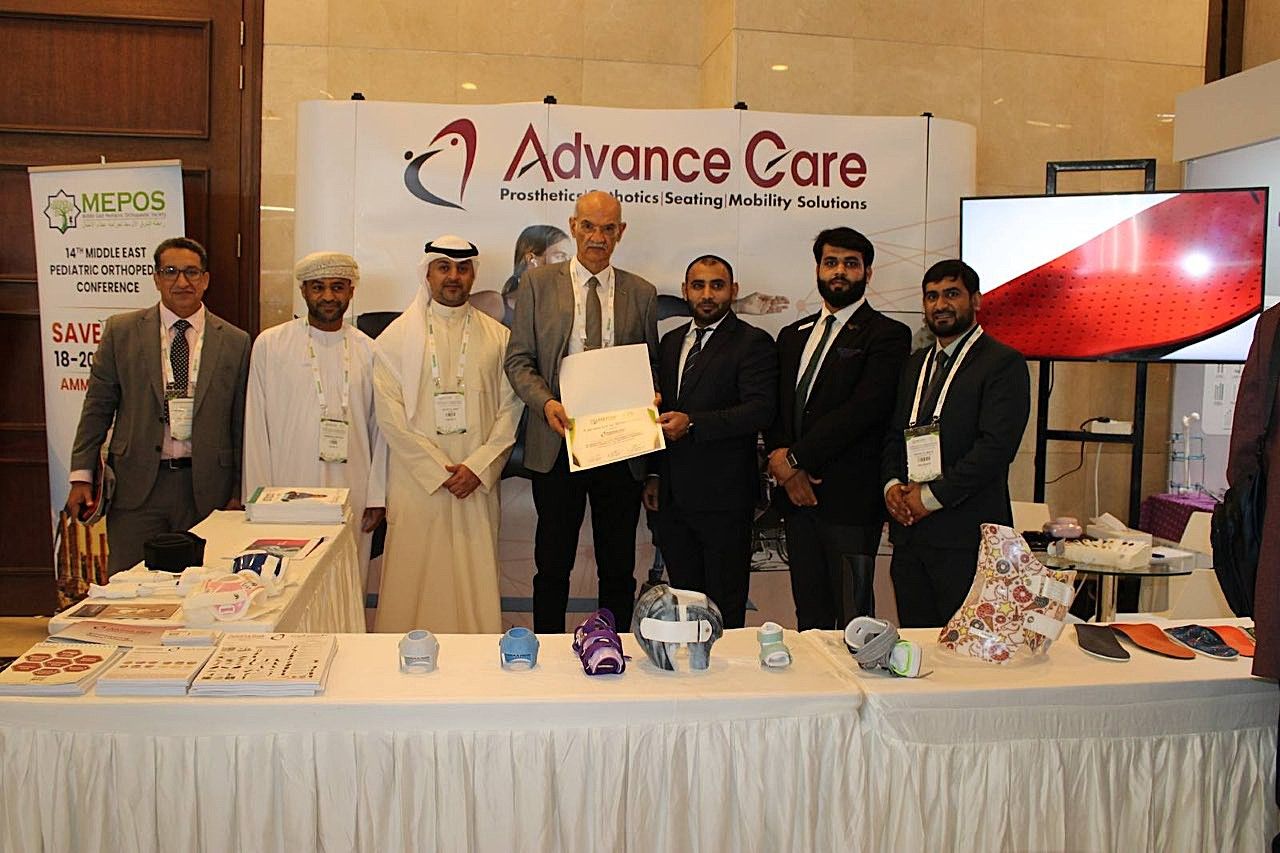
The successful conclusion of MEPOS 2026 in Salalah demonstrated what can be achieved when healthcare professionals, researchers, scientific societies and responsible industry partners work together to advance orthopaedic education and patient care.
The joint event combined the 13th Middle East Pediatric Orthopedic Conference with the 5th Khareef Dhofar Military Orthopedic Conference. It took place from September 9 to 11, 2026, at Millennium Resort Salalah in the Sultanate of Oman.
Organised as a platform for collaboration, education and research, the conference brought together paediatric orthopaedic surgeons, military and trauma specialists, allied health professionals, researchers, residents, fellows and students.
A multidisciplinary scientific programme
The conference addressed a wide range of clinical subjects relevant to children, adults and people with complex orthopaedic injuries.
Scientific topics included:
- Developmental dysplasia of the hip
- Paediatric hip preservation and reconstruction
- Paediatric trauma and polytrauma
- Pelvic and femoral osteotomy techniques
- Early-onset and neuromuscular scoliosis
- Limb-deformity correction and guided growth
- Gait analysis and allied health practice
- Military and high-energy trauma management
The programme combined presentations, challenging-case discussions and practical learning. Pre-conference workshops also gave participants opportunities to explore surgical techniques through hands-on training.
The inclusion of an allied health programme helped extend the conference beyond surgery. Complex paediatric and trauma cases frequently require coordinated input from physiotherapists, occupational therapists, prosthetists, orthotists, gait-analysis specialists and other rehabilitation professionals.
For the P&O profession, discussions around gait, neuromuscular conditions, limb deformity, scoliosis and trauma have direct relevance to orthotic planning, postoperative management and long-term rehabilitation.
Support from sponsors and partners
The organisers credited sponsors and partners with making the conference possible and supporting a platform for education, innovation, research and scientific exchange.
Organisations profiled by MEPOS included Advanced Care, KLS Martin, Muscat Pharmacy & Stores and Qualisys with its regional representative Link Gulf. Travelling-fellowship support was also provided by OrthoPediatrics, VICON and Al Redwan.
This support helped create opportunities for clinicians and allied health professionals to participate in the meeting, encounter new technologies and exchange experience with colleagues from different institutions and countries.
Industry involvement in scientific events is most valuable when it supports transparent education, responsible technology evaluation and clinically relevant professional development. Companies can contribute equipment, technical expertise and access to emerging solutions, while clinical and academic leadership ensures that education remains evidence-led and focused on patient needs.
Collaboration across professional boundaries
The joint structure of MEPOS 2026 reflected the overlap between paediatric orthopaedics, military trauma and rehabilitation.
Although these fields serve different populations, they share challenges involving complex injuries, deformity correction, functional restoration, mobility and long-term follow-up. Bringing professionals from these disciplines together allows experience from one area to inform another.
Gait-analysis technology, for example, can assist with understanding movement following surgery, orthotic intervention or rehabilitation. Close collaboration between surgeons and orthotists can help translate a surgical correction into an appropriate postoperative bracing strategy. In trauma care, prosthetic and rehabilitation planning may begin well before a person is ready for definitive device fitting.
Events that encourage these conversations can help reduce fragmentation between acute treatment and long-term functional care.
Investing in education and future leadership
MEPOS also supported professional development through travelling fellowships for doctors and allied health professionals.
Regional fellowship opportunities can be particularly valuable for clinicians who may otherwise struggle to attend international meetings. They help widen access to specialist education, strengthen professional networks and allow knowledge to be taken back to local hospitals and rehabilitation services.
Residents, fellows and students also benefit from direct contact with experienced clinicians, researchers and industry specialists. These relationships can create future opportunities for mentorship, research collaboration and multidisciplinary training.
Building on the Salalah conference
The conference’s success was not attributable to one organisation alone. It reflected the combined contribution of the organising societies, scientific faculty, delegates, healthcare institutions, sponsors, exhibitors and operational partners.
Maintaining this collaborative approach will be important as paediatric and trauma services across the region respond to increasingly complex expectations around clinical outcomes, evidence, technology and rehabilitation.
MEPOS 2026 provided a setting in which surgical knowledge, allied health practice, research and industry innovation could be considered together. Its legacy will depend on how the lessons and professional relationships developed in Salalah are applied within clinical services across the Middle East and neighbouring regions.
- MEPOS 2026 Salalah Conference
- MEPOS Official Website
- MEPOS 2026 Scientific Programme
- MEPOS Allied Health Activities