

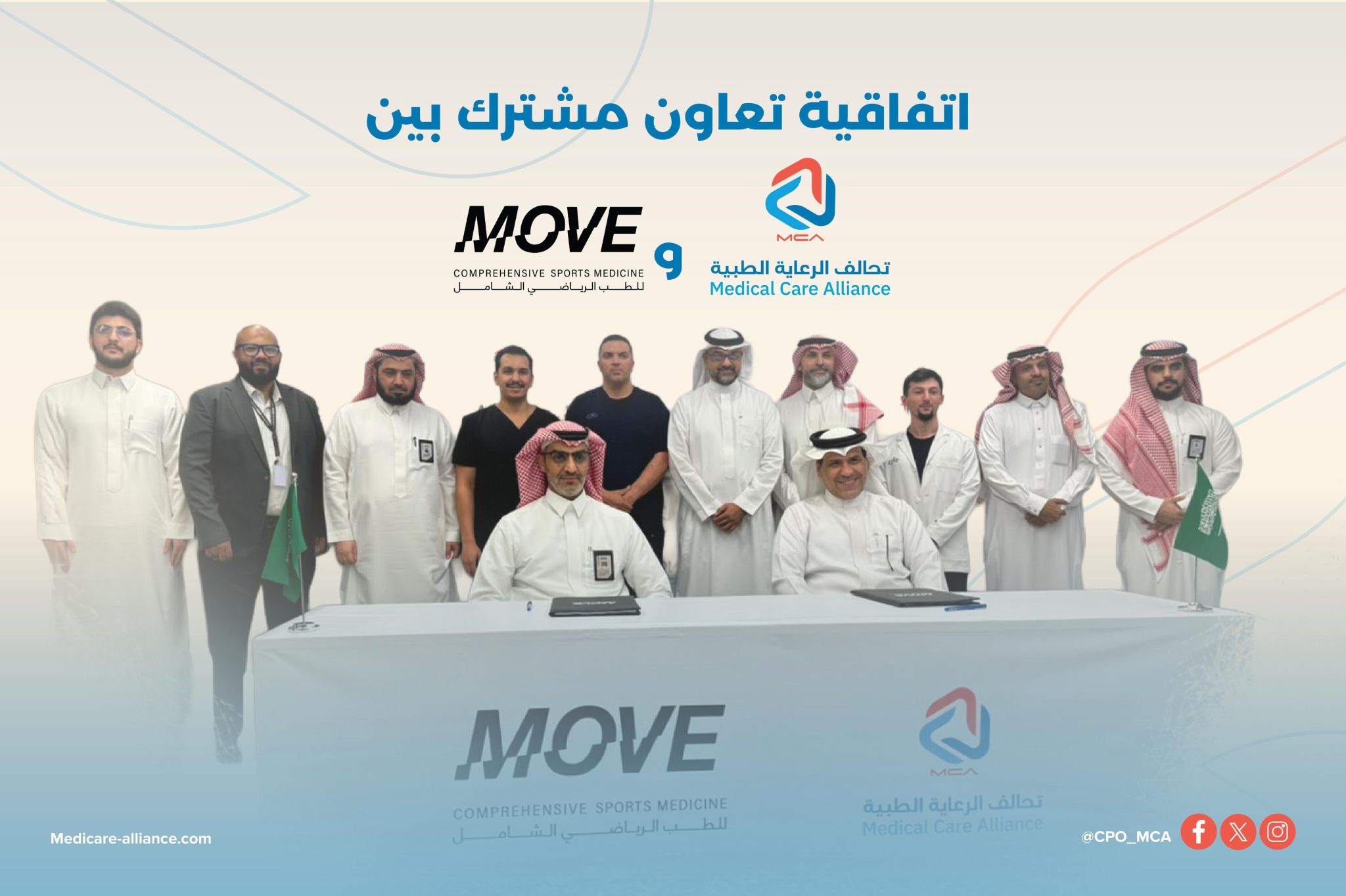
Saudi Arabia’s Medical Care Alliance, also known as Medical Care Alliance Saudi Arabia, has signed a joint cooperation agreement with MOVE Comprehensive Sports Medicine to strengthen access to assistive medical solutions, orthoses and specialised prostheses for athletes.
The partnership aims to combine prosthetic and orthotic expertise with MOVE’s sports-medicine, rehabilitation and performance services. Together, the organisations intend to develop integrated solutions reflecting the individual requirements of athletes and supporting them as they train, compete and return to sport.
The agreement represents a further step towards connecting Saudi Arabia’s O&P services with the country’s expanding sports-medicine infrastructure.
Combining O&P and sports-medicine expertise
Medical Care Alliance, also known in Arabic as Tahaluf Al-Riaya Al-Tebbiya, provides prosthetic, orthotic and medical-device services in Saudi Arabia. Its services include customised and prefabricated orthoses together with upper- and lower-limb prosthetic solutions.
By leveraging the strengths of both organisations, the collaboration aims to enhance the quality of services provided under the banner of Medical Care Alliance Saudi Arabia.
MOVE was established as a specialised sports-medicine provider in 2020. The Riyadh centre works with professional and recreational athletes as well as members of the wider community with sports and musculoskeletal injuries.
Its clinical model includes sports-medicine assessment, sports podiatry, exercise physiology, injury rehabilitation, conditioning, hydrotherapy, occupational therapy and structured return-to-play services.
Bringing these capabilities together could give athletes requiring an orthosis or prosthesis access to a more connected pathway—from assessment and device design through rehabilitation, biomechanical evaluation and return to sporting activity.
Sports prosthetics require individual prescription
A prosthesis used for competitive running, field sports, cycling or strength training must respond to very different demands from a device prescribed primarily for everyday walking.
Sports-specific provision may need to consider impact loading, range of motion, energy storage and return, socket security, component alignment and the rules of the athlete’s chosen discipline. The optimal design will also depend on amputation level, residual-limb condition, experience, strength and competition objectives.
Not every athlete requires a running blade, and a blade alone does not create a complete sports-prosthetic solution. Socket comfort, suspension, alignment and structured training remain fundamental. Some users may also require different prostheses for daily mobility and sporting activity rather than expecting one device to perform every role.
Orthotic interventions for athletes are similarly varied. They may include foot orthoses, ankle or knee braces, protective devices and custom solutions designed to manage an injury or support a safe return to play.
MOVE’s sports podiatry service includes biomechanical analysis and the provision of appropriate foot support. Connecting these assessments with specialist orthotic design could help ensure that devices are prescribed around the athlete’s movement patterns rather than supplied as isolated products.
An integrated return-to-sport pathway
An athlete’s treatment does not end when the prosthesis or orthosis is delivered. They must learn how the device responds during acceleration, deceleration, direction changes and fatigue.
A coordinated pathway may include:
- Medical and musculoskeletal assessment
- Biomechanical and gait analysis
- Prosthetic or orthotic prescription
- Custom design, fabrication and fitting
- Strength, balance and movement training
- Sport-specific drills and conditioning
- Objective return-to-play testing
- Ongoing adjustment and maintenance
- Injury-prevention and recovery planning
MOVE’s sports rehabilitation services include dedicated units for sports injuries, musculoskeletal rehabilitation, conditioning, recovery and return to play. These services can provide the clinical environment needed to evaluate how an orthosis or prosthesis performs under progressively greater sporting demands.
The athlete should remain central to each decision. Their goals, preferred sport, training environment and previous device experience must guide the process alongside clinical and technical findings.
Supporting adaptive sport in Saudi Arabia
The agreement arrives as Saudi Arabia continues to invest in sport, physical activity and specialist healthcare. Increased participation creates a corresponding need for services that include athletes with limb loss, limb difference and musculoskeletal impairments.
Access to sports-specific prosthetic and orthotic care can support much more than competitive performance. Physical activity may contribute to cardiovascular health, strength, confidence, social participation and long-term prosthetic mobility.
However, specialist sporting devices must be accompanied by clinical oversight and realistic progression. Athletes returning after amputation or serious injury may require careful management of residual-limb loading, skin condition, overuse risk and compensatory movement.
By connecting O&P professionals with sports physicians, physiotherapists, podiatrists, exercise specialists and return-to-play teams, the partnership has the potential to create a more comprehensive model of athlete care.
Measuring the partnership’s impact
The next stage will be translating the agreement into practical services and measurable outcomes.
Important indicators could include the number of athletes assessed, devices delivered, time required to return to sport, prosthetic or orthotic comfort, injury recurrence, sporting participation and athlete-reported satisfaction.
The collaboration could also support professional education and the development of sport-specific assessment protocols. Feedback from athletes should be used to improve device design and rehabilitation pathways over time.
Medical Care Alliance said the partnership seeks to provide integrated solutions that keep pace with athletes’ needs and enable them to continue their journey with the best possible quality.
For Saudi Arabia’s growing sports and rehabilitation sectors, the agreement reflects an important principle: adaptive equipment achieves its greatest value when it is integrated with clinical care, performance training and long-term support.
- Medical Care Alliance
- Medical Care Alliance prosthetic and orthotic services
- MOVE Comprehensive Sports Medicine
- MOVE sports-medicine services
- MOVE sports rehabilitation services
- Saudi Paralympic Committee
- Saudi Vision 2030