

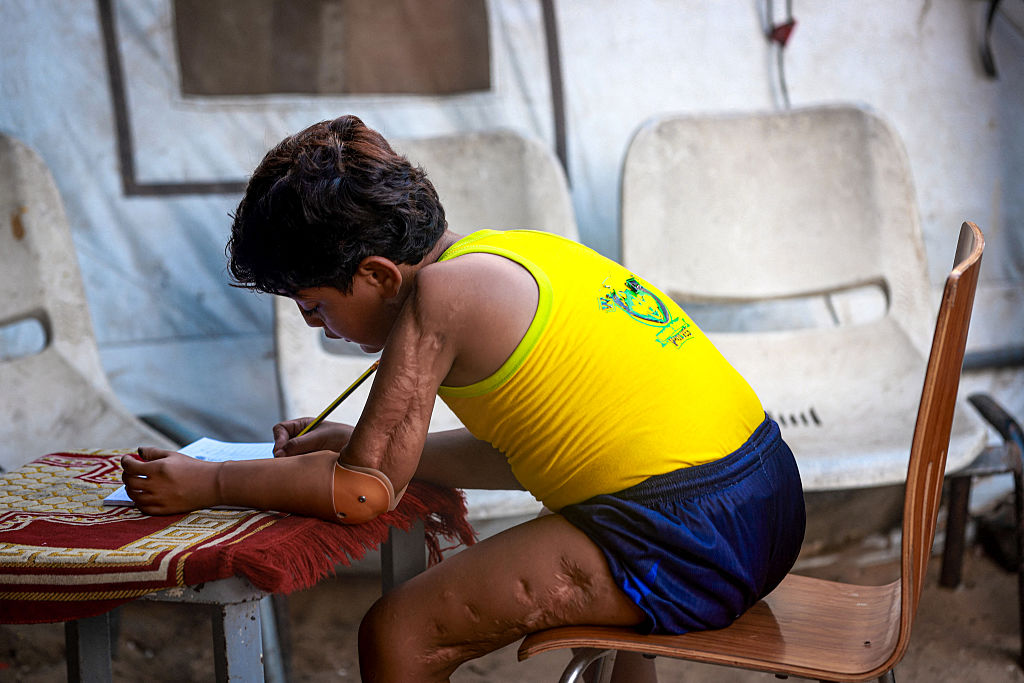
For a child who has lost a limb, rehabilitation reaches far beyond a prosthetic fitting. School, play, meals, friendships and a dependable daily routine all matter. A report from The New Arab describes how Al Bait Village in Deir al Balah, central Gaza, is trying to bring those parts of childhood together for children affected by amputation and the loss of family members. newarab.com
The project began taking shape in November 2025 and welcomed its first children in early 2026. Volunteers converted a rented building into a place for learning and support. According to The New Arab, an initial plan to serve around 130 children grew to approximately 240 children aged four to 14. That figure includes both orphaned children and children with limb loss; it is not a count of child amputees. newarab.com
A daily routine alongside healthcare
The village’s day begins with transport to the centre and a welcome from teachers. The Bukrah Foundation’s description of Al Bait sets out an education programme, individual and group psychosocial support, health and nutrition monitoring, and regular medical follow-up for children with amputations or other war injuries. It also describes computer, arts and heritage activities. Bukrah reports supporting more than 200 orphaned children and children with amputations through the village. newarab.com
That combination matters to prosthetists and orthotists. A child’s device needs to work during the activities that fill their day: getting to class, sitting comfortably, moving with friends and playing. As a child grows, the clinical plan also needs reassessment, socket or orthosis adjustments, maintenance and, eventually, replacement. The village’s published information describes medical follow-up but does not specify its prosthetic fitting capacity, device supply, clinical staffing or referral pathway. Bukrah Foundation

What an integrated pathway would require
For an O&P team working with a programme such as Al Bait, the first practical step would be to connect each child’s clinical record with a clear rehabilitation plan. That plan would identify who assesses the residual limb, provides and adjusts a device, supports mobility training, monitors pain and skin health, and responds when growth changes the fit. Teachers and caregivers can help identify problems early when they know whom to contact.
Psychosocial care belongs in the same conversation. A child may be coping with injury, bereavement, displacement and disrupted schooling at once. Bukrah says its programme provides both individual and group support, alongside a stable place to learn and spend time with other children. The aim of prosthetic care in this setting is participation in that life, guided by the child’s own goals. Bukrah Foundation
The wider need remains severe. UNRWA has described Gaza as hosting the largest group of child amputees in modern history, while a rehabilitation roadmap prepared with Palestinian and international partners calls for continuity of care, a skilled workforce, appropriate technology and better coordination. Al Bait illustrates the value of placing rehabilitation within a child’s ordinary day. Sustaining that model will depend on reliable clinical follow-up and access to the devices and repairs children need as they grow. UNRWA
- The New Arab: Gaza’s child amputees find support at Al Bait Village
- Bukrah Foundation: Al Bait Village
- Rebuilding Rehabilitation Services for Amputees in Gaza