

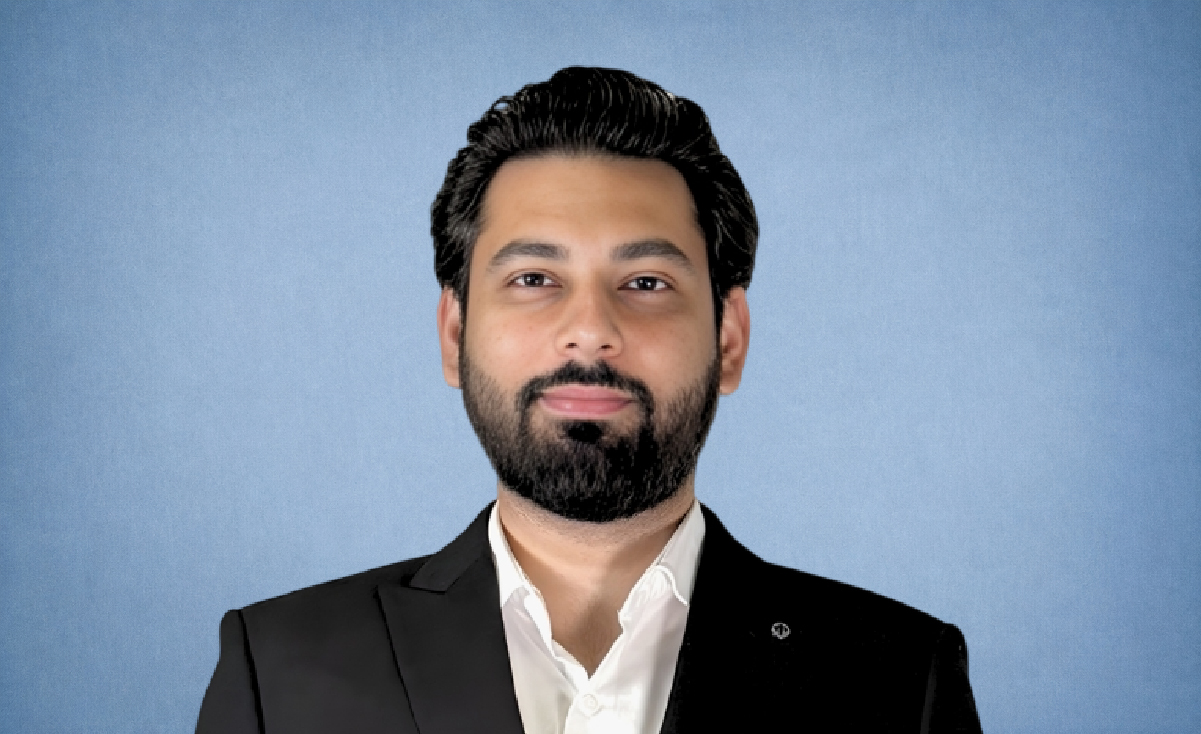
Bioniks founder Anas Niaz has outlined how a request from the family of a five-year-old child developed into a decade-long effort to build advanced prosthetic technology in Pakistan.
In an interview with Boardroom Ventures, the mechatronics engineer discussed the company’s human-centred design philosophy, the challenges of manufacturing medical hardware locally and his ambition to take Pakistani prosthetic innovation into international markets.
The story offers an important lesson for the wider prosthetics and orthotics community: meaningful innovation begins with the person who will use the device—not with the technology being promoted.
Engineering as a social responsibility
Niaz explained that his original ambition was to work professionally as a mechatronics engineer. His experience in robotics and product development subsequently made him consider how those capabilities could be applied to unmet social needs.
The turning point came when the family of a five-year-old boy approached him about developing a prosthetic arm. Niaz saw the request as both an engineering challenge and a responsibility to use his technical knowledge for a practical human purpose.
Bioniks traces its beginnings to 2016, when the parents of Mir Bayyan Baloch, a child born with a congenital limb difference, requested a prosthetic solution. Bioniks Pvt.
What began with one child has since developed into a Pakistani assistive-technology company working across prosthetic design, digital scanning, connected software and patient services.
Technology must support dignity
The Boardroom interview repeatedly returns to the distinction between creating an impressive prototype and producing a prosthesis that someone can use in everyday life.
Niaz said the company’s early design priorities were to make prostheses accessible, locally serviceable and suitable for regular use at school, work and social events. This meant considering appearance, comfort, confidence and identity alongside mechanical movement.
Bioniks describes its technology as incorporating myoelectric sensors, AI-supported signal processing, lightweight mechanical structures and haptic-feedback capabilities. These systems are intended to interpret muscle activity and provide more intuitive prosthetic control. Founder – Bioniks – Boardroom Ventures
However, technology alone does not determine whether an upper-limb prosthesis will be successful. Socket comfort, weight, control reliability, durability, repair access, training and the user’s individual goals all influence long-term acceptance.
Bioniks therefore includes consultation, scanning, fitting, customisation and training within its service model. Its digital platform also allows clinicians and technicians to manage patient information and prosthetic production, while its mobile scanning application is intended to capture limb measurements without conventional casting. Bioniks Pvt.
Building hardware in Pakistan
Developing a medical-hardware company in Pakistan presents challenges that differ significantly from those faced by a software startup.
Niaz identified limited access to specialised components, complex supply chains, regulatory requirements, restricted research funding and low public awareness of advanced prosthetic options as important barriers.
Hardware development also demands substantial investment before commercial scale can be achieved. Components must be sourced, prototypes tested and redesigned, production processes controlled, and devices supported after delivery.
Bioniks’ response has been to establish local research and development capability, manufacture or assemble locally where practical, use modular architecture and select materials that balance performance with affordability.
Rather than reproducing products designed around the economics of wealthier markets, the company says it is developing solutions suited to emerging-market conditions. This includes attention to cost, maintainability and remote access.
Digital delivery creates international possibilities
A digital workflow offers Bioniks a potential route beyond Pakistan.
The company has used remote consultation and digital capture to support patients who cannot easily travel to its Karachi facilities. This approach attracted wider attention when it supplied customised prosthetic arms to children injured in Gaza, with parts of the assessment and fitting process conducted remotely before final delivery in Jordan.
Reuters reported in 2025 that Bioniks had fitted more than 1,000 customised arms in Pakistan since 2021. The company’s patient-access model combined direct payment, corporate sponsorship and donations. dawn.com
Remote processes can extend specialist design and manufacturing capacity into underserved locations. They must nevertheless be supported by qualified local professionals who can assess residual-limb condition, verify fit, provide functional training and manage complications.
The strongest international model would therefore combine Bioniks’ central design and production capabilities with accredited clinical partners in each market.
Affordability should not mean basic technology
For Niaz, affordability is not achieved by removing every advanced feature. It is created through design decisions that allow technology to be manufactured and supported more efficiently.
Bioniks is pursuing this through modular product architecture, local assembly, cost-conscious material selection and scalable manufacturing. The objective is to reduce dependence on imported systems that may be financially inaccessible or difficult to repair locally.
This approach has relevance throughout the IMEA region. Many countries have skilled engineers and growing digital-manufacturing capacity but continue to import most advanced prosthetic components.
Local innovation can potentially reduce costs and shorten repair times. It can also develop domestic expertise in electronics, software, sockets, clinical integration and rehabilitation support.
Expanding the Pakistani medtech ecosystem
Niaz’s longer-term vision includes AI-driven adaptive prostheses, improved sensory-feedback systems and regional manufacturing hubs.
Achieving that vision will require more than continued engineering development. Bioniks and similar companies need:
- Experienced prosthetists and occupational therapists
- Structured clinical trials and outcome measurement
- Quality-management and regulatory capability
- Reliable component supply chains
- Patient training and long-term follow-up
- Investment suited to medical-hardware development
- International clinical and distribution partners
- Accessible repair and maintenance services
The potential impact extends beyond one company. Building these capabilities can strengthen Pakistan’s wider medical-device and rehabilitation-technology ecosystem.
A message for emerging innovators
Niaz encourages young engineers to concentrate on solving real problems rather than limiting their ambition to conventional employment. He also emphasises international exposure, local development and persistence.
Bioniks’ journey demonstrates why all three matter.
International participation provides credibility, investment relationships and access to new ideas. Local development ensures that solutions reflect the economic and practical realities of their users. Persistence is required because medical hardware takes time to validate, regulate, manufacture and earn clinical trust.
The most important measure of success, however, remains the user. For an upper-limb prosthesis, technical sophistication matters only when it helps a person perform meaningful activities, return to education or employment and participate more confidently in society.
That is the central idea behind Niaz’s description of Bioniks: engineering should not merely replace a missing limb. It should help restore independence, identity and dignity.
- Boardroom Ventures: Anas Niaz, Founder of Bioniks
- Bioniks Official Website
- About Bioniks
- Bioniks Services and Patient Process
- Bioniks Team