

Nigeria’s Federal Government has unveiled a digital prosthetics initiative combining artificial intelligence, 3D scanning, computer-aided design and additive manufacturing.
The programme aims to modernise national prosthetic and orthotic services, strengthen local technical capacity and reduce Nigeria’s dependence on imported assistive devices.
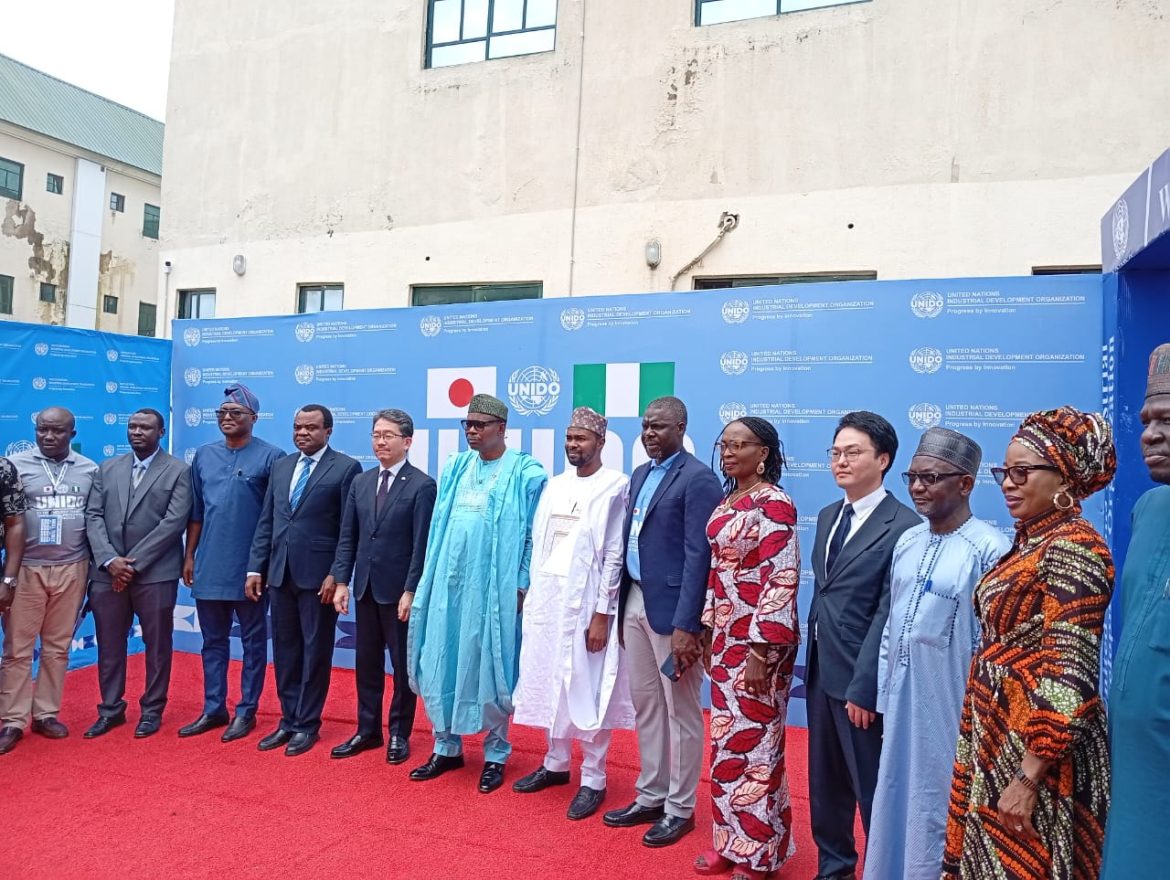
Dr Iziaq Adekunle Salako, Minister of State for Health and Social Welfare, formally opened a 3D-Printed Prosthetics Technology Showcase at the National Secretariat of the Medical Rehabilitation Therapists Board in Abuja.
The initiative is being implemented under the United Nations Industrial Development Organization project “Transferring Japanese 3D-Printed Prosthetics Technology to Support Landmine Victims in Africa.”
Funded by the Government of Japan, UNIDO Project 240280 was introduced in Nigeria in 2024. Japanese prosthetics company Instalimb is providing technology, equipment and specialist knowledge, while Nigerian rehabilitation institutions and P&O professionals are supporting local implementation. Pointblank News
From manual production to a digital workflow
Traditional prosthetic fabrication can involve plaster casting, positive-model modification, lamination or thermoforming and several stages of manual workshop production.
A digital workflow can replace or reorganise some of these steps:
- A prosthetist scans the residual limb
- The digital model is modified using CAD software
- AI-assisted tools may support aspects of model preparation or design
- The socket or production component is prepared for printing
- The part is manufactured using a 3D printer
- The prosthetist assembles, aligns and clinically fits the prosthesis
- The patient completes functional training and follow-up
Digital production can potentially improve consistency, preserve patient files, reduce dependence on plaster and shorten parts of the manufacturing process.
However, the technology does not eliminate the need for professional judgment. The scan is only a geometric record. It does not independently identify pain, tissue tolerance, joint range, muscle strength, sensation, functional objectives or the user’s living environment.
Technology must serve the patient
One of the most important aspects of the government’s announcement was its recognition that a printed component is not a complete rehabilitation service.
Dr Salako emphasised that digital technology must complement existing prosthetic expertise rather than replace it. He highlighted the continued importance of professional assessment, appropriate fitting, patient education, follow-up, maintenance and periodic adjustment. Pointblank News
This distinction is essential.
A prosthesis can only deliver sustained benefit when it forms part of a properly managed clinical pathway. That pathway includes:
- Medical and functional assessment
- Residual-limb evaluation
- Patient-centred goal setting
- Prosthetic prescription
- Socket design
- Component selection
- Static and dynamic alignment
- Gait or functional training
- Skin and pressure monitoring
- Repairs and adjustments
- Planned review and replacement
Artificial intelligence may support repetitive design tasks, but the certified prosthetist remains responsible for evaluating the patient and deciding whether the resulting device is clinically appropriate.
Equipment supplied under the initiative
The project includes:
- P&O Printer 3.0 systems
- Educational-grade 3D printers
- 3D scanners
- Testing equipment
- Replacement components
- Specialised printing consumables
A UN procurement notice shows that Instalimb received a contract valued at approximately US$425,295 for a 3D-printed prosthetics training and production unit in Nigeria. ungm.org
UNIDO’s progress reporting describes the initiative as a pilot intended to strengthen national production capacity, improve professional skills and expand access to prosthetic services for people with disabilities, including landmine survivors.
The assessment phase engaged government institutions, regulatory bodies, education providers, private-sector organisations and organisations of persons with disabilities. It reportedly found strong institutional interest but identified gaps in digital fabrication equipment and advanced technical training. downloads.unido.org
First devices delivered to landmine survivors
The project has already moved beyond equipment installation and demonstration.
During its test phase, four Nigerian landmine survivors received 3D-printed prostheses produced through the collaboration between UNIDO, Instalimb, Nigerian rehabilitation institutions and local P&O professionals.
UNIDO described the initial fittings as an opportunity to test the technology, improve local skills and gather experience before wider implementation. UNIDO Nigeria Projects
The small number is appropriate for an initial clinical phase. New manufacturing systems should be introduced progressively, with careful monitoring of:
- Socket comfort
- Fit and suspension
- Structural integrity
- Alignment
- Skin response
- Functional performance
- Device weight
- User satisfaction
- Failure and repair rates
- Longer-term durability
Production speed should not become the main measure of success. A rapidly manufactured socket that requires repeated remakes or is abandoned by the user delivers neither clinical nor financial value.
Four institutional sites and private-sector participation
UNIDO’s work involves four Nigerian institutional sites and includes engagement with private providers.
IfeanHealth Nigeria Limited has been identified as UNIDO’s private-sector contractual partner for the programme, supporting deployment of the Japanese technology and local capacity development. guardian.ng
Combining public institutions, the regulator and private providers could help the project test different service models. It may also create a route for trained personnel and technology to reach patients beyond major government hospitals.
However, expansion should remain coordinated. Each site needs suitable infrastructure, trained staff, reliable electricity, equipment maintenance, material supply and access to replacement parts.
Sustainability after the pilot
Many technology-transfer projects perform well while international funding, visiting specialists and donated consumables remain available. The more difficult question is what happens after the initial support ends.
The minister called on participating institutions to establish sustainable arrangements for:
- Equipment management
- Staff training
- Preventive maintenance
- Replacement parts
- Printing consumables
- Quality assurance
- Patient follow-up
- Knowledge sharing
- Financial sustainability
The Federal Government has also made budgetary provision for a specialised centre at the MRTB to support training in 3D prosthetic technology. Pointblank News
This could provide a national base for professional development, workflow validation and technical support. Its success will depend on sustained staffing and operational funding rather than the initial purchase of equipment alone.
The role of the MRTB
The Medical Rehabilitation Therapists Board regulates prosthetics and orthotics practice in Nigeria alongside other rehabilitation professions. Its involvement gives the project an important connection to professional standards and education. mrtb.gov.ng
The MRTB will need to consider how digital competencies are incorporated into:
- University curricula
- Clinical internships
- Practitioner registration
- Continuing professional development
- Facility accreditation
- Device documentation
- Quality-control procedures
- Adverse-event reporting
Digital fabrication should become an additional professional capability, not an unregulated shortcut allowing inadequately trained operators to provide clinical devices.
An opportunity for local manufacturing
If the initiative proves clinically and economically sustainable, it could stimulate a broader Nigerian rehabilitation-technology sector.
Opportunities may emerge for:
- Local printing and fabrication centres
- Scanner and software support
- Biomedical engineering
- Materials distribution
- Equipment maintenance
- Clinical data systems
- Practitioner education
- Design validation
- Research and outcome measurement
- Regional production for neighbouring countries
Nigeria could eventually serve as a knowledge and production hub for other African markets, but expansion must be supported by clear product standards and professional accountability.
UNIDO has described Nigeria as the pilot location for possible scale-up of the approach across Africa. UNIDO
Measuring the real impact
The project should ultimately be evaluated through patient and system outcomes, not simply by counting printers or devices.
Useful measures would include:
- Time from assessment to delivery
- Total cost per completed prosthesis
- First-fit success
- Number of clinical adjustments
- Socket remake rate
- Device failure rate
- Continued use after six and 12 months
- Patient comfort and satisfaction
- Mobility and participation outcomes
- Practitioner time
- Percentage of materials and services sourced locally
- Access for women, children and rural communities
Nigeria’s adoption of AI-assisted design and 3D printing is an important step towards modernising prosthetic production. The most encouraging feature is the government’s acknowledgement that technology must remain within a professionally led rehabilitation service.
The project will succeed if it produces more than printed sockets. It must build Nigerian expertise, strengthen clinical systems and enable more people with limb loss to receive safe, affordable and continuing care.
- Pointblank News: Federal Government Unveils AI and 3D Prosthetics Initiative
- UNIDO: Japanese Funding for Prosthetics Technology in Nigeria
- UNIDO Project 240280 Progress Report
- UN Procurement Contract for the Training and Production Unit
- Medical Rehabilitation Therapists Board of Nigeria
- Instalimb