

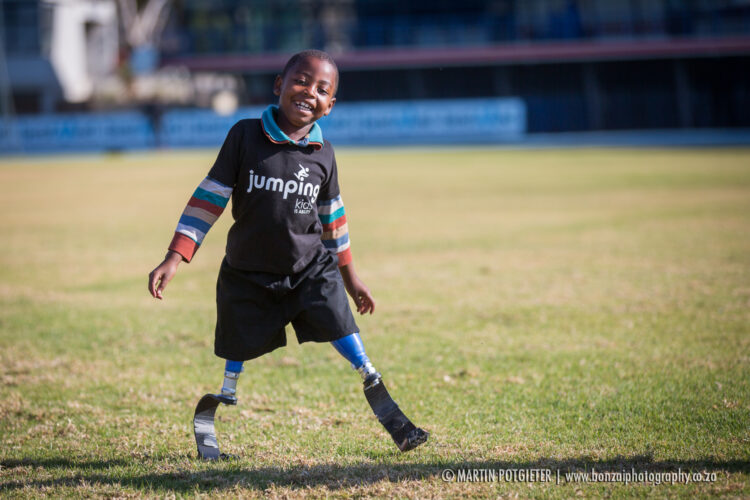
South Africa possesses one of Africa’s most established prosthetics and orthotics professions. Its development reflects the country’s broader history: colonial medicine, two world wars, industrialisation, racial segregation, university reform, disability activism and the continuing struggle to provide equitable healthcare across a geographically and economically divided society.
What began as a craft practised by bonesetters, brace makers, shoemakers and artificial-limb technicians gradually became a regulated clinical profession. South Africa now trains medical orthotists and prosthetists at three universities, operates public and private O&P services and contributes to education and professional development across the African continent.
Yet the documentary record remains incomplete. A 2025 review published in Prosthetics and Orthotics International found no earlier peer-reviewed publication offering a comprehensive account of the profession’s South African development. Much of its history survives through institutional archives, professional organisations and the memories of practitioners. OrthoArchives
Early craft traditions and imported expertise
The earliest South African orthotic and prosthetic work was not performed by university-educated clinicians.
As in Europe, the field developed from several manual trades. Bonesetters treated fractures and deformities, while blacksmiths, leatherworkers, shoemakers and surgical-instrument makers produced braces, splints, surgical footwear and artificial limbs.
European colonial settlement introduced additional medical and technical practices. Dutch and later British institutions brought orthopaedic technicians and manufactured components into South Africa, although services remained limited and were concentrated around military, hospital and urban populations.
Early devices were generally constructed from wood, leather and metal. They were heavy by modern standards and depended heavily on the skill of the individual craftsperson.
The distinction between the person prescribing a device and the person making it was also more pronounced. Physicians frequently directed treatment while technicians manufactured the appliance. The contemporary prosthetist-orthotist’s combined responsibility for clinical assessment, prescription input, design, fabrication, fitting and follow-up emerged much later.
War accelerated organised prosthetic services
Military conflict has repeatedly accelerated the development of prosthetics internationally, and South Africa was no exception.
The South African War, the First World War and the Second World War produced servicemen with amputations and complex musculoskeletal injuries. Returning veterans created a need for more organised artificial-limb production, surgical footwear and rehabilitation.
South Africa’s military medical structures became increasingly formal following the creation of the Union of South Africa in 1910. The South African Medical Corps was established within the Union Defence Force era, bringing previously separate colonial and provincial medical arrangements into a more coordinated structure. History
The influence of the British prosthetic system was significant. Historical research records visits to a South African government artificial-limb factory in Johannesburg, which imported duralumin components from Britain and constructed individually fitted limbs locally. South African officials nevertheless took pride in their own appliance and surgical-footwear services. Oxford Academic
These developments helped establish the principle that artificial limbs required specialist centres rather than occasional work by general craftsmen.
The artificial-limb centres of 1947
A decisive milestone came in 1947 with the establishment of artificial-limb centres at Auckland Park in Johannesburg and Frere Hospital in East London.
These centres were among South Africa’s first organised institutions dedicated to artificial-limb provision. They also became important training sites.
At the time, no standard national university route existed for prosthetists and orthotists. Trainees entered four-year in-service programmes and learned through supervised workshop practice. Physicians and nursing personnel initially played important roles in directing their training and clinical work. PMC
The artificial-limb centres represented a transition between traditional apprenticeship and modern professional education.
Training remained technically oriented, but practitioners gradually assumed more responsibility for patient contact, measurement, fitting, alignment and problem-solving. Experience with prosthetic rehabilitation also influenced the development of orthotic practice, including bracing, calipers, surgical footwear and other appliances.
Industrialisation and rising civilian demand
The profession expanded beyond military rehabilitation as South Africa industrialised.
Mining, manufacturing, agriculture and transport exposed workers to traumatic injuries. Road traffic collisions added further demand, while polio, tuberculosis, diabetes, congenital conditions and neurological disorders generated extensive orthotic and prosthetic needs.
Industrial injury also influenced how devices were financed. Alongside state hospitals and private payment, workers’ compensation became an important source of funding for people injured in employment.
Over time, South Africa developed a mixed funding system in which prostheses may be financed through:
- Provincial public health services
- Medical schemes
- The Compensation Fund
- The Road Accident Fund
- Military or veterans’ services
- Private payment
- Charitable and non-governmental support
This plural system helped establish a substantial private O&P sector, but it also contributed to differences in access, component choice, waiting time and follow-up.
Apartheid shaped unequal access
No history of South African healthcare can be separated from apartheid.
Racially segregated education, residence, employment and healthcare determined who could enter professional training and who could reach specialist services. Better-resourced hospitals and urban centres disproportionately served white populations, while black South Africans were frequently expected to use underfunded facilities or services located far from their communities.
The spatial consequences remain visible. O&P centres and practitioners are still concentrated in cities and larger towns, while many rural patients must travel considerable distances for assessment, fitting and repairs.
Research examining South Africa’s prosthetist-orthotist workforce between 2002 and 2018 concluded that its unequal geographical distribution could partly be explained by apartheid history and the slow pace of subsequent transformation. PubMed
The former homeland system also fragmented services. Different administrations developed their own hospitals, workshops and procurement arrangements, leaving the democratic government with a divided healthcare infrastructure after 1994.
Private practices nevertheless emerged and expanded during this period, sometimes providing services under government contracts to hospitals in the former homelands. These businesses contributed to local fabrication and component distribution but operated within a deeply unequal national system.
From apprenticeship to formal education
For decades, South African practitioners were principally trained through apprenticeships and structured in-service programmes.
The move towards nationally standardised tertiary education was therefore a defining stage in the profession’s development.
In 1985, a National Diploma in Medical Orthotics and Prosthetics was introduced at Technikon Pretoria. The programme was broadly aligned with what later became recognised as ISPO Category II-level education.
Tshwane University of Technology records the longstanding National Diploma as operating from 1987 until 2021. For many years, it was South Africa’s primary formal route into the profession. hpcsa-blogs.co.za
Training combined scientific subjects with extensive technical practice. Students learned anatomy, pathology, biomechanics, materials, workshop processes, prosthetic alignment, orthotic design and patient fitting.
Private practices and public facilities also served as training centres. This relationship between education and clinical service remains important because O&P cannot be learned solely through lectures or simulated workshop exercises.
The BTech transition
International education standards increasingly recognised the need for prosthetist-orthotists who could work as autonomous clinical professionals rather than technical assistants.
In response, South Africa approved a Bachelor of Technology in Medical Orthotics and Prosthetics at Tshwane University of Technology in 2003.
The Health Professions Council of South Africa describes this as an important step towards international recognition of prosthetist-orthotists as key members of the rehabilitation team. hpcsa-blogs.co.za
The transition reflected a broader change in professional identity.
The medical orthotist-prosthetist was increasingly expected to:
- Assess the patient
- Participate in prescription decisions
- Establish functional goals
- Select appropriate technology
- Design and manufacture the device
- Fit and align it
- Evaluate performance
- Provide follow-up and maintenance
- Work within a multidisciplinary team
- contribute to research and service management
The profession was moving from a predominantly technical workshop occupation towards a combined clinical and technological discipline.
Professional regulation
Medical orthotics and prosthetics is now a recognised health profession in South Africa.
Practitioners must register with the Health Professions Council of South Africa under the Health Professions Act 56 of 1974. They fall within the Professional Board for Occupational Therapy, Medical Orthotics, Prosthetics and Arts Therapy. South African Orthotic & Prosthetic Association
The regulatory structure distinguishes medical orthotists and prosthetists from professions governed by the Allied Health Professions Council.
South Africa also recognises supporting occupational categories. Orthotic and prosthetic assistants may complete supervised in-service training and support device manufacture, while orthopaedic-footwear technicians work within a defined scope associated with surgical footwear.
This workforce structure reflects the field’s technical origins while retaining clinical responsibility with the registered medical orthotist-prosthetist.
The role of professional associations
Professional organisations have helped shape standards, representation and continuing development.
The South African Orthotic and Prosthetic Association represents medical orthotists and prosthetists and engages with matters affecting professional practice, reimbursement, ethics and service delivery.
Its origins are linked to the Association of Orthotic and Prosthetic Private Practitioners, reflecting the importance of independent clinical businesses in South African O&P.
A separate multidisciplinary body, ISPO South Africa, became an International Society for Prosthetics and Orthotics national member society in 2009. Its membership extends beyond prosthetists and orthotists to surgeons, therapists, engineers, researchers and other rehabilitation stakeholders. isposa.co.za
Together, these organisations represent different but complementary elements of the profession: practitioner interests, multidisciplinary exchange, education and international standards.
Expansion to KwaZulu-Natal
For many years, Tshwane University of Technology was the only South African higher-education institution offering a complete medical orthotics and prosthetics course.
A major expansion occurred when Durban University of Technology established its Medical Orthotics and Prosthetics Department in partnership with the KwaZulu-Natal Department of Health.
The programme began operating in 2013, and its facility at Wentworth Hospital was officially opened in November 2014. The provincial government committed approximately R30 million, with a plan to enrol 30 bursary-supported students annually in a four-year Bachelor of Health Sciences programme. dut.ac.za
The partnership was designed to solve both an educational and service-delivery problem.
In 2012, KwaZulu-Natal’s public service reportedly treated 19,495 orthotic patients and 2,954 prosthetic patients. Some patients were waiting more than a year to receive a prosthesis. dut.ac.za
Locating the academic department at Wentworth Hospital brought students into direct contact with patients while building a provincial workforce.
KwaZulu-Natal’s public O&P service now includes the main Wentworth centre, satellite services and outreach clinics serving communities across the province. www2.kznhealth.gov.za
Walter Sisulu University and rural transformation
Walter Sisulu University established its Bachelor of Health Sciences in Medical Orthotics and Prosthetics in 2015 within the Department of Rehabilitation Medicine.
Its location in the Eastern Cape is especially significant. The university has a strong rural and community-health orientation, serving a province with extensive poverty, dispersed populations and persistent access barriers.
WSU expanded the geographical base of South African education while increasing opportunities for black students and professionals from historically underserved areas.
The programme has subsequently invested in modern training infrastructure and movement-analysis capabilities. WSU has installed gait-laboratory equipment and developed an upgraded O&P teaching laboratory to support education and research. wsu.ac.za
The institution has also contributed to postgraduate development. Dr Luphiwo Mduzana, head of rehabilitation medicine at WSU, became the first black African South African orthotist-prosthetist reported to obtain a PhD in the discipline—an important milestone in the profession’s academic transformation. wsu.ac.za
Three national training institutions
South Africa now has three universities offering medical orthotics and prosthetics qualifications:
- Tshwane University of Technology in Gauteng
- Durban University of Technology in KwaZulu-Natal
- Walter Sisulu University in the Eastern Cape
TUT’s Bachelor of Health Science in Medical Orthotics and Prosthetics received international recognition from ISPO for the 2022–2026 period. The programme combines clinical and practical education, research and work-integrated learning. ISPO
These institutions represent substantial progress from the days when practitioners could only qualify through in-service training at artificial-limb centres.
However, the country still needs more educators, clinical placement sites and postgraduate researchers. Expansion must protect training quality rather than simply increase enrolment.
Public and private services today
Modern South African O&P operates through a mixed public–private system.
Public workshops supply large numbers of patients, many of whom receive fully subsidised care. One recent study estimated that approximately 70%–80% of the population may qualify for fully subsidised public prosthetic provision. Government services are delivered through approximately 23 O&P centres, generally located in cities or larger towns. scielo.org.za
The Western Cape Orthotic and Prosthetic Centre in Pinelands, for example, acts as the principal government facility serving much of the province with prostheses, orthoses and surgical footwear. WCRC Facility Board
The private sector offers access through medical schemes, compensation funds and direct payment. Private facilities have often been quicker to adopt imported componentry, microprocessor technologies, advanced materials and specialised private rehabilitation pathways.
Yet this creates a difficult contrast. South Africa can provide internationally advanced devices to some patients while others wait months for comparatively basic care or travel hundreds of kilometres for an adjustment.
Technology changes, but the access question remains
South African workshops have progressed through several technological eras:
- Wood, steel and leather appliances
- Aluminium and conventional mechanical limbs
- Thermoplastics
- Modular endoskeletal prostheses
- Composite laminates
- Energy-storing prosthetic feet
- Myoelectric upper-limb systems
- Microprocessor-controlled knees
- Computer-aided design and manufacturing
- Digital scanning
- CNC milling
- Additive manufacturing
- Sensor-based gait analysis
These technologies have improved comfort, repeatability and function. They have also created new requirements for investment, software, technical support and continuing education.
Digital production may help decentralise certain parts of provision, but it cannot remove the need for assessment, fitting and follow-up. South Africa’s challenge is therefore not merely to obtain more advanced equipment. It is to connect technology with sustainable clinical services.
South Africa’s wider African role
South African institutions have long served patients and students from neighbouring countries.
DUT’s early cohorts included students from Angola, while South African universities, suppliers and practitioners continue to support education and service development across southern Africa.
The country’s combination of formal professional regulation, university education, public workshops, private practice and specialist suppliers gives it an important role within the continental profession.
However, its history also offers a warning. Technical capacity can coexist with severe inequality. Developing world-class centres is not enough if rural communities cannot reach them.
The unfinished history
The history of South African O&P is a movement from craft to profession, apprenticeship to degree education and isolated workshops to multidisciplinary rehabilitation.
Key milestones include:
- Early brace makers, surgical shoemakers and artificial-limb craftsmen
- Military and industrial demand for organised services
- The 1947 artificial-limb centres in Johannesburg and East London
- Four-year in-service training
- The National Diploma introduced through Technikon Pretoria
- Formal regulation under the HPCSA
- The BTech transition in 2003
- DUT’s KwaZulu-Natal programme from 2013
- WSU’s Eastern Cape programme from 2015
- International recognition of university education
- Expanding research and digital practice
But the profession’s next chapter will be judged by access.
South Africa must continue increasing workforce capacity, transforming the demographic and geographical distribution of practitioners, strengthening public workshops, supporting rural services and ensuring that advanced technology does not widen the divide between those who can pay and those dependent on public provision.
Its O&P history is already one of the most substantial on the African continent. Its future opportunity is to combine that technical and educational legacy with a genuinely equitable national service.
- South African Orthotic and Prosthetic Association
- HPCSA: History of O&P in South Africa
- The Development of the Profession and Education of P&O in South Africa
- Tshwane University of Technology Medical Orthotics and Prosthetics
- Durban University of Technology Medical Orthotics and Prosthetics
- Walter Sisulu University
- ISPO South Africa
- Western Cape Orthotic and Prosthetic Centre
- KwaZulu-Natal Orthotic and Prosthetic Services