 By
By
Additive Manufacturing is entering a decisive phase. Consolidation is no longer a future scenario; it is happening now. Across polymers and metals, companies are under intense pressure to become profitable, defend relevance, and survive in a capital-constrained environment. Fresh money is hard to raise, valuations remain subdued, and “growth at any cost” has given way to hard questions around focus, differentiation, and execution.
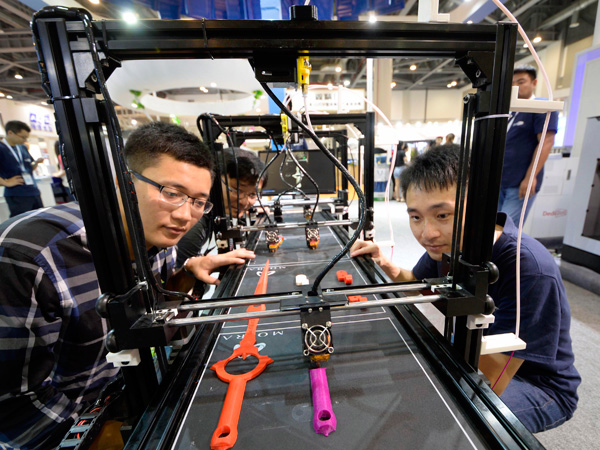
At the same time, Chinese AM suppliers are reshaping the competitive landscape. Their machines are no longer just “cheap alternatives.” They are increasingly capable, reliable, and available at price points that dramatically lower the entry barrier to AM. This combination is accelerating adoption across prototyping, education, small-batch manufacturing, and decentralized production.
Many Western AM companies view this development primarily as a threat. We believe that perspective is incomplete. We strongly support the Value Discipline Model as a foundation for strategy. The model is simple, but unforgiving: companies that win long-term lead in one value discipline (operational excellence, product leadership, or customer intimacy) while meeting industry standards in the others. Trying to excel at everything leads to mediocrity and margin erosion.

Chinese AM suppliers are executing a textbook operational excellence strategy. They focus on scale, speed, cost efficiency, and broad market coverage. Their goal is not to tailor solutions, but to serve large and growing mass markets with standardized platforms. And they are very good at it. This is not a weakness but their competitive advantage.
Western AM companies, however, should not try to fight this battle. Competing head-on on price and volume against operationally excellent Chinese suppliers is a race few can win. The opportunity lies elsewhere.
Low-cost machines are democratizing AM. This is a good thing. Just as affordable PCs, smartphones, and CNC machines expanded their respective markets before higher-end, specialized solutions captured the most profitable segments, AM is now entering a similar phase. More users mean more applications, more experimentation, and ultimately more demand for robust, production-grade solutions.
And this is where Western companies can, and must, win.
What Chinese suppliers cannot easily provide is customer intimacy: deeply integrated solutions tailored to specific applications, industries, qualification requirements, and production environments. Industrial users do not buy machines; they buy outcomes. They need validated processes, certified materials, stable supply chains, software integration, application engineering, and long-term partnerships. These capabilities require proximity to customers, domain expertise, and a willingness to say “no” to markets that do not fit the strategy.

This is where strategy becomes uncomfortable, because strategy always means sacrifice.
Western AM suppliers must make bold choices:
- Which industries do we truly understand?
- Which applications can we dominate?
- Where can we provide a superior, end-to-end customer solution rather than a product?
Those who answer these questions honestly and act decisively have a strong chance to emerge from consolidation as leaders.
The influx of affordable Chinese AM machines is not the end of Western Additive Manufacturing. It is the catalyst forcing the industry to grow up. Those who embrace customer excellence, leverage market intelligence, and commit to a clear value discipline will not just survive, they will shape the next phase of industrial AM.