 By
By
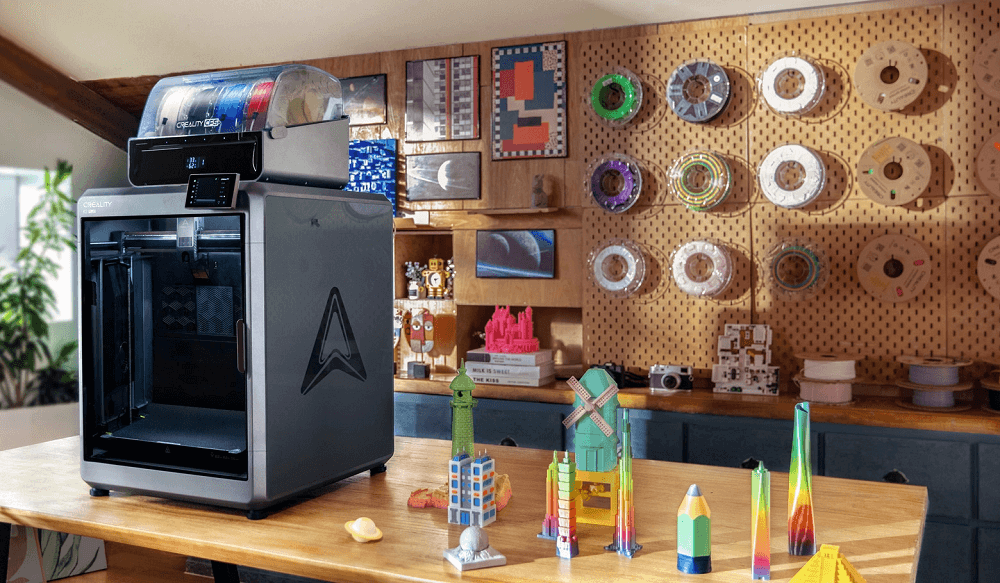
Creality, one of the world’s best-known desktop 3D printer manufacturers, has completed an oversubscribed listing on the Hong Kong Stock Exchange, raising approximately $177 million and valuing the company at around $1.12 billion. For the prosthetics and orthotics sector, the listing is not only a consumer 3D printing milestone. It is another signal that low-cost additive manufacturing is moving deeper into mainstream production, education and clinical-adjacent fabrication.
According to 3D Printing Industry, the Shenzhen-based company listed on the Main Board of the Hong Kong Stock Exchange under ticker 3388.HK, issuing 73,427,550 H-shares and raising net proceeds of about HK$1.272 billion. Shares opened at HK$33.88, around 80% above the IPO price, underlining strong investor demand.
Creality also described itself as the first consumer 3D printing company to debut on the Hong Kong market. A company announcement distributed through PR Newswire said the offering was 3,829 times oversubscribed, with the same share issue and net proceeds figure of approximately HK$1.272 billion.
For the O&P industry, this matters because Creality sits at the affordable end of additive manufacturing. The company is best known for desktop FDM printers used by hobbyists, schools, designers, small businesses and increasingly technical users who need accessible prototyping and production tools. As public-market capital enters this segment, desktop 3D printing may become more capable, more reliable and more widely distributed.
That could have direct implications for prosthetics and orthotics, particularly in the IMEA region, where many clinics, workshops, training centres and NGOs are seeking lower-cost ways to enter digital fabrication.
Why a Consumer 3D Printer IPO Matters to O&P
The O&P sector is already using 3D printing in several ways: prosthetic check sockets, cosmetic covers, orthotic devices, AFO prototypes, spinal brace models, foot orthotic shells, partial hand devices, paediatric devices, jigs, fixtures, moulds and workshop tooling. Industrial systems remain essential for many certified end-use devices, but desktop printers have become increasingly important for prototyping, training and small-scale production.
Creality’s IPO could accelerate several trends:
- More investment in printer reliability and automation
- Lower-cost access to larger build volumes
- Better material compatibility
- More connected software ecosystems
- Wider availability of replacement parts and service networks
- Faster adoption in schools, universities and small clinics
- Increased competition among desktop and prosumer 3D printer brands
For O&P providers, this may reduce the barrier to entry for digital manufacturing. A small clinic may not be ready to invest in an industrial additive manufacturing system, but it may be able to use a desktop printer for trial devices, socket models, design validation, educational tools or low-risk assistive products.
Desktop Printing Is Not the Same as Clinical-Grade Manufacturing
The sector should remain realistic. A desktop 3D printer is not automatically a medical-device production system. O&P devices must meet clinical, mechanical and safety requirements. A prosthetic socket, AFO or spinal orthosis cannot be judged only by whether it prints successfully. It must be safe, durable, correctly prescribed, properly fitted and clinically appropriate.
This distinction is especially important as affordable 3D printers become more powerful. The risk is that lower-cost technology may encourage unregulated or poorly governed device production. In O&P, the question is never only “Can it be printed?” The real question is: Should it be printed, for this patient, with this material, using this workflow, under this clinician’s responsibility?
The World Health Organization standards for prosthetics and orthotics emphasise that P&O services must be delivered by trained personnel and should be appropriate, safe, effective and accessible. That principle remains true whether a device is made from plaster, polypropylene, carbon fibre, milled foam or 3D-printed polymer.
What This Could Mean for IMEA Clinics
Across the Middle East, Africa and South Asia, many O&P services face common constraints: limited workshop capacity, long turnaround times, high import costs, shortages of skilled technicians, inconsistent access to components and difficulty serving remote populations.
Affordable desktop and prosumer 3D printing may help in several areas:
- Producing jigs, fixtures and workshop tools locally
- Printing trial components or low-risk prototypes
- Supporting student training in digital design and fabrication
- Creating visual models for patient education
- Supporting paediatric design iteration
- Producing device covers, accessories and non-load-bearing parts
- Enabling clinics to test digital workflows before scaling to industrial systems
This is where Creality’s growth could be relevant. If desktop 3D printing continues to improve, the first impact in O&P may not be full replacement of traditional fabrication. It may be the gradual creation of hybrid workshops where plaster, thermoplastics, CAD/CAM, milling and 3D printing sit side by side.
The Training Impact
One of the biggest opportunities is education. O&P training programmes across the IMEA region can use affordable 3D printers to teach digital design, additive manufacturing principles, material behaviour and iterative problem-solving.
Students can learn how scan data becomes a model, how CAD changes affect fit and structure, how orientation affects strength, and why material selection matters. This can help prepare the next generation of prosthetists, orthotists and technicians for a profession where digital workflows are increasingly normal.
However, digital training must be balanced with manual craft. A student who can print a brace but cannot understand rectification, pressure relief, trimlines or alignment remains incomplete. Desktop 3D printers should support clinical reasoning, not replace it.
A Boost for Local Innovation
Creality’s listing also matters because it validates a broader market: affordable 3D printing is no longer a niche hobby category. Investors are treating it as a global manufacturing ecosystem.
That could encourage more local innovation in O&P. Start-ups, university teams and rehabilitation engineers across IMEA may find it easier to develop assistive devices, prosthetic accessories, orthotic prototypes and low-cost rehabilitation tools when printers, materials and software are more accessible.
This could support:
- University research into low-cost orthoses
- Local paediatric assistive-device design
- Humanitarian prosthetic and orthotic prototyping
- Custom seating and wheelchair accessories
- Adaptive grips and daily-living aids
- Rapid iteration for locally relevant devices
- Collaboration between engineers and clinicians
For emerging markets, this may be one of the most important effects. Low-cost 3D printing can democratise experimentation. It allows local teams to design around local realities rather than waiting for imported solutions.
Supply Chains and Resilience
The COVID-19 pandemic, conflicts and shipping disruptions have shown how vulnerable medical and rehabilitation supply chains can be. In some settings, clinics struggle to obtain replacement parts, workshop tools or simple accessories.
Desktop 3D printing can improve resilience by allowing some items to be made locally. It will not replace regulated components such as knees, feet, joints or high-risk structural parts, but it can reduce dependency for selected tools, adapters, prototypes and accessories.
Creality’s success may push more manufacturers to improve global distribution and spare-part availability. That could benefit O&P workshops that depend on printers as part of everyday operations.
The Risk of Overpromising
There is also a risk. Consumer 3D printing often comes with strong marketing language: faster, cheaper, easier, decentralised, revolutionary. O&P professionals should be cautious.
A printer alone does not create a clinical service. A 3D-printed orthosis is only as good as the assessment, design, material, print parameters, post-processing, fitting and follow-up behind it. Poorly printed devices can fail. Poorly designed devices can injure. Poorly fitted devices can be abandoned.
The O&P industry needs clear standards for when desktop printing is appropriate and when industrial-grade production or traditional fabrication remains safer. This is particularly important for load-bearing prosthetic sockets, high-stress orthoses, paediatric devices and devices used by patients with reduced sensation.
What O&P Leaders Should Watch
Creality’s IPO should prompt O&P clinics, educators and distributors to monitor several developments:
- Whether consumer printers become more reliable for technical applications
- Whether larger-format and higher-temperature systems become more affordable
- Whether software ecosystems become easier for healthcare workflows
- Whether material manufacturers provide better clinical testing data
- Whether regulators take more interest in decentralised medical-device printing
- Whether O&P education programmes formalise additive manufacturing training
- Whether clinics build hybrid workflows combining manual and digital fabrication
The most successful O&P organisations will not simply buy printers. They will build governed workflows around them.
Implications for the IMEA Region
For IMEA, the promise of desktop 3D printing is practical rather than futuristic. Many clinics need tools that improve productivity without requiring massive capital investment. Many schools need equipment for training. Many NGOs need localised solutions. Many patients need faster, more affordable care.
Creality’s IPO suggests that the affordable 3D printing sector has matured enough to attract major public-market investment. That maturity may help make digital fabrication more accessible to smaller O&P providers.
But the region must avoid a technology-first approach. The starting point should remain the patient: What device is needed? What outcome is expected? What risks exist? What follow-up is available? What skills does the clinician or technician have? Only then should the production method be chosen.
Conclusion
Creality’s $177 million IPO is a milestone for consumer 3D printing, but its significance reaches beyond hobbyists and desktop manufacturing. For prosthetics and orthotics, it points to a future in which affordable additive manufacturing becomes more common in clinics, workshops, training centres and innovation labs.
The technology will not replace skilled prosthetists, orthotists or technicians. It will not remove the need for clinical judgement, manual rectification skills or rigorous safety standards. But it may give the profession new tools to prototype faster, train better, fabricate locally and improve access in resource-constrained settings.
For the IMEA O&P industry, the message is clear: desktop 3D printing is no longer peripheral. It is becoming part of the wider manufacturing infrastructure that will shape the next decade of rehabilitation technology.
The challenge now is to use it responsibly.
- Original 3D Printing Industry article on Creality’s $177 million IPO
- Creality IPO announcement via PR Newswire
- Hong Kong Stock Exchange quote for Shenzhen Creality 3D Technology
- Creality official website
- VoxelMatters report on Creality’s Hong Kong IPO
- 3DPrint.com report on Creality’s IPO process
- WHO standards for prosthetics and orthotics
- International Society for Prosthetics and Orthotics standards resources