 By
By
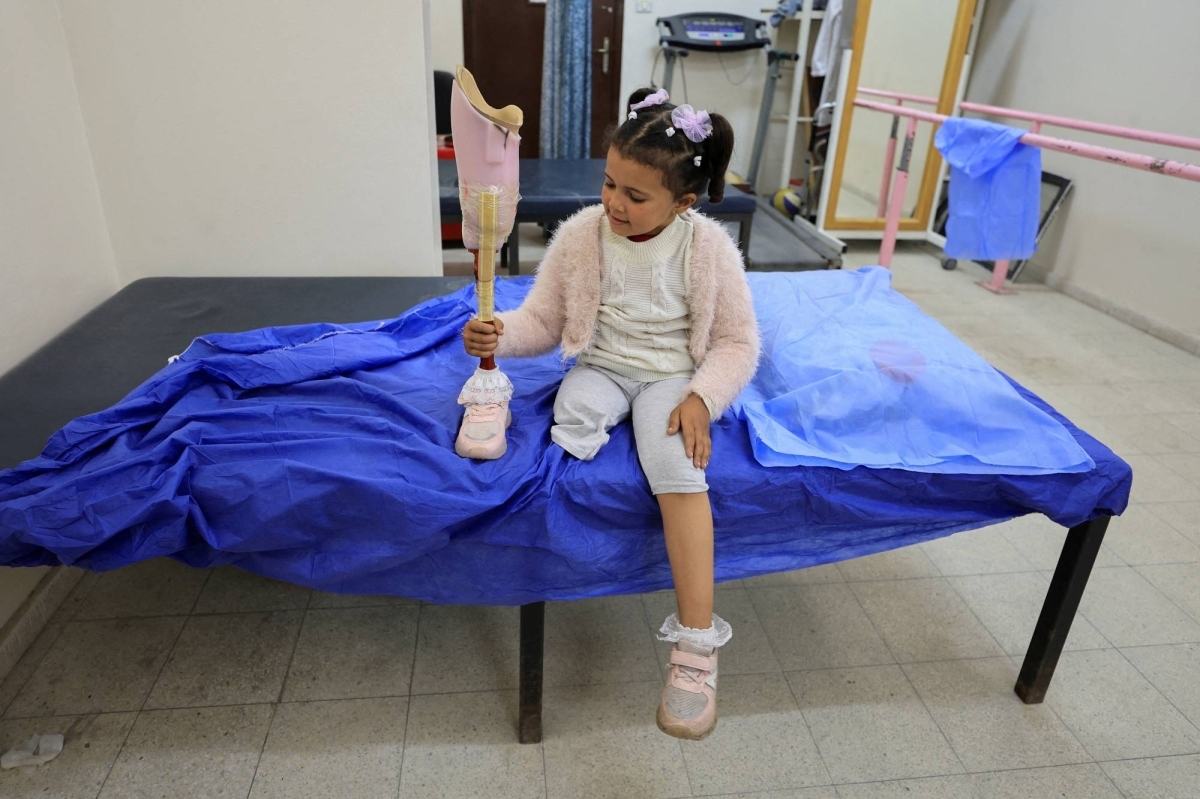
A new SciDev.Net feature has highlighted a critical issue for Gaza’s injured children: amputation care does not end when a child receives a prosthesis.
For the orthotics and prosthetics profession across the Middle East, India and Africa, the story is an urgent reminder that paediatric amputee care requires sustained follow-up, repeated socket replacement, rehabilitation, psychosocial support and reliable access to materials and trained professionals.
According to the report, more than 1,000 children have undergone amputations in Gaza since 2023, while many still lack prostheses or the regular adaptations needed as they grow. Shipments of rehabilitation supplies continue to face long delays, creating severe barriers for local prosthetists, orthotists and rehabilitation teams trying to support children with complex injuries.
The issue is not simply access to an artificial limb. For a child, a prosthesis is a changing clinical relationship that must continue through growth, schooling, play, social development and adolescence.
Children grow, sockets do not
One of the most important clinical messages from the report is that children with amputations need their prostheses modified, repaired or replaced every six to 12 months, and sometimes sooner.
This is a major difference between adult and paediatric prosthetic care. A child’s residual limb changes as the child grows. Socket fit can quickly become painful or unsafe. A prosthesis that worked several months earlier may become unusable, causing skin breakdown, pain, gait problems and loss of confidence.
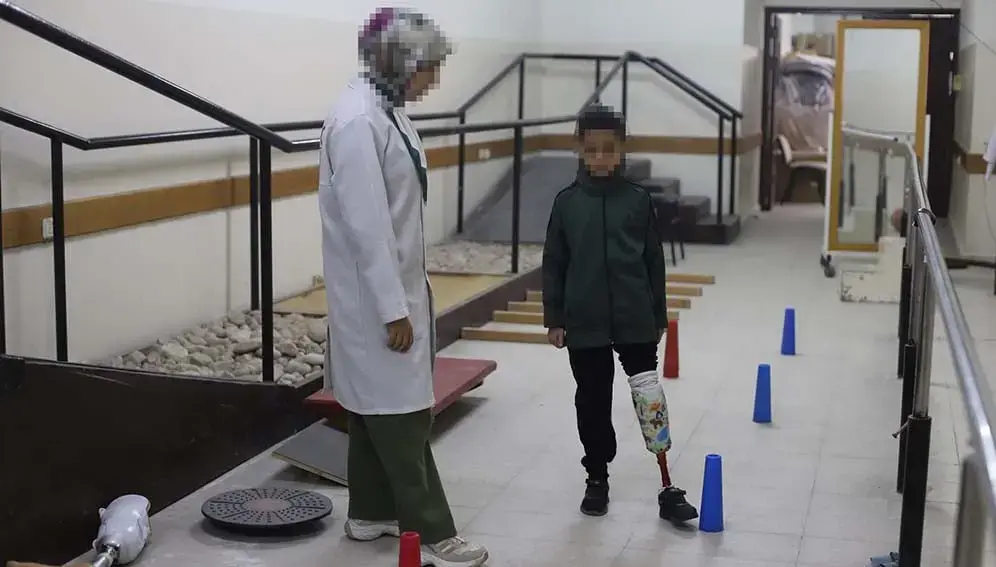
The story of eight-year-old Mohammed Akram Abu Aker illustrates the challenge. After suffering a traumatic above-knee amputation, he was medically evacuated to Jordan, fitted with a prosthesis and began rehabilitation and gait training. But after returning to Gaza, his prosthesis reportedly no longer fit properly because of growth, limiting his ability to wear it comfortably.
For O&P professionals, this is a familiar but often under-recognised reality: paediatric prosthetic care is not a single device delivery. It is a long-term service pathway.
Without follow-up, a prosthesis can quickly become a source of pain rather than mobility.
Gaza’s rehabilitation system is under extreme pressure
The World Health Organization’s Eastern Mediterranean Regional Office has reported that around 10,000 children in Gaza have sustained life-changing injuries since October 2023. SciDev.Net also cites WHO figures indicating that one in five people among more than 5,000 limb amputations is a child.
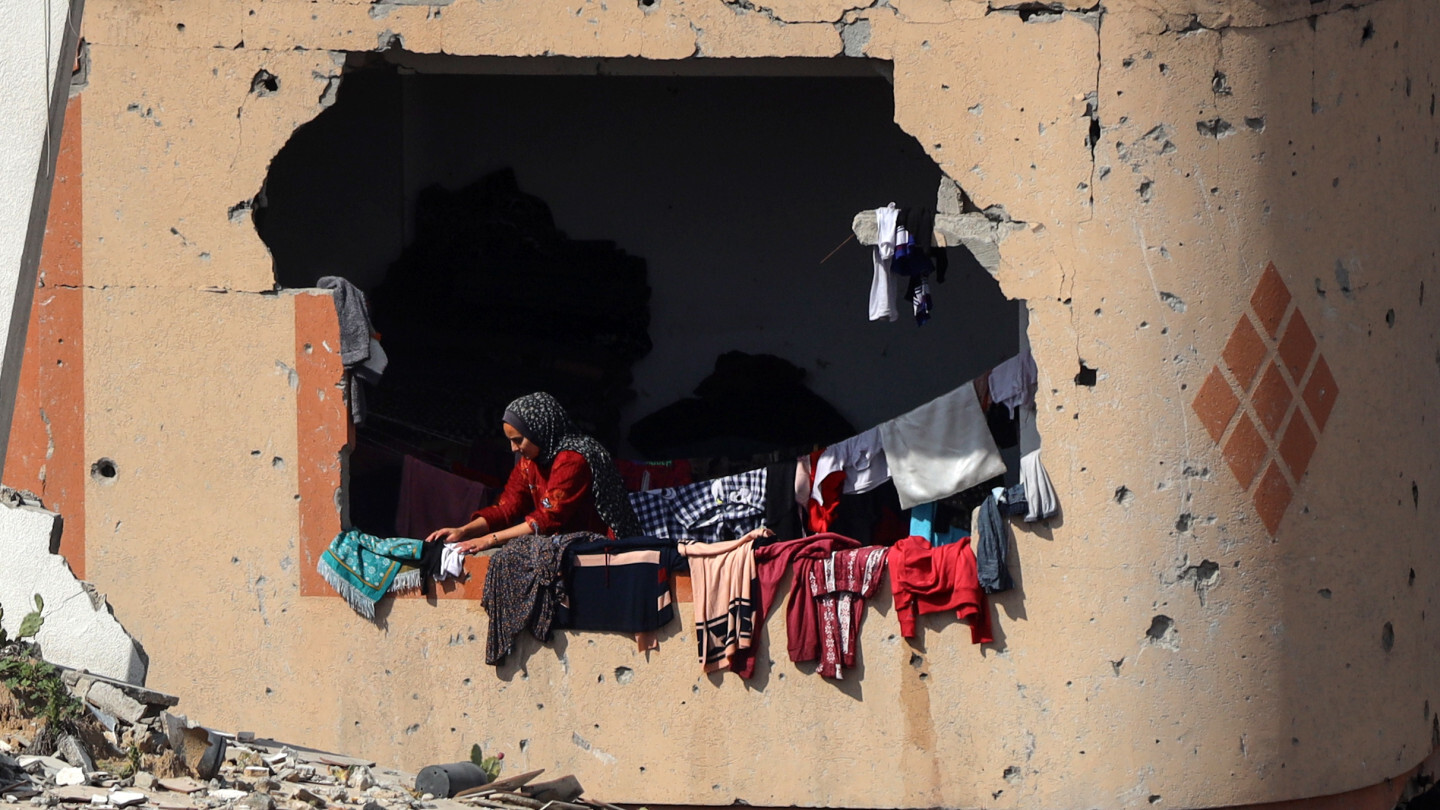
The scale of need is overwhelming Gaza’s already weakened rehabilitation infrastructure.
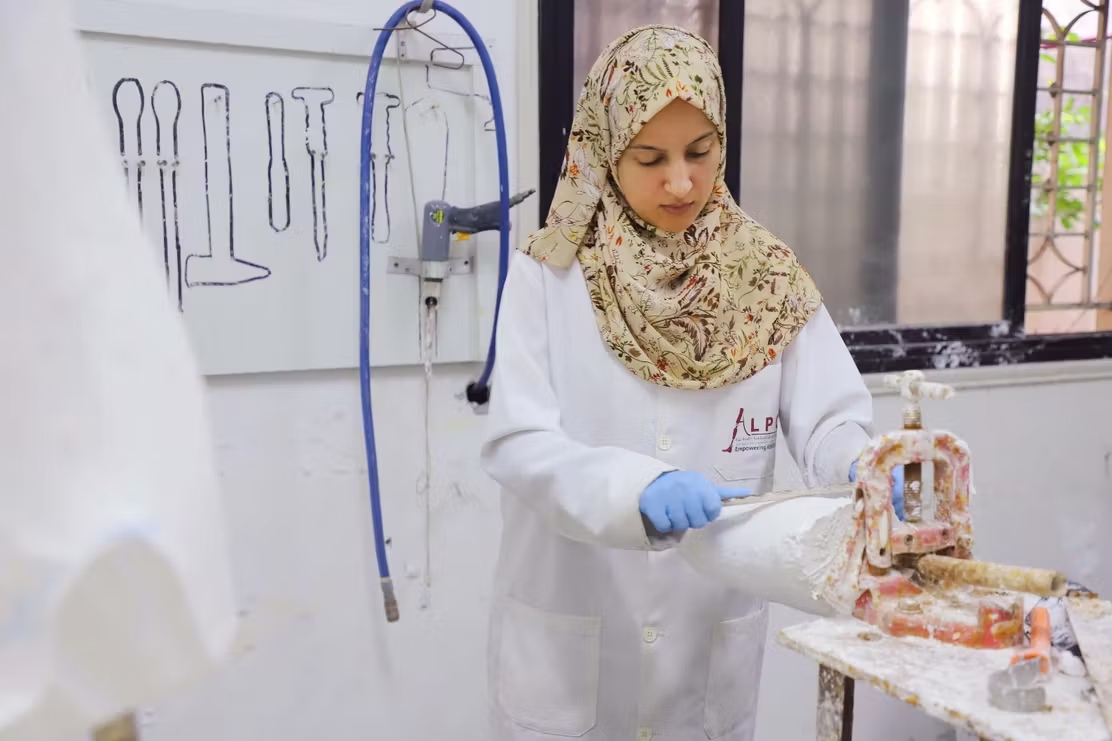
The Artificial Limbs and Polio Centre, known as ALPC, remains one of Gaza’s key physical rehabilitation centres, providing prosthetics, orthotics, physiotherapy, assistive devices, wheelchairs and mental health support. However, the centre is operating under severe constraints, including shortages of raw materials, components, tools, machinery and rehabilitation equipment.
According to the SciDev.Net report, ALPC is seeing approximately 40 to 50 patients per day requiring prosthetic or orthotic support, with children making up around 40 per cent of those patients. The centre is reportedly fabricating and fitting around 35 permanent prostheses and about 100 orthoses each month.
For any O&P service, those numbers would represent a heavy workload. In Gaza, they are being managed amid damaged infrastructure, restricted imports, workforce shortages and an expanding population of people with complex trauma injuries.
Supplies are as important as surgical care
Emergency surgery saves lives. But without rehabilitation supplies, children who survive traumatic injury may be left without the means to regain mobility.
The SciDev.Net article notes that rehabilitation-related supplies and assistive products continue to face major clearance delays. It cites WHO reporting that 18 shipments of rehabilitation supplies were pending clearance as of mid-April 2026, with waiting times ranging from 130 to 520 days.
For O&P teams, this means essential materials may not be available when they are needed most.
These include:
- prosthetic feet
- knees and pylons
- paediatric components
- socket materials
- liners and suspension systems
- plaster of Paris
- thermoplastics
- orthotic joints
- footwear materials
- wheelchairs and walking aids
- tools and workshop machinery
- rehabilitation equipment
- 3D printing materials and spare parts
A prosthetic service cannot function on goodwill alone. It requires a supply chain. When plaster, resin, liners, components, tools or replacement parts are unavailable, even the most skilled prosthetist cannot deliver appropriate care.
This is why humanitarian response for Gaza must treat O&P materials as essential medical supplies, not secondary equipment.
Permanent prosthetics remain out of reach for many
A further concern is the gap between the number of people assessed and the number receiving permanent prosthetic care.
SciDev.Net cites a WHO trauma rehabilitation needs report showing that, among 2,300 people with amputated limbs assessed in Gaza between September 2024 and May 2026, fewer than 25 per cent had been fitted with permanent prosthetics.
That figure should concern every O&P professional in the region.
A permanent prosthesis is not a luxury. It is often the difference between dependence and mobility, between home confinement and school attendance, between social isolation and participation.
For children, the consequences are even more serious. Delayed prosthetic fitting can affect gait development, muscle strength, balance, confidence, education, social integration and long-term functional independence.
Workforce shortage is a major barrier
The article also highlights a severe shortage of trained prosthetic and orthotic professionals in Gaza.
Patrick Griffiths of the International Committee of the Red Cross is quoted by SciDev.Net as saying that Gaza currently has only nine prosthetic and orthotic professionals. Against the scale of amputations, orthotic needs, burns, spinal injuries and other trauma-related disabilities, this indicates a major workforce gap.
This issue matters well beyond Gaza.
Across many IMEA countries, prosthetists and orthotists are still under-recognised within national health systems. Training pathways remain limited, professional regulation is uneven, and rehabilitation is often funded after acute care rather than alongside it.
Gaza shows the consequences of that gap in its most extreme form. When mass injury occurs, the need for trained O&P professionals becomes immediate and unavoidable.
Burn rehabilitation and 3D printed facial orthoses
The report also draws attention to another important area of rehabilitation: burn injuries.
WHO has recorded thousands of major burn injuries in Gaza, many of which require long-term rehabilitation. SciDev.Net reports that the Médecins Sans Frontières clinic in Gaza City is using 3D technology to support transparent facial orthosis treatment for burn patients.
This is an important development for IMEA CPO readers because it shows that advanced rehabilitation technologies can be relevant even in crisis settings. Transparent facial orthoses, pressure garments, splints, customised orthoses and 3D-printed assistive devices can all play a role in post-burn care.
However, the same problem appears again: technology depends on supply. MSF reportedly faces shortages of filament and spare parts needed for 3D printing, alongside shortages of basic medical supplies.
For the O&P and rehabilitation technology sector, the lesson is clear. Digital fabrication is useful only when it is supported by reliable materials, maintenance, training and clinical follow-up.
The wider IMEA lesson: paediatric prosthetics must be planned as a system
Gaza’s child amputees need more than emergency evacuation, one prosthesis or short-term international attention.
They need a system.
That system must include:
- early surgical and rehabilitation coordination
- pre-prosthetic care
- residual limb monitoring
- paediatric prosthetic assessment
- repeated socket replacement
- growth-related component changes
- gait training
- school reintegration
- psychosocial support
- sports and play opportunities
- family education
- long-term follow-up
- local O&P workforce development
- secure supply chains for materials and components
This is the message for IMEA CPOs. Paediatric limb loss is not solved by device donation alone. It requires clinical continuity.
Children who lose limbs in conflict will need prosthetic and rehabilitation care for years. They will need new sockets, new components, new alignment, new therapy goals and new psychosocial support as they grow. Some will need reconstructive surgery, stump revision or management of complex injuries. Others will need orthoses, wheelchairs, walking aids or burn rehabilitation.
The O&P profession must advocate for this full pathway.
What should regional CPOs and rehabilitation organisations do?
The Gaza crisis should push professional bodies, universities, NGOs, manufacturers, distributors and rehabilitation providers across IMEA to consider how they can support long-term paediatric amputee care.
Priority actions could include:
- creating paediatric prosthetic component donation channels
- supporting ALPC and other Gaza rehabilitation providers with materials and tools
- offering remote technical mentoring where appropriate
- training more clinicians in paediatric prosthetics and orthotics
- supporting Arabic-language rehabilitation education materials
- developing regional emergency O&P supply reserves
- including O&P in emergency trauma response planning
- building referral pathways for children medically evacuated outside Gaza
- ensuring evacuated children receive follow-up after return
- funding sports and psychosocial rehabilitation for young amputees
The need is not only technical. It is humanitarian, educational and social.
A child who receives a well-fitting prosthesis must also be able to return to school, play with friends, participate in family life and feel safe in public. Rehabilitation must therefore include dignity, identity and belonging.
Emergency response must become long-term commitment
The most powerful message from the SciDev.Net report is that Gaza’s child amputees are not facing a short-term rehabilitation problem. They are entering a lifetime of prosthetic and orthotic need.
For IMEA CPOs, this should be a call to action.
The region has the clinical expertise, manufacturing capacity, educational institutions, suppliers and humanitarian networks to contribute meaningfully. But support must be organised around continuity, not one-off interventions.
A child amputee does not need one prosthesis.
A child amputee needs a rehabilitation pathway that grows with them.
- SciDev.Net: Sustained care critical for Gaza’s child amputees
- WHO EMRO: One in four injuries in Gaza is life-changing
- WHO trauma rehabilitation needs in Gaza report
- ICRC: Artificial Limbs and Polio Centre in Gaza
- International Committee of the Red Cross
- Médecins Sans Frontières
- WHO Rehabilitation
- International Society for Prosthetics and Orthotics