 By
By
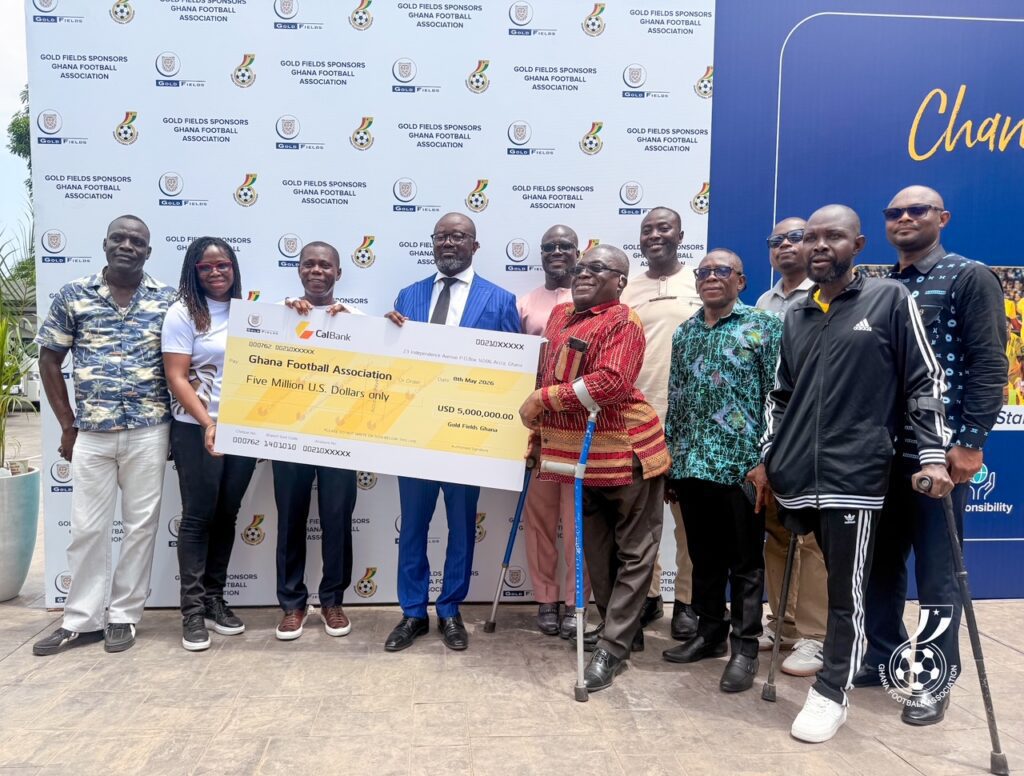
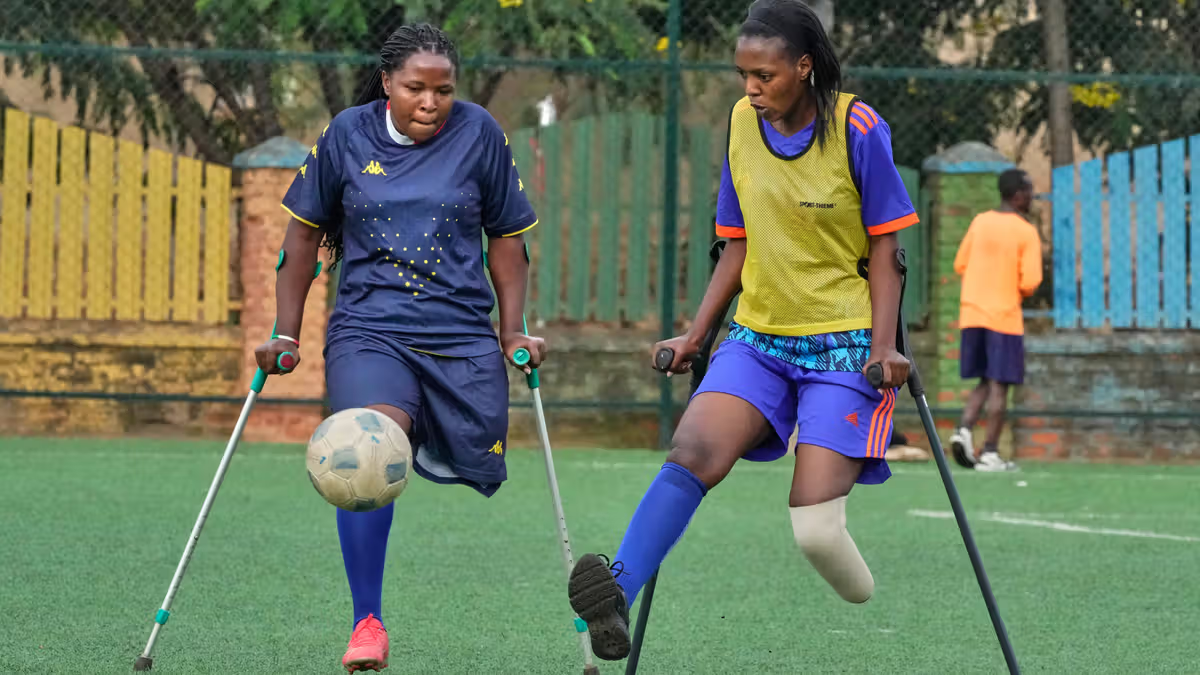
Ghana’s national amputee football team, the Black Challenge, has received a major boost after the Ghana Football Association and Gold Fields Ghana confirmed a new sponsorship agreement that includes support for the country’s amputee football programme.
According to GhanaSoccernet, GFA President Kurt Okraku said the Black Challenge’s participation in the 2026 Amputee World Cup had been uncertain before the new sponsorship arrangement was secured. His comments were made during the signing of a two-year, $5 million sponsorship deal between Gold Fields Ghana and the Ghana Football Association in Accra.
The agreement is significant because it extends beyond Ghana’s senior men’s national team. It also covers the Black Queens, the Black Challenge, and the Women’s Premier League, reflecting a broader approach to football development and national representation.
For the Black Challenge, the timing is important. Ghana qualified for the global tournament after winning the 2024 Amputee Africa Cup of Nations in Egypt. The team reached the final after a 3–0 semi-final win over Algeria and then defeated Morocco 2–1 to retain the continental title.
Why This Matters Beyond Football
For the prosthetics, orthotics and rehabilitation community across IMEA, Ghana’s Black Challenge represents more than sporting success. Amputee football sits at the intersection of rehabilitation, mobility, disability inclusion, national pride and public visibility.
When amputee athletes compete internationally, they challenge narrow views of disability. They also demonstrate what becomes possible when rehabilitation, training, peer support and opportunity come together.
However, elite adaptive sport requires more than talent. Teams need travel funding, training camps, equipment, medical support, prosthetic and orthotic expertise, coaching, logistics and long-term planning. Without stable sponsorship, even highly successful teams can face uncertainty when preparing for major tournaments.
A Signal for Corporate Support in Adaptive Sport
Gold Fields’ inclusion of the Black Challenge within a wider national football sponsorship package is an important signal. It places amputee football inside the mainstream sporting conversation rather than treating it as a separate charitable activity.
That distinction matters.
Adaptive sport programmes often depend on short-term donations or one-off support. A structured sponsorship model gives teams a better chance to plan, prepare and compete with dignity. It also helps build public awareness around disability sport and the rehabilitation pathways that make high-level participation possible.
The CPO Perspective
For certified prosthetists and orthotists, amputee football highlights the importance of functional mobility beyond basic walking. Athletes need comfort, stability, endurance, residual limb protection and confidence under high physical demand.
Even when players compete without prostheses during matches, the broader rehabilitation journey still depends on good prosthetic and orthotic care. Daily mobility, training access, travel and recovery are all connected to device provision, socket comfort, limb health and follow-up.
Ghana’s success should therefore be seen as part of a wider rehabilitation ecosystem. Strong amputee sport programmes can inspire young people with limb loss, but they also underline the need for accessible clinical services, trained professionals and durable assistive technology.
IMEA CPO Perspective
Across India, the Middle East and Africa, amputee football continues to grow as both a sport and a platform for inclusion. Ghana’s Black Challenge has become one of the strongest examples of what can be achieved when athletes are given the opportunity to compete at the highest level.
The new Gold Fields sponsorship should help reduce immediate uncertainty around World Cup participation. But the wider lesson is clear: adaptive sport needs consistent investment, not only celebration after success.
For IMEA’s O&P and rehabilitation sector, Ghana’s story is a reminder that mobility is not only a clinical outcome. It can become identity, leadership, national representation and hope.