 By
By
India’s orthotics, prosthetics, and rehabilitation sector is one of the largest in the world—defined by enormous clinical demand, wide geographic variation, and a unique blend of public health programs, major NGOs delivering at scale, tertiary hospitals, armed forces rehabilitation, and private clinic networks. Demand is fuelled by rising diabetes and vascular disease, high rates of trauma and road traffic injuries, and a substantial stroke-related disability load—creating sustained need for prosthetic limbs, orthotic bracing, diabetic foot protection/offloading, wheelchairs, and long-term rehabilitation follow-up.
Prevalence & demand drivers (key statistics)
Diabetes
India has one of the world’s largest diabetes populations. The International Diabetes Federation estimates:
- 89.8 million adults (20–79) living with diabetes in 2024
This directly drives demand for diabetic footwear, custom foot orthoses, Charcot management, wound offloading, and amputation prevention pathways.
Stroke
Stroke is a major disability driver in India—creating high ongoing need for AFOs/KAFOs, upper-limb supports, mobility aids, and neurorehabilitation. Published evidence commonly reports:
- Incidence ~119–145 per 100,000 per year (ranges reported in recent synthesis/review work)
- A pooled study in the region reports a crude incidence ~138 per 100,000 (contextual comparator)
Persons with disabilities
India’s disability prevalence depends heavily on methodology and definitions. Two widely referenced official sources report:
- Census 2011: 26.8 million persons with disabilities (2.21%)
- NSS 76th round (2018): disability prevalence 2.2% (2.3% rural; 2.0% urban)
Amputations (notably traumatic + diabetes-linked)
National amputee totals are difficult to “pin down” as a single number, but India’s amputation burden is clearly very large:
- A global burden analysis reports India had the highest incidence of traumatic amputation in 2019: ~2.22 million (95% UI 1.85–2.70 million)
- Reviews of rehabilitation literature highlight older national estimates (historical baseline) and underline the scale of need and follow-up burden
India O&P system snapshot
India’s delivery model is multi-layered:
- Major NGO/charity networks providing very high-volume fittings and outreach camps
- Government distribution models (assistive devices, limb-fitting programs, district-level camps, and national schemes) anchored by domestic manufacturing and pan-India distribution networks
- Tertiary hospitals (public + private) delivering complex clinical rehabilitation, paediatrics, and multidisciplinary follow-up
- Armed forces rehabilitation with structured pathways for early fitting, advanced fabrication and outcomes-driven protocols
- Private clinical networks expanding premium prosthetics/orthotics access in major cities
Top orthotic & prosthetic service providers in India
A practical “who’s who” list across charitable, government-linked, hospital-based, and private networks:
1) Jaipur Foot (BMVSS)
One of the most globally recognised charitable prosthetic and assistive device models—delivering large-scale access through multi-city branches and outreach.
2) ALIMCO
India’s government enterprise manufacturing a wide range of assistive devices (including orthotic/prosthetic products) and supporting broad distribution through national programs.
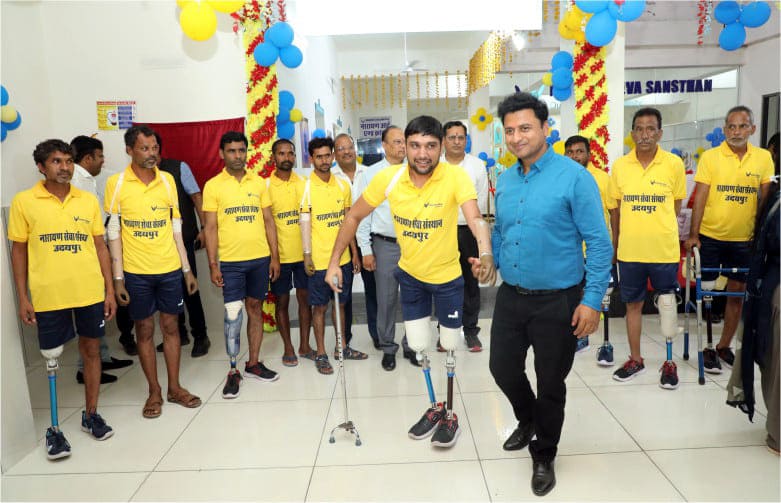
3) Narayan Seva Sansthan
A major NGO provider delivering prosthetic limb services through workshops and fitting camps, improving access for underserved communities.
4) Mobility India
A long-standing rehabilitation organisation with strong assistive technology capability and education/training pathways that help build India’s O&P workforce capacity.
5) All India Institute of Medical Sciences (AIIMS)
A flagship tertiary institution with structured rehabilitation services and specialist clinics where prosthetists/orthotists support clinical pathways (including orthotic prescription and fitting workflows).
6) Ottobock India
A premium private network providing prosthetics, orthotics, and wheelchair services through clinical centres, supporting higher-end device options and rehabilitation integration.
7) Indian Spinal Injuries Centre (ISIC)
A prominent specialist centre with rehabilitation services that include orthotics and prosthetics as part of multidisciplinary care.
8) Artificial Limb Centre (ALC) Pune
A key armed forces rehabilitation hub associated with modern protocols (including faster fitting pathways and advanced fabrication capacity).
Key challenges
India’s O&P growth constraints are less about “whether demand exists” and more about system consistency and reach:
- Uneven access between metro vs rural/remote areas
- High out-of-pocket affordability barriers for advanced components
- Variable device quality and follow-up consistency across providers
- A need to scale diabetic foot prevention (to reduce avoidable amputations) given the diabetes burden
- Workforce pressure: growing demand vs training/output capacity
Growth opportunities (what comes next)
India can make major outcomes gains by focusing on prevention + scale + standardisation:
- National diabetic foot pathways: screening + protective footwear/orthoses + offloading and rapid referral
- Hub-and-spoke digital workflows (scan → design → central manufacture → local fitting) to reduce turnaround time
- Standardised outcomes & repair programs to reduce device downtime and extend service life (especially for rural users)
- Stronger integration with stroke rehab to improve mobility outcomes with earlier, consistent orthotic provision
IMEA CPO outlook
India is a global-scale rehabilitation market: massive need, powerful delivery models (especially NGO and government distribution), and fast-expanding private-sector capability. With 89.8 million adults living with diabetes and substantial stroke/disability burden, the biggest wins will come from preventing avoidable limb loss, standardising quality, expanding follow-up capacity, and accelerating access through scalable digital and outreach models.