 By
By
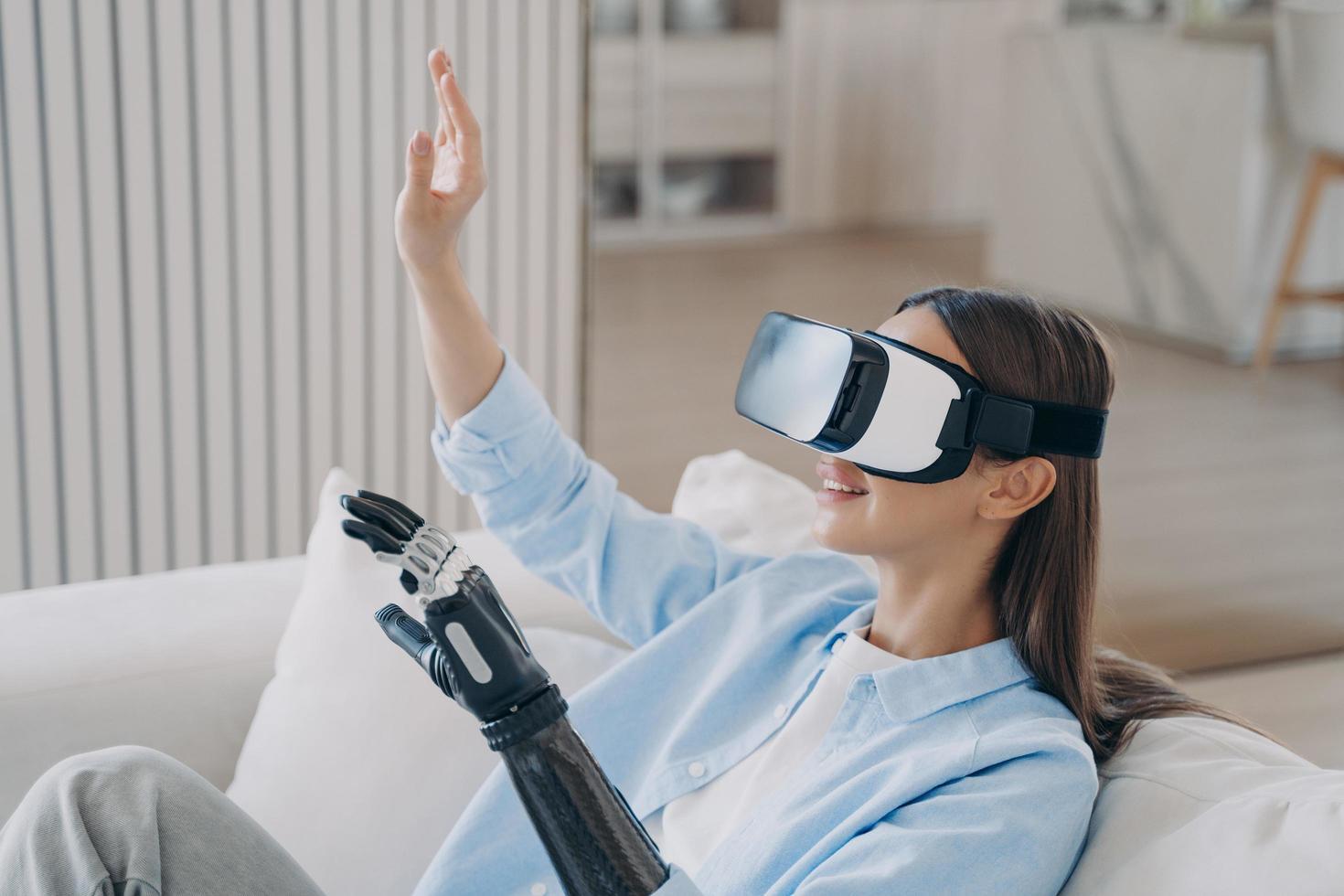
The virtual arm bent toward a floating purple target all by itself, following a smooth minimum-jerk trajectory — the kind of gentle speed-up-then-slow-down curve that characterises natural human reaching. What Hapuarachchi wanted to know was simple enough: how fast should that autonomous movement be before it stops feeling like your arm and starts feeling like something else entirely?
Quite a narrow window, as it turns out.
Nineteen volunteers (all male, average age about 24) each performed the reaching task at six different speeds, from a 125-millisecond snap — faster than you could blink — to a glacial four-second crawl. After each block of fifteen reaches, they rated ownership, agency, usability, and a battery of social impressions borrowed from robotics research: did the arm seem competent, warm, uncomfortable?
The one-second condition won on nearly every measure. Ownership peaked there. So did agency and usability. Push the arm faster and those scores fell off; slow it down and the same thing happened, though perhaps for different reasons. The 125-millisecond arm, the one that moved in a fraction of a blink, scored highest on discomfort by a wide margin — participants rated it as awkward, strange, aggressive even. The four-second arm wasn’t scary. It was just rubbish. Participants stopped believing it was competent, stopped feeling it belonged to them, and (rather tellingly) slowed their own real upper-arm movements to match its sluggish pace.
That last finding is worth pausing on. The volunteers were unconsciously synchronising their real movements with the autonomous prosthetic. When the machine dawdled, they dawdled. The team think this might be a behavioural signature of embodiment itself — the brain accepting the limb as its own and adjusting accordingly; pulling the whole system into coordination even though the person had zero direct control over the forearm.
Why one second? It is not an arbitrary number. Previous work on natural reaching — asking people to grab targets at whatever pace felt comfortable — has consistently landed on movement durations close to 1 s. The prosthetic arm, in other words, was most readily accepted as part of the body when it moved at roughly the speed a real arm would have. Humanlike movement, humanlike acceptance. Sort of obvious in retrospect, but nobody had tested it properly for autonomous prosthetics before.
There is a catch, though. The experiment used VR and healthy volunteers, not amputees with real prostheses. Nobody felt the weight of an actual device, the forces at the socket where a prosthesis meets residual limb, or the general weirdness of living with limb loss day to day. The rigid brace was an ingenious workaround — it meant participants genuinely couldn’t bend their elbow, which forced reliance on the virtual prosthetic — but it’s not the same thing.
And single sessions tell you only so much. People adapt to tools; a kitchen knife that felt unwieldy on day one becomes an extension of your hand after a month. The researchers reckon that a fast, accurate robotic arm which feels alarming at first encounter could come to feel perfectly natural with enough daily use. They plan to study long-term adaptation next, which seems like the obvious follow-up.
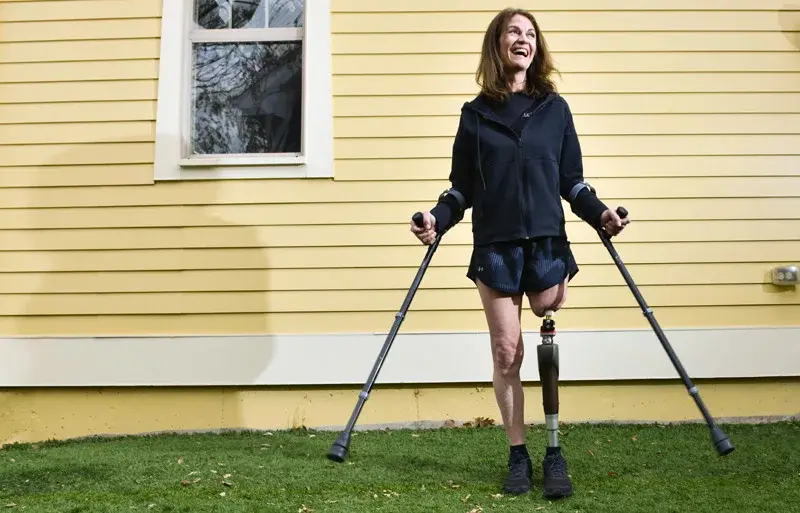
Still, the broader point stands. Exoskeletons, extra robotic limbs, wearable assistive devices — any technology meant to work as a functional extension of the body faces the same design tension. Engineers optimise for speed and accuracy because those are the metrics they can measure. But a prosthetic arm that outperforms biology while feeling like a foreign object strapped to your shoulder is a prosthetic arm people stop wearing. The design target isn’t performance. It is plausibility — making the machine move in a way the brain is willing to call its own.
Study link: https://www.nature.com/articles/s41598-026-38977-8