 By
By
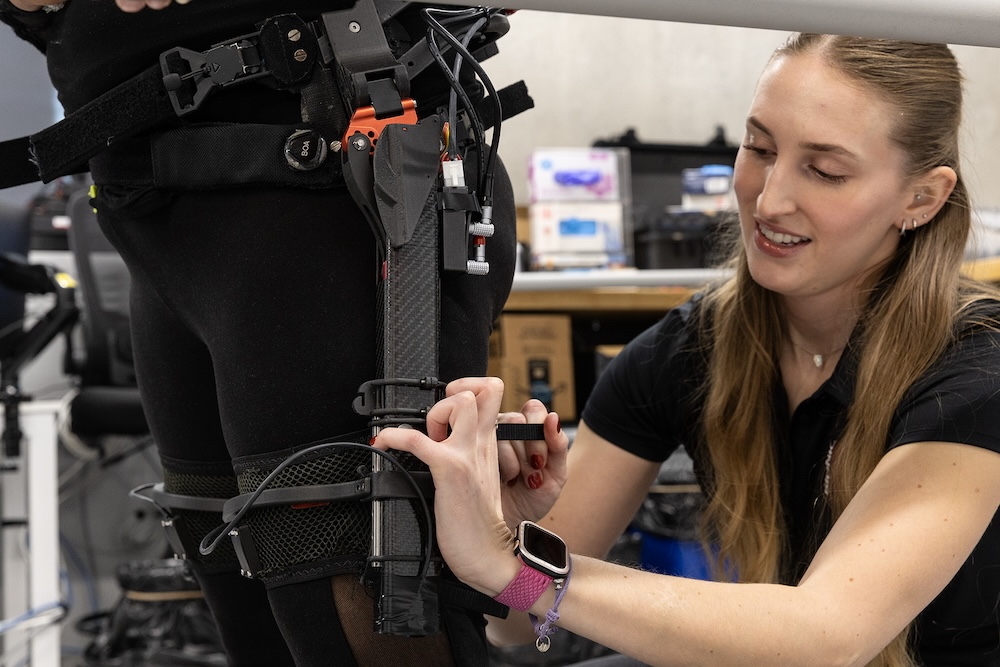
Researchers at the University of Utah have developed a novel, portable exoskeleton designed to help individuals with gait impairments after a stroke walk more efficiently. The breakthrough wearable device targets the reduced mobility many stroke survivors experience due to hemiparesis, a condition involving muscle weakness and impaired motor control on one side of the body that affects roughly 80 % of people after a stroke in the United States.
The lightweight exoskeleton, which fits around the hips and thighs, provides targeted motorized assistance during walking, helping to reduce the metabolic effort required to take each step. In trials documented in Nature Communications, the device significantly lowered the energy cost of walking—by nearly 20 %—in participants with chronic post-stroke walking impairments, suggesting wearers may be able to walk longer with less fatigue.
Engineers chose to focus assistance at the hips because this joint plays a central role in propulsion and balance and is closer to the body’s center of mass, allowing for effective support with a lighter overall system. The design integrates sensors and intelligent controls that adapt in real time to the wearer’s gait, providing power at the precise moments the hips must push off during the stride.
This innovation marks a promising advance in wearable robotics for neurorehabilitation and independent mobility. By lowering the physical demands of walking, the exoskeleton offers potential benefits for quality of life, endurance, and functional recovery for millions of stroke survivors worldwide who struggle with everyday mobility.