 By
By
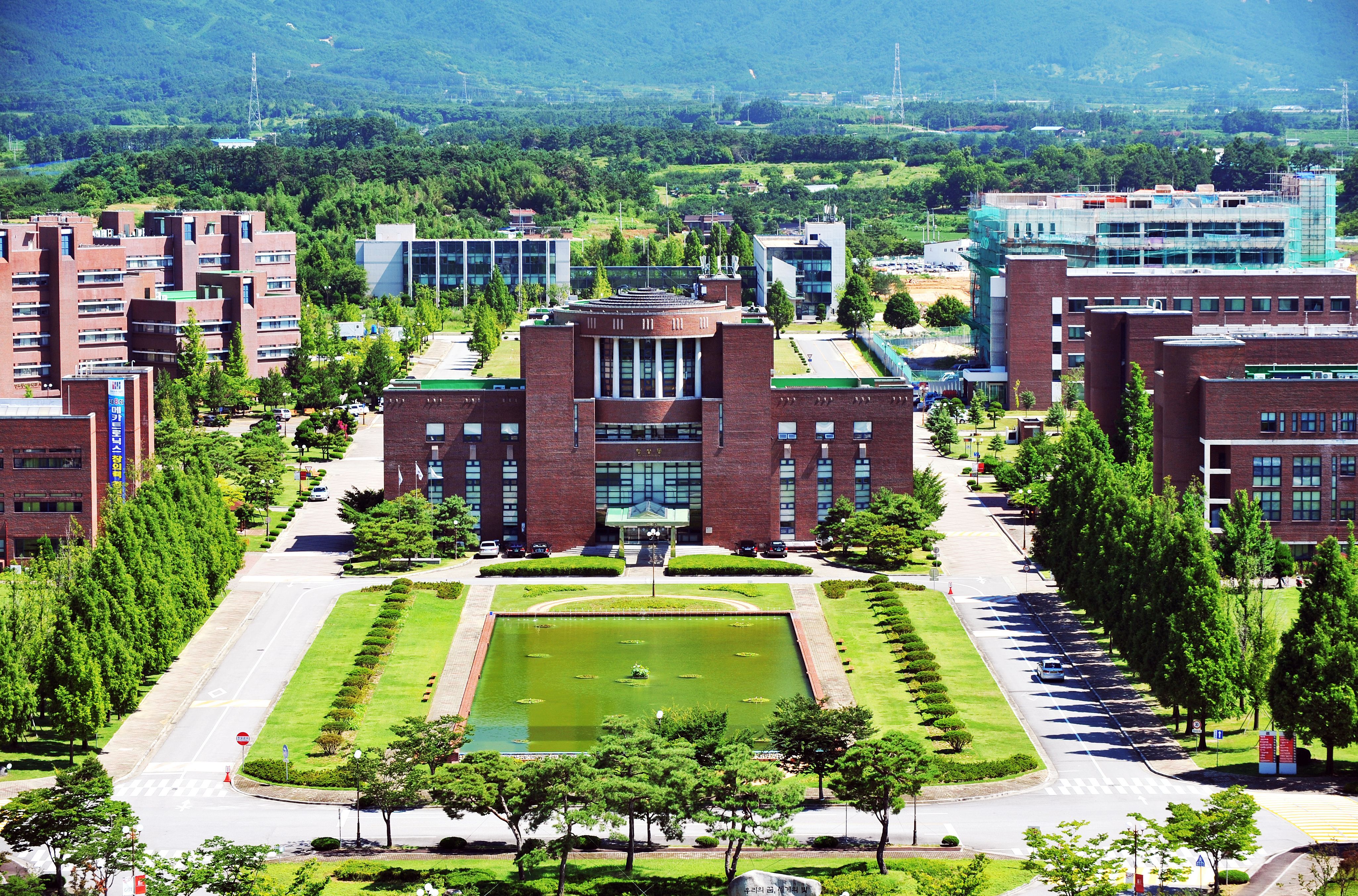
A joint research team led by Professor Kang Jiyeon from the Department of AI Convergence at the Gwangju Institute of Science and Technology (GIST) has developed an innovative robotic system to support customized prosthetic arm assessment and design. The system, known as I-PEDLE (Intelligent Prosthesis Emulator for Daily Living Enhancement), allows users to virtually experience the movements of different prosthetic arm configurations before final fabrication.
The technology is intended to streamline the selection and design process for upper-limb prosthetic arms, which currently poses challenges due to weight, control complexity, limited wrist functionality, and high patient dissatisfaction. The I-PEDLE system replicates shoulder-to-hand motion using a robot capable of free movement in multiple directions, letting individuals test how different prosthetic designs perform in daily tasks.
I-PEDLE’s core feature is its multi-directional robotic emulator, which can simulate realistic prosthetic wrist functions such as rotation, bending, and grasping. By placing drive mechanisms externally and minimizing the weight of the prosthetic arm itself, the research team was able to demonstrate natural motion patterns that reduce compensatory movements often seen when users lack effective wrist articulation.
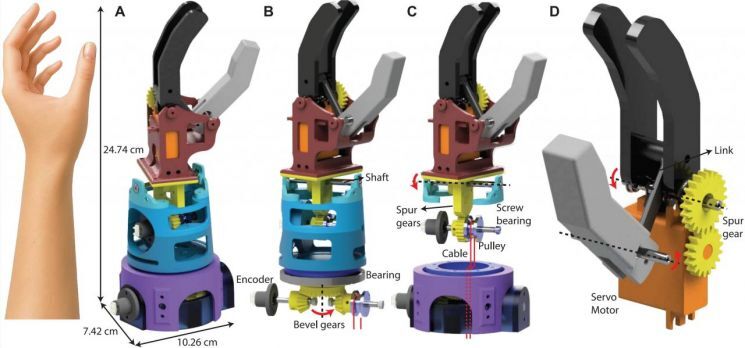
Through sensor data capture and movement analysis, the system enables quantitative evaluation of how various wrist designs affect joint use, compensatory behavior, and overall user comfort. This represents a shift from traditional trial-and-error fitting towards a more data-driven method that can inform personalized prosthetic design choices.
Professor Kang described the development as a meaningful step toward objective customization in prosthetic design, with potential applications in both research and clinical decision-making. Future work will involve testing the platform with individuals who have upper-limb amputations and advancing algorithms that incorporate real-time user feedback into prosthetic design optimization.
The project was conducted in collaboration with the University of Michigan and State University of New York at Buffalo, and supported by programs from the U.S. National Science Foundation (NSF) and Korea’s Ministry of Science and ICT and National Research Foundation of Korea. The research findings were published in IEEE Robotics and Automation Letters in early February 2026.