

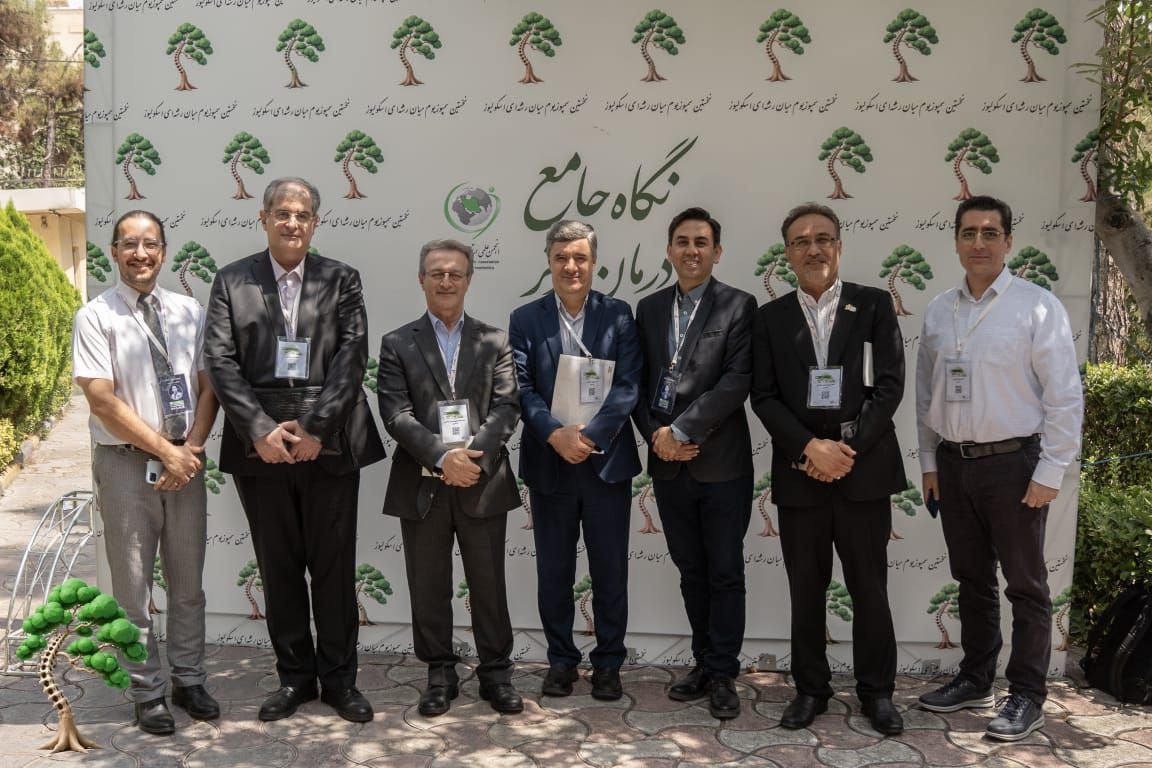
Behgam Company has taken part in the 1st Scoliosis Rehabilitation Interdisciplinary Symposium, using the event not simply as a promotional opportunity but as another point of engagement with the scientific and rehabilitation community.
The company said it was informed about the symposium only one day before the event, creating an immediate challenge around logistics, preparation and what it described as achieving “quality attendance.”
Despite the short notice, Behgam emphasised that participation in scientific events should meet the same standards it applies to its wider professional engagement.
For the prosthetics and orthotics sector, that attitude is significant.
Scientific meetings around scoliosis are increasingly multidisciplinary, bringing together professionals from orthotics, physiotherapy, rehabilitation medicine, orthopaedics and other specialist fields. For companies working in spinal orthotics and rehabilitation, attending these meetings is therefore about considerably more than displaying products.
It is about remaining connected to the clinical community that ultimately determines how technology is prescribed and used.
Scientific events are also networking platforms
Behgam described every scientific event as a networking opportunity.
That approach reflects an important reality within rehabilitation.
Many of the most useful conversations at conferences do not necessarily happen during formal presentations. They occur between sessions, around exhibition areas and during informal discussions between clinicians, researchers, manufacturers and educators.
Scoliosis care makes these interactions particularly important because successful treatment often requires cooperation between multiple disciplines.
Orthotists may be responsible for the design and fitting of spinal braces, while physiotherapists focus on movement and exercise. Physicians assess progression and treatment requirements, and surgeons may become involved in more severe cases.
A symposium specifically positioned around interdisciplinary scoliosis rehabilitation therefore creates a natural environment for these different perspectives to meet.
For O&P professionals, this also provides an opportunity to ensure that orthotic expertise remains part of the wider clinical discussion around conservative scoliosis management.
Quality of presence matters
Behgam’s comments around “quality attendance” are also worth examining.
Companies operating within medical technology frequently face pressure to attend large numbers of conferences, workshops and professional meetings.
But physical presence alone does not necessarily create meaningful engagement.
A well-prepared scientific event presence should ideally communicate something about the organisation’s identity, expertise and commitment to the field.
Behgam highlighted this point through something as simple as the promotional materials it prepared for the symposium.
The company said that seeing photographs from the event was not simply about seeing promotional merchandise. Instead, those materials represented intensive teamwork and, in its words, respect for the scientific community.
Even the choice of a pen was presented as part of the company’s refreshed visual identity — a small brand touch designed to accompany professionals while taking notes during scientific sessions.
It is a reminder that conference participation can reinforce how a company wishes to be perceived professionally.
Scoliosis requires multidisciplinary thinking
For the wider IMEA CPO community, the subject of the symposium is equally relevant.
Scoliosis management is one of the areas where orthotists can have a particularly close working relationship with other healthcare professionals.
Depending on the patient, treatment may involve observation, physiotherapy, exercise-based rehabilitation, spinal bracing or surgical intervention.
For patients receiving a brace, successful treatment extends well beyond fabrication.
Brace design, fit, corrective forces, comfort, wearing time, patient adherence and ongoing clinical monitoring all influence outcomes.
This makes communication between orthotists and referring clinicians essential.
Interdisciplinary events can therefore help professionals better understand each other’s objectives and limitations.
A physiotherapist may gain greater insight into how brace design influences movement.
An orthotist may learn more about how exercise programmes interact with bracing.
Physicians and surgeons can discuss which patients may benefit most from conservative intervention and when treatment strategy should change.
A changing role for orthotics companies
Companies supplying orthotic technologies are also increasingly becoming participants in education rather than simply equipment providers.
The strongest relationships with clinicians are often built by helping them understand why a technology exists, how it should be prescribed and where it fits within a broader treatment pathway.
This is particularly important in spinal orthotics.
The value of a brace is determined by much more than the material or manufacturing method used. Clinical assessment, biomechanical design and the relationship between the clinician, orthotist and patient remain central.
For manufacturers and distributors, supporting scientific dialogue can therefore be more valuable over time than conventional product promotion alone.
Building a modern professional identity
Behgam also used the symposium to introduce what it described as its “new and modern identity.”
Brand development may appear separate from clinical practice, but for medical technology companies it often reflects something broader.
A modern professional identity can signal changing ambitions — whether that means greater engagement with clinicians, increased participation in scientific events or the introduction of new products and services.
The challenge is ensuring that the underlying professional contribution develops alongside the branding.
Behgam’s emphasis on preparation and respect for the scientific community suggests that the company sees conference participation as part of that wider positioning.
The value of being present
Across the IMEA region, O&P companies often operate within relatively specialised professional communities.
That makes relationships particularly important.
A prosthetist may work with the same suppliers for many years. Clinicians may encounter company representatives repeatedly at conferences, workshops and training events.
Trust is therefore built gradually.
Scientific meetings provide an opportunity for companies to demonstrate that they are willing to participate in professional conversations even when there is no immediate commercial transaction attached.
Behgam summarised its own philosophy as continuing to stand alongside the scientific community with “respect, care and accompaniment.”
The phrase captures something that applies more widely across O&P.
The most successful relationships between industry and clinicians are rarely built around a single sale.
They are built by remaining visible, useful and engaged over time.
For Behgam Company, participation in the first Scoliosis Rehabilitation Interdisciplinary Symposium represents another step in that direction — and also highlights the growing importance of interdisciplinary collaboration within scoliosis rehabilitation across the region.
- Behgam Company on LinkedIn
- International Society for Prosthetics and Orthotics
- SOSORT – Society on Scoliosis Orthopaedic and Rehabilitation Treatment
- World Health Organization – Rehabilitation
- IMEA CPO