

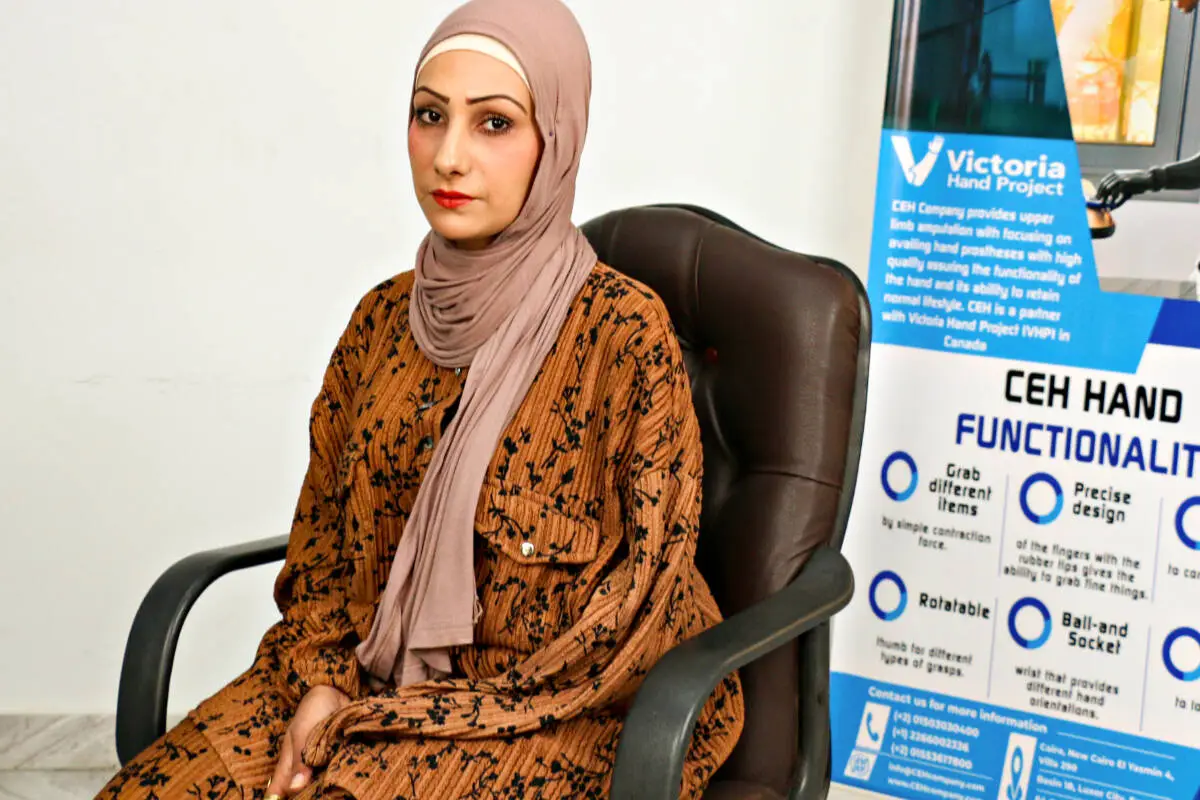
The Victoria Hand Project (VHP), a University of Victoria-based initiative focused on improving access to affordable upper-limb prosthetic care, is expanding its work across the Middle East and South Asia.
The development highlights a growing shift in how prosthetic services can be delivered in regions where cost, specialist capacity, infrastructure and access to advanced manufacturing remain significant barriers.
According to the organisation, more than 530 beneficiaries have been helped across 11 countries, while more than 50 clinicians have received training in technologies supporting the delivery of the Victoria Hand.
The model is particularly relevant to developing and emerging rehabilitation systems because it does not rely solely on importing finished prosthetic devices. Instead, VHP works with local clinical partners, provides training and establishes the capability to design and manufacture devices closer to the patient.
Local manufacturing rather than imported prostheses
At the heart of the Victoria Hand Project is a digitally enabled manufacturing approach.
The organisation uses 3D scanning, computer-aided design and 3D printing to enable prosthetic hands to be produced locally. VHP describes its model around three core elements: localized 3D printing and fabrication, professional care through local healthcare practitioners, and training and ongoing technical support.
This approach can reduce some of the logistical and financial barriers associated with conventional prosthetic provision.
The University of Victoria notes that conventional upper-limb prosthetic devices can cost thousands of US dollars, placing them beyond the reach of many people in lower-income communities. By combining digital design and local production, the Victoria Hand can be manufactured at a substantially lower cost while still being customized to the individual user.
For healthcare systems across the IMEA CPO region, this distinction is important. Digital manufacturing is not simply being used as an alternative production technique; it can become part of a broader strategy for developing local rehabilitation capacity.
Building capability within local clinics
VHP’s model places prosthetists, technicians and local rehabilitation professionals at the centre of service delivery.
Rather than creating a parallel international service, the organisation works with clinical partners in individual countries and supports them with equipment, training and technical expertise. Its international partner network includes organisations and clinicians in countries including Egypt, Nepal, Pakistan, Kenya and Uganda.
In Nepal, for example, VHP established a 3D printing centre with LimbCare Nepal and trained local staff in the technology. The programme was designed not only to provide prostheses but also to build technical skills and create a more sustainable local service model.
The organisation’s work in Egypt has similarly focused on developing local production capacity. VHP first travelled to Egypt in 2016 and subsequently worked with the Canadian Egyptian Hand Company to establish a print centre serving Egypt and surrounding areas.
These examples demonstrate an increasingly important principle for prosthetic and orthotic development: technology has greater long-term impact when it is accompanied by clinical training, technical capability and local ownership.
Why this matters for IMEA
The Middle East, Africa, Central Asia and South Asia contain some of the world’s fastest-changing rehabilitation markets, but access to prosthetic services remains uneven.
For many patients, the challenge is not simply the availability of a prosthetic component. It can involve the entire care pathway — assessment, measurement, socket or interface fabrication, alignment, fitting, rehabilitation, maintenance and follow-up.
Digital workflows may help address some of these constraints by reducing dependence on centralized manufacturing and enabling selected components to be produced closer to the patient.
The Victoria Hand Project demonstrates one possible model: establish local capability, train clinicians and technicians, use digital technologies to simplify production, and provide continuing technical support.
Recent developments in digital prosthetics are making this approach increasingly practical. VHP’s workflow can use 3D scanning and automated design tools to generate patient-specific components, with printing and assembly taking place locally. A recent account of the project’s technology described a workflow in which a clinician captures the patient’s anatomy, digital tools generate the design and the prosthesis can then be printed and assembled locally.
From technology transfer to sustainable rehabilitation
The significance of VHP’s expansion extends beyond the Victoria Hand itself.
For CPOs and rehabilitation professionals across IMEA, the project provides another example of how digital manufacturing can be incorporated into a sustainable clinical ecosystem.
The objective is not necessarily to replace established prosthetic manufacturing methods. Instead, technologies such as 3D scanning, CAD and additive manufacturing can provide additional options where conventional infrastructure is difficult or expensive to establish.
The model also reinforces the importance of investing in people. VHP’s international programmes have trained clinicians and technicians in 3D printing, scanning and computer design, helping local teams develop skills that can potentially support wider digital transformation within their services.
As demand for rehabilitation services grows across the IMEA region, initiatives that combine affordable technology with local clinical expertise could become increasingly important.
The Victoria Hand Project’s expansion therefore represents more than the distribution of a particular prosthetic hand. It reflects a broader movement toward locally delivered, digitally enabled and capacity-building approaches to prosthetic care — an approach that could have relevance well beyond upper-limb prosthetics.
- Victoria Hand Project
- Victoria Hand Project – International Partners
- University of Victoria – 3D Printed Hands
- Victoria Hand Project – Nepal Programme