

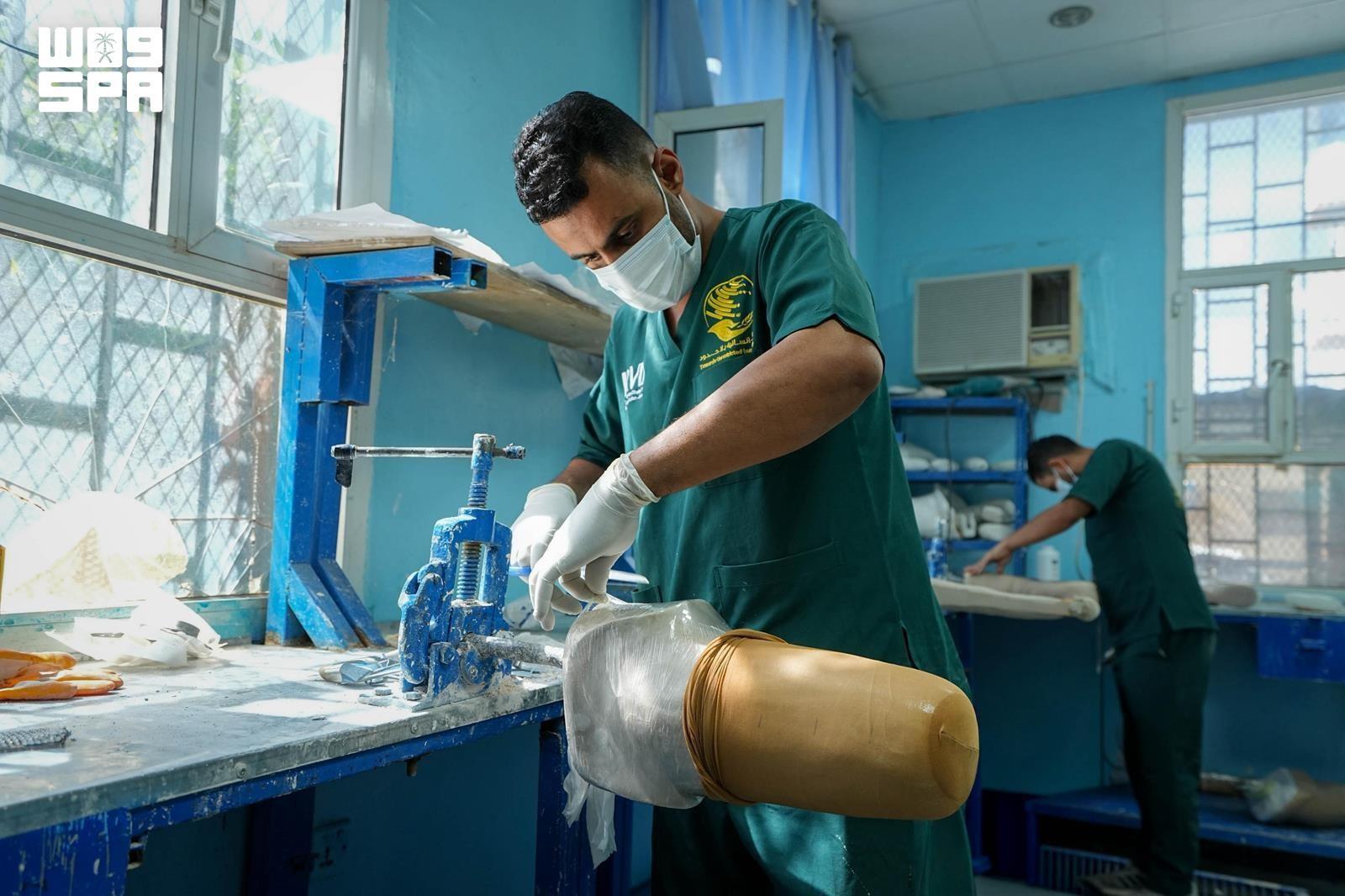
The Prosthetics and Rehabilitation Centre in Yemen’s Marib Governorate provided 2,427 services to 614 beneficiaries during July 2026, according to the King Salman Humanitarian Aid and Relief Centre.
Supported by KSrelief, the centre delivered a combination of prosthetic manufacturing and fitting, physical rehabilitation, specialist consultations and other services for Yemenis affected by limb loss.
Men accounted for 69% of those receiving care during the month, while women represented 31%. Internally displaced people made up 80% of beneficiaries, compared with 20% from the resident population.
The high proportion of displaced beneficiaries demonstrates the importance of maintaining rehabilitation services in locations hosting people uprooted by conflict. Displacement can interrupt established care pathways, separate patients from clinical records and make it more difficult to access the repeated appointments required for prosthetic fitting, gait training and device maintenance.
More than the delivery of a prosthesis
The provision of 2,427 services to 614 people illustrates the multi-stage nature of prosthetic and rehabilitation care. A prosthesis cannot normally be delivered as a single isolated intervention.
The process may involve clinical assessment, measurement, casting or digital capture, component selection, fabrication, fitting, alignment and functional training. Patients may subsequently require socket adjustments, repairs, replacement consumables, physiotherapy or further clinical review.
Changes in a patient’s residual limb, health, weight or functional requirements can also affect the fit and performance of a prosthesis. Continuing access to trained professionals and workshop facilities is therefore essential if the device is to remain safe and useful.
By combining manufacturing, fitting, physical therapy and specialist consultation, the Marib project supports a more complete rehabilitation pathway rather than focusing only on the number of devices distributed.
Part of a longer-term programme in Marib
The July figures follow the implementation of the eleventh phase of the Marib Prosthetics and Rehabilitation Centre project between January and May 2026.
In an earlier KSrelief project update, the organisation reported that the phase was designed to serve 7,677 beneficiaries. Its planned outputs included 300 new upper- and lower-limb prostheses, physical rehabilitation for 3,600 people, technical maintenance for 650 beneficiaries and medical or technical consultations for 3,080 people.
The programme also created 47 employment opportunities for local personnel. Developing and retaining a local rehabilitation workforce is critical to sustainability, particularly in a setting where imported expertise and short-duration clinical missions cannot meet the continuing needs of the population.
Prosthetic users require services over many years. Locally based clinicians, technicians, physiotherapists and support staff provide continuity while developing knowledge of the practical conditions in which devices are used.
Rehabilitation needs remain extensive across Yemen
Yemen’s prolonged conflict has increased the number of people living with traumatic injury while severely affecting healthcare infrastructure and access to specialist services. People with congenital limb difference, diabetes, neurological conditions and other causes of physical disability also continue to require rehabilitation alongside those injured during the conflict.
Reliable national data on rehabilitation need remain limited. However, the International Committee of the Red Cross previously estimated that approximately 4.5 million people in Yemen were living with some form of disability. Of these, around 460,500 were thought to require a mobility device and approximately 153,500 a prosthesis or orthosis.
These estimates demonstrate why physical rehabilitation must be incorporated into the wider humanitarian health response. Emergency surgery may save a life, but rehabilitation is often what enables an injured person to regain mobility, return to education or employment and participate more fully in family and community life.
For displaced people, the challenges can be particularly severe. Travel expenses, insecure routes, unsuitable accommodation and a lack of information about available services can all prevent patients from attending follow-up appointments. Programmes must therefore consider referral, transport, accommodation and long-term maintenance alongside clinical delivery.
A continuing commitment to rehabilitation
KSrelief described the Marib project as an extension of Saudi Arabia’s humanitarian support for Yemen’s health sector and for communities affected by the country’s continuing crisis.
The results from July provide a useful measure of service activity, but they also highlight the importance of maintaining comprehensive rehabilitation over time. Manufacturing a prosthesis is only one component of the process. Appropriate fitting, physical therapy, clinical follow-up and technical maintenance determine whether the device ultimately improves mobility and independence.
For the wider prosthetics and orthotics community, the programme illustrates the value of investing in permanent rehabilitation capacity within conflict-affected countries—combining devices, professional expertise and continuing patient support within one service.
- KSrelief: Marib Prosthetics Centre Serves 614 Beneficiaries in July
- KSrelief: Marib Centre’s Eleventh Project Phase
- King Salman Humanitarian Aid and Relief Centre
- ICRC: Physical Rehabilitation Services in Yemen
- World Health Organization: Rehabilitation