

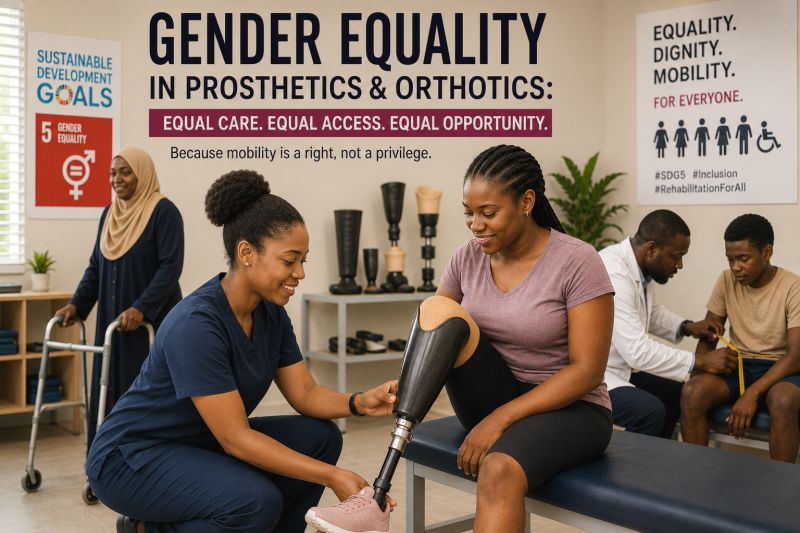
Nigerian prosthetics and orthotics clinician Georgina Anaele has been announced as the first featured speaker for She Moves, an initiative intended to amplify women’s experiences and perspectives across prosthetics, orthotics and rehabilitation in Africa.
Anaele will speak on November 7 about the realities of practising prosthetics and orthotics, the gaps that remain in professional training and the experience of working as a woman in a field that combines healthcare, technology, engineering and direct patient care.
The announcement was made by the Eva Create Impact Initiative, which described Anaele as a clinician working “at the point where technology meets the human being it’s meant to serve.”
Her participation is the first in a series of six voices expected to be introduced through the She Moves platform.
Bringing the clinical reality into the conversation
Advances in digital scanning, computer-aided design, additive manufacturing and component technology are changing what may be possible within prosthetic and orthotic care. However, the success of any technology ultimately depends on the clinician’s ability to assess the patient, make appropriate decisions, deliver a comfortable device and provide effective follow-up.
In many African settings, practitioners must work within environments affected by limited access to specialist education, uneven clinical infrastructure, equipment shortages and affordability constraints. Clinicians may also be expected to manage complex caseloads while adapting international techniques and technologies to local conditions.
By sharing her day-to-day experience, Georgina Anaele can help connect discussions about innovation with the practical realities of serving patients.
Her contribution is particularly relevant at a time when Africa’s rehabilitation sector is seeking to expand access to assistive technology while also building the skilled workforce needed to deliver it safely and effectively.
Addressing gaps in P&O training
Education and continuing professional development remain central to the future of prosthetics and orthotics across the continent. Access to formal training varies considerably between countries, while practising clinicians may face difficulties obtaining specialist mentorship, product training and exposure to emerging clinical techniques.
These gaps can affect both professional development and patient access. Introducing new technology without adequate clinical education risks creating solutions that cannot be sustainably integrated into local services.
The She Moves discussion offers an opportunity to hear directly from a clinician about which training gaps are most visible in practice and what forms of education, mentorship and professional support could make the greatest difference.
It may also encourage manufacturers, professional associations, educational institutions and rehabilitation providers to involve local clinicians earlier when developing training programmes or introducing technology into African markets.
Making women more visible in rehabilitation
Women contribute throughout prosthetics, orthotics, physiotherapy, occupational therapy and wider rehabilitation services, yet their professional experiences and leadership journeys are not always sufficiently visible.
Women working in technical and clinical roles may encounter barriers related to mentorship, career progression, workplace culture and access to decision-making opportunities. At the same time, greater representation can strengthen the profession by broadening its leadership base and encouraging more young women to consider careers in rehabilitation and assistive technology.
She Moves creates space for these experiences to be discussed openly—not simply as questions of representation, but as part of building a stronger and more responsive rehabilitation workforce.
By placing clinicians such as Anaele at the centre of the conversation, the initiative recognises that meaningful progress requires listening to professionals who understand both the potential of technology and the needs of the people it is designed to support.
The November 7 event will provide an opportunity for rehabilitation professionals, students, educators, organisations and advocates to hear her perspective and engage with a wider conversation about training, inclusion and the future of prosthetics and orthotics in Africa.
Registration for the event is available through the She Moves registration link.