

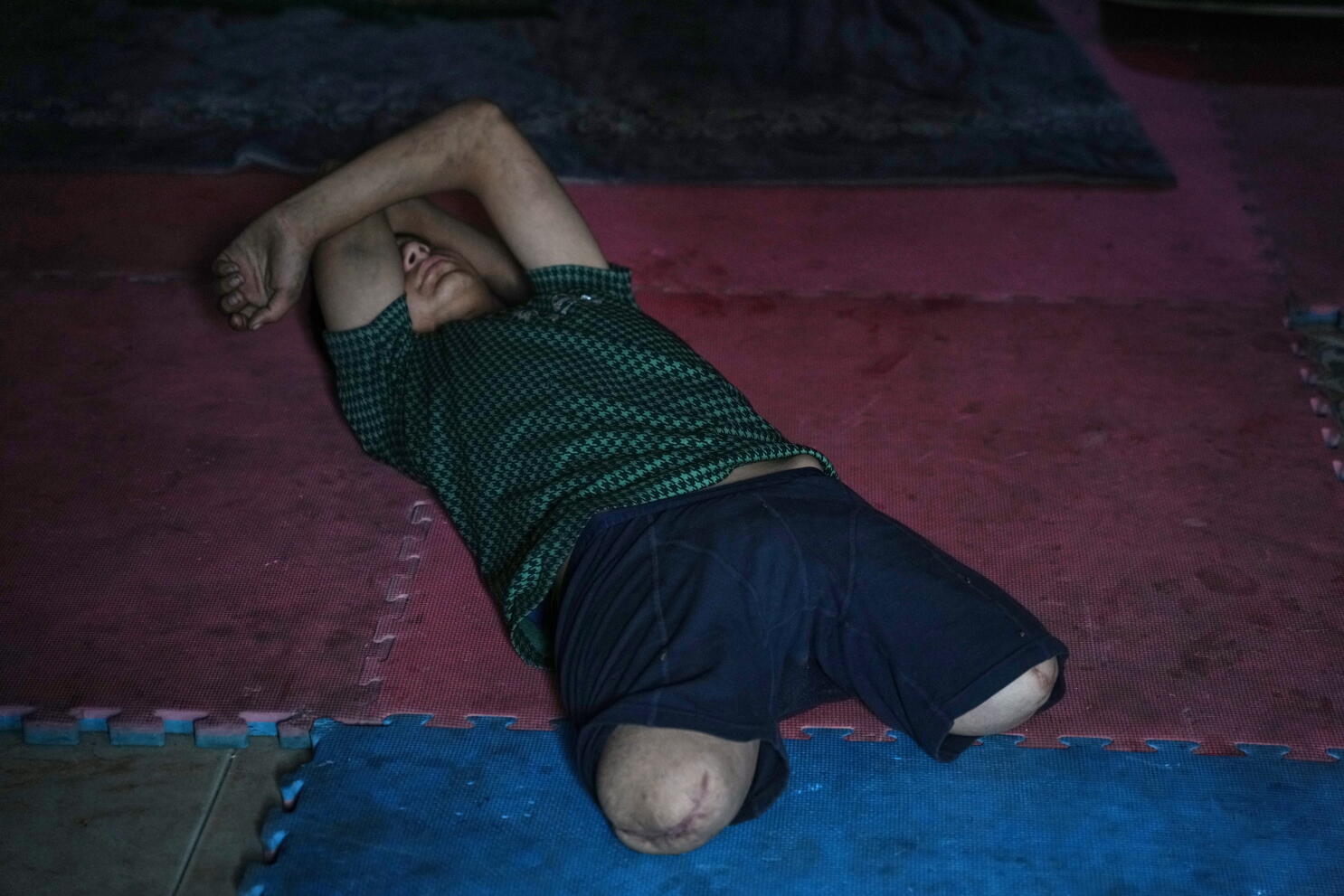
International Prosthetics and Orthotics Day falls on 5 November 2026. This year, the International Society for Prosthetics and Orthotics (ISPO) has chosen “PEOPLE” as its theme, recognising the users, clinicians, technicians, educators and advocates whose work makes rehabilitation possible.
In Gaza, the theme carries particular weight. The World Health Organization (WHO) estimates that around 5,000 traumatic limb amputations have been recorded since October 2023. Yet the figures describe only part of the need: WHO says about 500 of the 2,300 people with amputations it assessed between September 2024 and May 2026 had received permanent prostheses. Euro-Med Human Rights Monitor says there are just eight certified prosthetics and orthotics (P&O) professionals available to treat patients.
This week, Restoring Hope Society, a Jordan-based organisation, said it had managed to bring a shipment of gypsum into Gaza after a prolonged period of restrictions. The organisation described the delivery as a step forward, while saying that significant barriers to rehabilitation supplies remain.
The figures and accounts in this article come from the sources cited below. They have not been independently verified by IMEA CPO. They are estimates and reports from different organisations, gathered at different times and using different methods. Read together, they point to a system under severe pressure: many people need care, few professionals are available, and access to materials and treatment remains difficult.
What the published figures tell us—and what they leave out
There is no single, complete count of people in Gaza who need prosthetic services. The most authoritative recent estimate cited here comes from WHO. In a release dated 12 May 2026, the organisation estimated that around 5,000 traumatic limb amputations had been recorded since October 2023. WHO also reported that 2,300 people with amputations were assessed between September 2024 and May 2026, and that around 500 of those assessed had received permanent prostheses.
These numbers describe different groups. The estimate of 5,000 refers to recorded traumatic amputations since October 2023. The 2,300 refers to people assessed during a defined period. The 500 is a count of those assessed who had been fitted with permanent prostheses; it should not be read as the total number of fitted patients across Gaza. WHO presents its figures as estimates, not a full census. WHO’s May 2026 update provides the source and context.
Children make up a substantial share of the reported need. Reuters, citing aid and medical sources in April, reported that about a quarter of Gaza’s nearly 5,000 war amputees were children. On 4 November, Euro-Med Human Rights Monitor said 1,134 children had undergone amputations, a figure reported by Al Jazeera.
Those figures come from different sources and should not be treated as though they were collected in one shared survey. Subtracting the Euro-Med child figure from WHO’s approximate total would suggest roughly 3,900 adult cases, but that is only an arithmetic comparison of separate estimates—not an independently published count.
There is another significant gap. WHO’s figures concern conflict-related injuries since October 2023. They do not include people with chronic conditions or pre-existing disabilities. IMEA CPO has not found a reliable published count of people in Gaza who were already living with limb loss before 7 October 2023, including people with diabetes-related amputations. The total demand for P&O care is therefore likely to exceed the war-injury figures, but the additional need has not been reliably measured.
Why the clinical workload exceeds a simple ratio
The reported figure of eight certified P&O professionals set against thousands of amputations gives a stark impression of the workforce challenge. But the gap is not just a matter of fitting a first prosthesis to each person.
A patient may need assessment, casting or scanning, fabrication, fitting, gait training and follow-up. Each stage depends on staff, materials, functioning equipment and a safe place to deliver care. If any part of the process is interrupted, a device may be delayed or may not be suitable for the patient’s needs.
Children require particular attention. As they grow, their residual limbs and mobility needs change, and their prostheses may need adjustment or replacement. The follow-up cycle can therefore repeat more often than it does for many adults. IMEA CPO has previously examined this issue in Gaza Child Amputees Outgrow Prostheses as Rehabilitation Shortages Deepen.
The wider rehabilitation system is also under pressure. WHO reported in May that more than 400 patients were waiting for specialised rehabilitation beds, according to the Euro-Med statement cited in the source material. For people recovering from amputation, prosthetic provision is only one part of care. Rehabilitation may also involve wound management, pain care, strengthening, balance and mobility training, psychological support, and help returning to family, education or work.
What is known about restrictions on materials?
A prosthetic service relies on a range of inputs: casting materials, thermoplastics, resins, liners, components, tools and replacement parts. The disruption of any one essential material can affect clinical work.
In a LinkedIn post this week, Restoring Hope Society said gypsum materials had been restricted from entering Gaza for more than three years and that it had finally managed to bring in a shipment. The organisation said not all materials were allowed to enter, and that Israel classifies the powder as a dual-use material. That is the organisation’s account. IMEA CPO has not seen a separate statement from COGAT, WHO or the International Committee of the Red Cross (ICRC) confirming the shipment or its contents.
Earlier reporting describes a related but not identical restriction. In April, Reuters reported that imports of plaster of Paris had been almost completely restricted for more than four months, citing the ICRC. Sheikh Hamad Hospital told Reuters it could only maintain existing prostheses. COGAT, the Israeli military body responsible for access to Gaza, told Reuters that it facilitates the regular entry of medical equipment but would not allow materials it said could support a “terrorist build-up” by Hamas. It also said it was in dialogue with the UN and aid groups.
Reuters noted that plaster of Paris and plastic prosthetic components were not listed as dual-use items in the export-control document it reviewed. The account of restrictions lasting “more than three years” and the Reuters report of a period exceeding four months may concern different materials or different timeframes. They should not be collapsed into one claim without further evidence.
A separate claim has circulated that paediatric SACH feet and pylons were barred because they could be used as weapons. IMEA CPO has not found a published source substantiating that claim, and it does not appear in the Restoring Hope Society post or the Reuters report described above. It is not repeated here as fact.
The reported arrival of gypsum is welcome, but one shipment cannot by itself ensure continuity of care. A functioning service needs a reliable supply of the full range of materials and components, along with trained staff, working equipment and the ability to see patients repeatedly over time.
What the P&O community can do
ISPO cannot control border access, but it can contribute technical expertise, professional networks and support for training. Practical steps could include:
- Set out a clinical minimum list. ISPO could publish a concise, evidence-based list of materials, components and tools needed for basic lower-limb and paediatric prosthetic services. Plain descriptions and clinical purposes could help humanitarian agencies, donors and officials assess specific items individually.
- Support clinicians and technicians already working in Gaza. Remote mentoring, case discussions and technical guidance could help extend the reach of the available workforce, coordinated with WHO rehabilitation efforts and organisations delivering care.
- Help expand the workforce. Training and supervised development for orthopaedic technologists and other rehabilitation staff could strengthen service capacity over time. This would need to complement, rather than replace, the expertise of certified P&O professionals.
- Improve the evidence base. A shared system for recording amputations, assessments, fittings, waiting times and follow-up could help distinguish estimates from service data and identify where support is most needed.
- Prioritise children’s follow-up. Practical guidance for growth-adjusted prosthetic care could support decisions about reviews, adjustments and replacement when clinical capacity and supplies are limited.
What could a Democratic Congress do after 3 January 2027?
The new Congress is scheduled to begin at noon on 3 January 2027. If Democrats control both the House of Representatives and the Senate, they would have the chairmanships and agenda-setting power of congressional committees, subject to each chamber’s rules. That would give them practical ways to investigate rehabilitation access and shape US funding and policy. It would not give Congress direct authority over Gaza’s crossings or the decisions of Israeli authorities.
Investigate what is blocking rehabilitation supplies. House and Senate committees could hold hearings, request records and question officials from the State Department, the Department of Defense and humanitarian agencies. They could seek specific answers about whether casting gypsum, prosthetic components or other rehabilitation items are being delayed or restricted, which authority is being used, and how requests for review are handled. Congress has a long-standing investigative role, though obtaining records or testimony can lead to disputes with the executive branch.
Write rehabilitation priorities into funding bills. Congress controls federal spending through appropriations. A majority could propose funding for prosthetic and rehabilitation services, workforce training, remote clinical support, equipment and patient treatment. It could also require public reports on how the funds were spent and what services they supported. These proposals would still have to pass both chambers and become law; the president can veto a bill, and overriding a veto requires a two-thirds vote in each chamber.
Set conditions or reporting requirements on assistance. Congress could consider legislation requiring the administration to report on humanitarian access or making specified funding subject to conditions. For example, members could seek regular reporting on the entry of medical and rehabilitation supplies and on the number of patients assessed, fitted or waiting for care. Such provisions would need to be drafted into legislation and enacted. A committee request or hearing alone would not change the rules governing aid or border access.
Use its role in arms-sale review. Congress already has statutory review procedures for certain proposed US arms sales. Members could scrutinise notifications and propose legislation or resolutions concerning those sales. The precise route and deadlines depend on the sale and the applicable law; a proposed measure would still face the legislative process and could be vetoed. This gives Congress potential leverage over US policy, but it does not directly open a crossing or ensure that a particular P&O item enters Gaza.
Use Senate powers where they apply. The Senate could scrutinise relevant presidential nominations and treaties through its constitutional advice-and-consent role. Those powers do not provide a direct mechanism for directing Gaza aid or prosthetic-supply access, but confirmation proceedings can provide a forum to question nominees about policy.
There would also be procedural limits. In the Senate, most legislation may need 60 votes to end debate under the current cloture rule, even when a simple majority supports the bill. A Democratic majority could set hearings and advance proposals, but it could not guarantee enactment without the votes needed to pass legislation and overcome any veto.
For Gaza’s P&O services, the most concrete early steps would be to demand a clear, item-by-item account of rehabilitation supply restrictions; hold hearings with clinicians and relevant officials; and propose dedicated funding and public reporting for rehabilitation. Those actions could increase scrutiny and create pressure for policy changes. Decisions about the entry of goods and the delivery of US policy would still involve the executive branch and other authorities.
IMEA CPO perspective: keeping people at the centre
For CPOs across the Middle East and Africa, Gaza demonstrates how quickly a rehabilitation system can be overwhelmed when workforce, materials and access are constrained at the same time. The reported figures are not just a measure of devices needed. They represent people who may need repeated clinical care to regain mobility and participate in daily life.
The profession can offer help within its own expertise: share protocols, provide mentoring, support training, host patients where services are available and document needs accurately. Those contributions cannot resolve border policy or replace the responsibilities of governments and humanitarian agencies. They can, however, support clinicians and patients while broader decisions are being made.
IMEA CPO reports Euro-Med’s legal characterisation of events as the organisation’s position, without endorsing it. The clinical need is clearer: people require timely, appropriate rehabilitation, and children need follow-up as they grow. On International Prosthetics and Orthotics Day, putting “PEOPLE” at the centre means recognising that access to a prosthesis is part of a longer pathway of care—and that each delay can affect a person’s mobility, education, independence and future.
Frequently asked questions
How many amputations have been recorded in Gaza since October 2023?
WHO estimates around 5,000 traumatic limb amputations. This figure excludes pre-existing and chronic-condition-related cases and is not a complete census.
How many children have undergone amputations?
Reuters cited a figure of about one quarter of Gaza’s nearly 5,000 war amputees. Euro-Med reported 1,134 child amputees on 4 November. These are separate reports, not a single reconciled count.
How many certified P&O professionals are available in Gaza?
Euro-Med says eight certified professionals are available. Reuters cited WHO for the same number in April.
Has gypsum entered Gaza?
Restoring Hope Society says it brought in a shipment, while reporting that not all materials were allowed to enter. IMEA CPO has not independently verified the shipment or its contents.
- WHO: Estimating trauma and rehabilitation needs in Gaza, May 2026
- Reuters report on children and amputations in Gaza
- Al Jazeera report on Euro-Med’s child amputee estimate
- Gaza Child Amputees Outgrow Prostheses as Rehabilitation Shortages Deepen
- UAE Floating Hospital fits prosthetic limbs for Palestinian amputees
- The National: Adam Hamawy wins a New Jersey House seat