 By
By
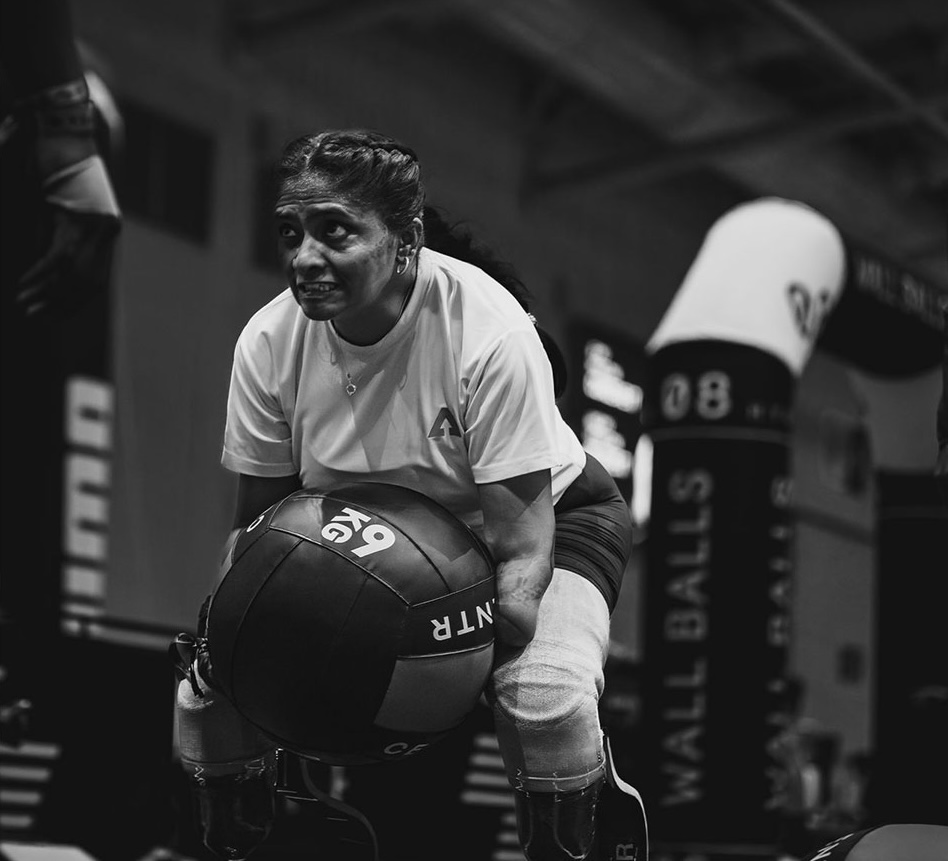
Adaptive athletes emerged as one of the most powerful stories at Ultrahuman HYROX Bengaluru, reinforcing the message that inclusive competitive fitness is gaining real momentum in India.
Held on 11 and 12 April at the Bangalore International Exhibition Centre, the event showcased the Adaptives category as one of the standout features of what was described as HYROX India’s biggest event to date. More than just a race category, it served as a visible reminder that high-energy fitness competition can and should be accessible to a much wider range of participants.
Among the most inspiring athletes at the event was Shalini Saraswathi, a quadruple amputee whose sporting journey continues to challenge assumptions about disability and athletic performance. After a rare bacterial infection in 2012 led to multiple organ failure and the loss of all four limbs, Saraswathi went on to rebuild her sporting career in remarkable fashion. She later won gold at the 2021 National Para Games and silver in 2022 in the 100m sprint, represented India at the Asian Games in Hangzhou in 2023, and now holds the Asian record as the fastest woman on blades in the T62 category.
Having now stepped away from professional athletics, Saraswathi described HYROX as a new challenge that matched her ambitions.
“Now that I have retired from professional athletics, I needed another goal to work towards, and HYROX seemed like a great mix of endurance and strength.”
Her comments reflect the growing appeal of HYROX as a format that blends functional training with endurance in a way that can attract both elite competitors and everyday fitness participants. The event combines eight 1 km runs with eight workout stations, making it one of the more physically demanding but also widely adaptable race concepts in global fitness.
Reflecting on her Bengaluru experience, Saraswathi said the event atmosphere played a major role in helping her through the course.
“I pretty much liked all the stations, but the wall balls were really tough for me. The support from volunteers at stations was fantastic, and the crowd energy was unbelievable; that is what really got me through.”
Another notable athlete in the Adaptives category was Veenita Johnson from Pune, who lives with bilateral peroneal neuropathy (foot drop) and has rebuilt her life around movement and fitness. Johnson brought a different but equally compelling story to the event, balancing her own competition with her responsibilities as a coach, while also supporting multiple trainees who were racing in Bengaluru.
Her presence captured another important side of adaptive sport: not just individual achievement, but also the role of community, mentorship and shared participation.
“Competing in the Adaptives category was a great experience. It gave me the space to perform better. Overall, the race felt incredibly rewarding.”
Johnson also highlighted the importance of the wider race environment, noting how support from organisers, fellow athletes and spectators helped transform the competition into something more meaningful.
“The crowd support made a huge difference. I had HYROX staff, my gym community, trainees, and even complete strangers cheering me on at every station, it made the entire race feel like a celebration.”
From an IMEA CPO perspective, stories like these matter because they help shift disability away from a purely clinical narrative and into a broader conversation about performance, participation and visibility. Adaptive competition does more than create sporting opportunities. It helps expand public understanding of what people with disabilities can achieve, while also reinforcing the importance of accessible equipment, supportive environments and inclusive event design.
The strong visibility of athletes such as Shalini Saraswathi and Veenita Johnson at Ultrahuman HYROX Bengaluru shows that adaptive sport is not a side story. It is becoming a more prominent part of mainstream fitness culture, and that is a positive signal for the wider rehabilitation and assistive technology ecosystem in India and across IMEA.
For prosthetic and orthotic professionals, it is also a reminder that mobility support should never be framed only around basic function. For many users, the goal is not simply to walk again. It is to compete, perform, inspire and fully participate in public life. Events like HYROX help make that ambition visible.