 By
By
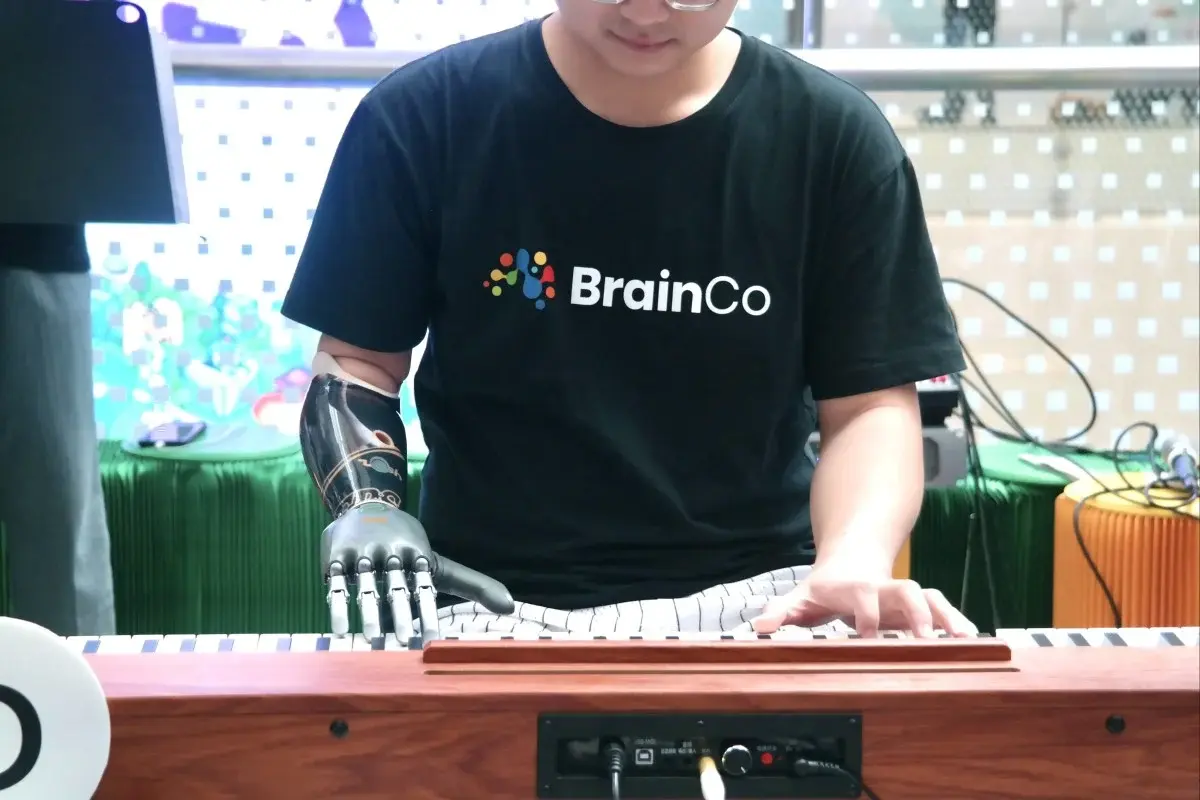
BrainCo has put brain-computer interface technology back into the prosthetics spotlight after demonstrating a mind-controlled hand in Hong Kong, in a presentation that drew attention at a major international technology gathering. The company was featured by the South China Morning Post after showcasing its system during the HSBC Global Investment Summit, while related demonstrations of BrainCo technology were also visible around the 2026 World Internet Conference Asia-Pacific Summit in Hong Kong.
According to the SCMP report, BrainCo said its non-invasive brain-computer interface technology can read neural signals through the skin, offering a less invasive alternative to surgically implanted systems for some applications. That positioning is important because much of the recent global attention around BCI has focused on implant-based platforms, whereas BrainCo is pushing a model that aims to reduce clinical risk and broaden accessibility.
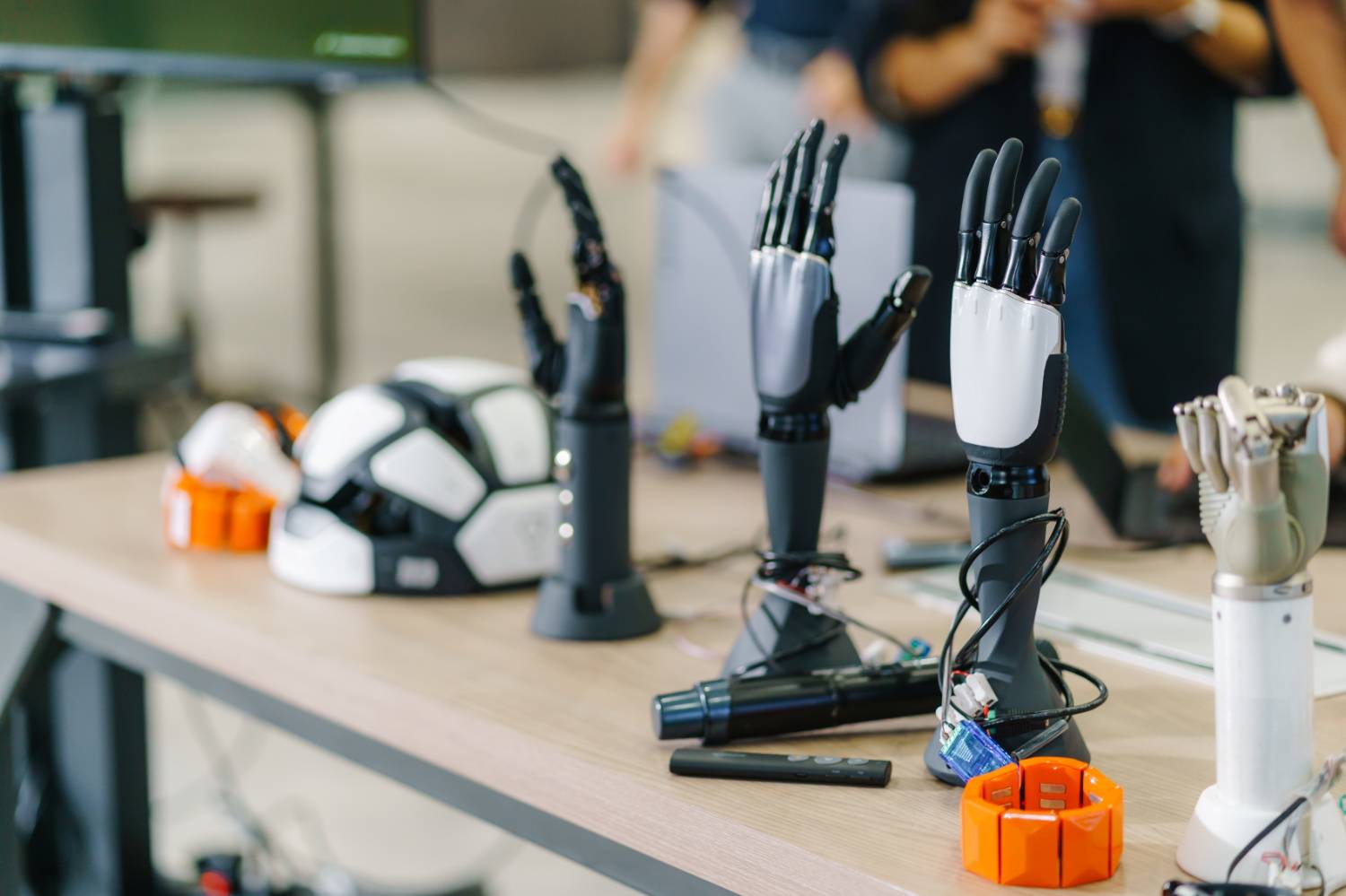
The demonstration centred on a prosthetic hand controlled through BrainCo’s human-machine interface approach. BrainCo’s official materials describe its prosthetic and bionic hand platforms as combining biosignal interpretation with AI-enabled control, while the company says its wider portfolio includes prosthetic hands, bionic legs and other BCI-linked products. Its English-language site describes BrainCo as a Harvard-born BCI company with more than 200 patents.
What makes the story especially relevant for the O&P sector is the way BrainCo is framing the technology. This is not being presented purely as a robotics spectacle. The prosthetic hand is being positioned as a practical assistive device intended to help users regain daily function through more intuitive control. BrainCo’s own product pages say the hand uses advanced EMG recognition and promotes high control accuracy, while company materials emphasise independence in everyday activities.
For prosthetics professionals, the more interesting question is not whether a summit demonstration can attract attention. It is whether non-invasive BCI and biosignal-driven systems can deliver reliable, clinically useful control in routine real-world fitting and rehabilitation. That remains the key threshold. Public demonstrations can be compelling, but long-term adoption in prosthetic practice depends on repeatability, training burden, durability, maintenance, cost, and how well the technology performs outside controlled presentation settings. This is an editorial interpretation based on the gap between showcase demonstrations and standard O&P adoption pathways.
From an IMEA CPO perspective, the development is worth watching because it points to a wider direction of travel in upper-limb prosthetics: more effort to close the gap between intention and motion without necessarily requiring highly invasive surgery. In emerging and mixed-resource markets, that distinction could matter. If non-invasive systems can eventually provide meaningful functional gains at a manageable cost and complexity level, they may prove more scalable than fully implant-based approaches. That is a forward-looking inference rather than a confirmed market outcome.
The timing is also notable. The 2026 World Internet Conference Asia-Pacific Summit opened in Hong Kong on 13 April, bringing together policymakers, industry leaders and technology companies from more than 50 countries and regions. Against that backdrop, BrainCo’s demonstration helped place prosthetics and neurotechnology into a broader conversation about applied AI, next-generation interfaces and accessible innovation.
For now, BrainCo’s Hong Kong appearance is best understood as a high-visibility signal rather than definitive proof of clinical transformation. But it is another reminder that the future of prosthetic control is likely to involve a growing mix of AI, biosignal decoding and human-machine interface design, and that some of the most commercially ambitious players are trying to make that future less invasive and more usable.