 By
By
Exploring Clinical Decision-Making in Shape Capture: A Strathclyde Research Perspective
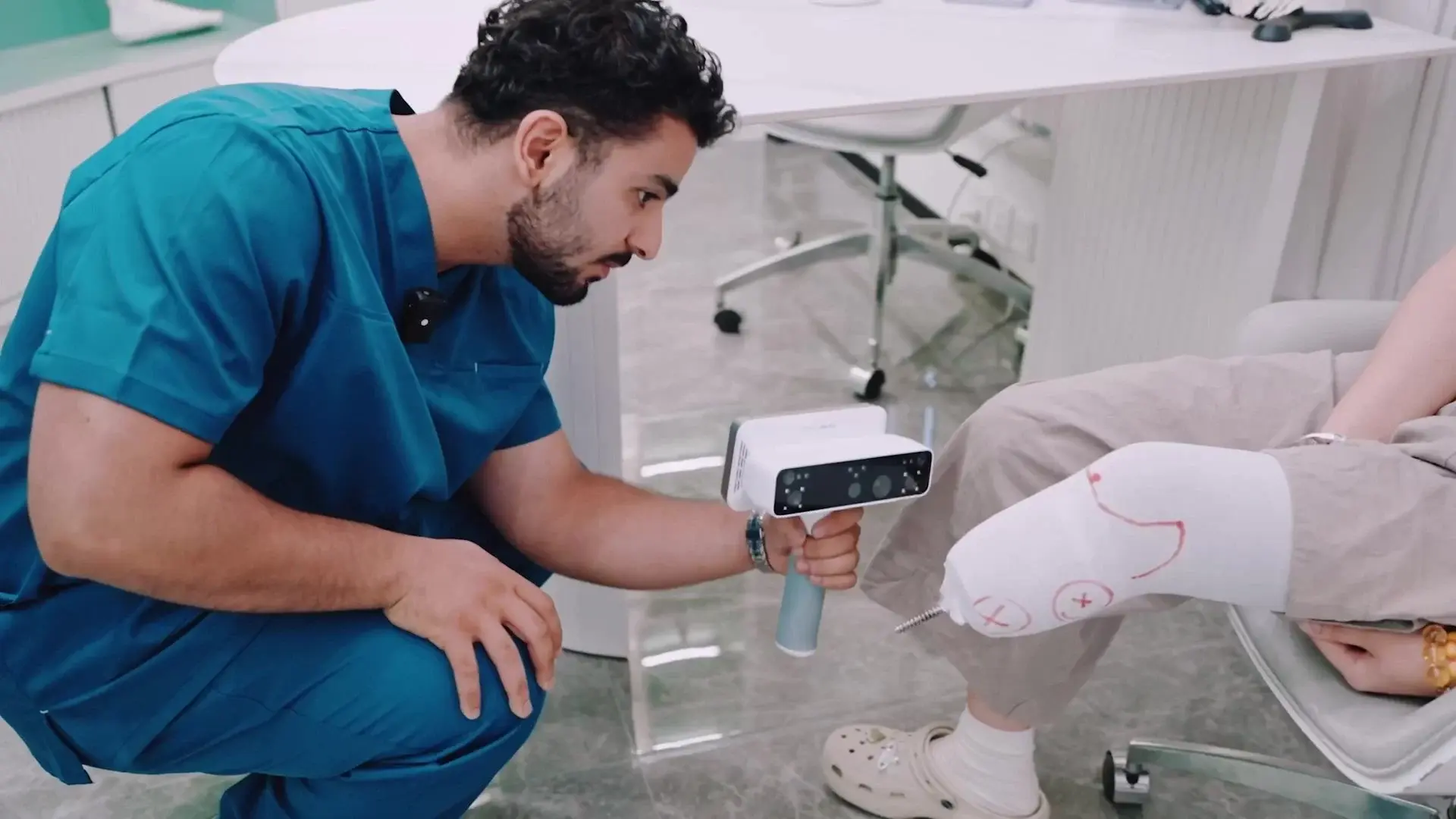
Clinical shape capture remains one of the most fundamental — yet rapidly evolving — elements of orthotic and prosthetic practice. As digital technologies continue to gain traction, the profession faces an increasingly important question:
How do clinicians decide between traditional hand casting and modern 3D scanning?
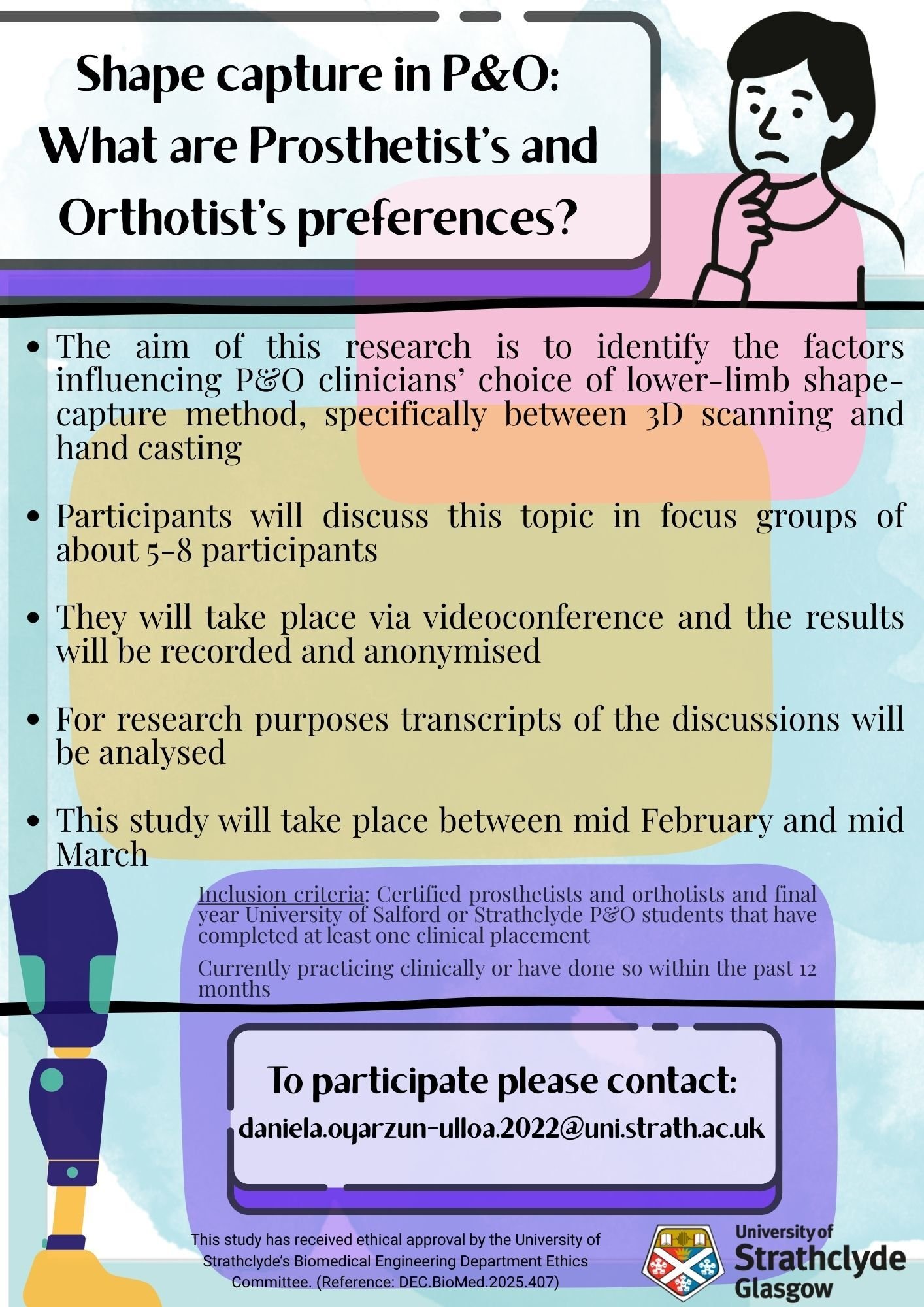
This question sits at the heart of a new research project by Daniela Oyarzun, a final-year student in the BSc Prosthetics and Orthotics programme at the University of Strathclyde.
A Research Focus Grounded in Clinical Reality
As part of her 4th-year curriculum, Daniela’s study investigates:
- Clinicians’ considerations when selecting a shape capture method
- The decision-making process behind choosing
3D scanning vs hand casting - Factors influencing confidence, accuracy, workflow efficiency, and patient outcomes
Rather than framing digital and traditional methods as competitors, the research aims to understand the discernment process clinicians use in real practice settings.
Why This Research Matters
Shape capture directly influences:
✔ Socket fit and comfort
✔ Orthotic effectiveness
✔ Biomechanical accuracy
✔ Fabrication efficiency
✔ Patient satisfaction
With clinics increasingly adopting hybrid analogue–digital workflows, understanding how practitioners evaluate these methods is critical for:
- Clinical education
- Technology integration
- Best practice development
- Procurement and investment decisions
Ethical Approval & Academic Rigor
Daniela’s project has received formal approval from the:
Departmental Ethics Committee
Faculty of Engineering
University of Strathclyde
This ensures that the research adheres to rigorous standards regarding:
- Participant consent
- Data protection
- Confidentiality
- Responsible analysis
Professional Visibility Through BAPO
Demonstrating early professional engagement, Daniela’s research poster has been:
📢 Advertised through BAPO
(British Association of Prosthetists and Orthotists)
This exposure highlights the profession’s recognition of the study’s relevance and its contribution to ongoing discussions about:
- Digital transformation
- Clinical workflow evolution
- Evidence-informed decision-making
The Shape Capture Debate: More Than Technology
While technology comparisons often focus on speed, precision, and digital advantages, clinicians know the decision is rarely that simple.
Key considerations may include:
- Clinical complexity of the case
- Practitioner experience and skillset
- Patient presentation and tolerance
- Equipment availability
- Fabrication model (in-house vs central fab)
- Perceived accuracy and reliability
- Time pressures
- Cost implications
Daniela’s work seeks to capture these nuanced, human, and contextual factors.
Supporting Evidence-Based Evolution
As O&P continues its transition into a more digitally enabled profession, research like this plays an essential role in:
✅ Informing clinical guidelines
✅ Supporting balanced education models
✅ Identifying training needs
✅ Understanding barriers to adoption
✅ Protecting clinical value and judgement
Looking Ahead
The outcomes of this study may provide valuable insights for:
- Practicing clinicians
- Clinic owners and managers
- Educators
- Students
- Technology developers
- Professional bodies
By examining how clinicians think — not just what tools they use — Daniela’s research contributes to a deeper understanding of modern clinical decision-making in prosthetics and orthotics.
Contact Daniela @ - daniela.oyarzun-ulloa.2022@uni.strath.ac.uk