 By
By
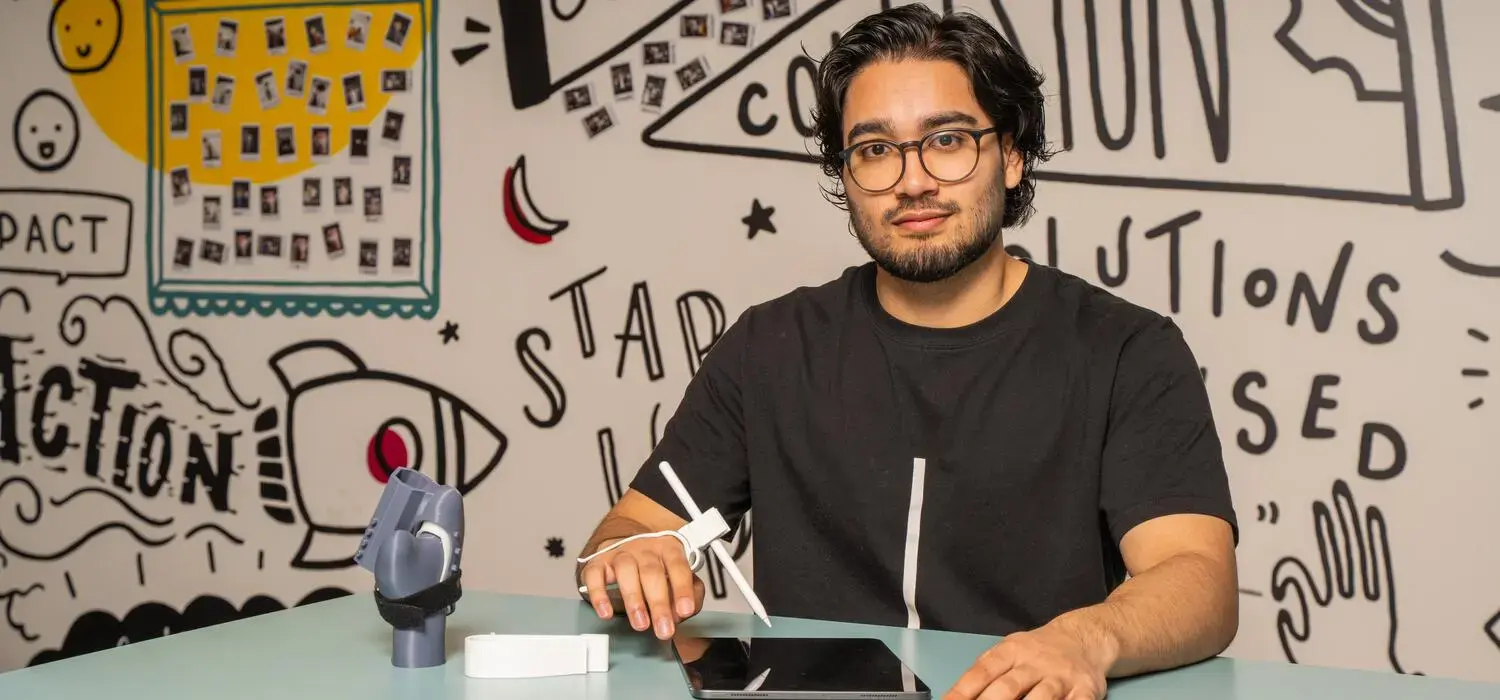
A University of Calgary student entrepreneur is developing affordable prosthetic and assistive devices for people with finger amputations, hand injuries, and grip-related mobility challenges through a startup called Dextera.
According to a University of Calgary news feature, founder Huzaifa Shafiq, a fifth-year student at the Schulich School of Engineering, created Dextera to make practical hand function more accessible for people whose daily independence is affected by limited dexterity. The company focuses particularly on users with finger amputations, injuries, or neurological conditions that affect grip.
For prosthetists, orthotists, rehabilitation teams, and assistive technology providers, Dextera is a useful example of how student-led engineering, digital fabrication, and user-centred design can address a highly specific but often underserved clinical need: partial hand and finger-level function. Many mainstream prosthetic systems focus on full-hand or upper-limb replacement, while people with finger loss or reduced grip may still struggle with daily tasks such as opening bottles, holding utensils, turning switches, or taking part in sport.
Dextera’s model includes two product pathways: custom prosthetic devices and ready-made assistive accessories. The startup’s own website says it specialises in 3D-printed accessories for individuals with finger amputations, with the goal of supporting daily activities and improving independence through user-friendly designs.
A previous report in The Gauntlet noted that one of Shafiq’s early projects involved developing a custom device for retired Paralympian Zak Madell, allowing him to grip and swing a racket again. That project helped shape the idea behind Dextera and its focus on affordable, functional support for finger amputees.
The same report highlighted how Dextera uses digital methods, including 3D scanning, algorithm-supported socket design, AI-enabled workflows, and 3D printing, to reduce the cost and complexity often associated with custom prosthetic fabrication. Instead of relying only on traditional moulding and repeated physical adjustments, the company aims to use a digital scan of the residual hand to support a faster, more repeatable fit process.
This approach reflects a wider trend in O&P and assistive technology: using digital design and additive manufacturing to make devices more affordable, more personalised, and easier to produce at smaller volumes. For partial-hand users, this can be especially important because functional needs are highly individual. A device for sport, work, self-care, school, or kitchen tasks may need to be simple, task-specific, durable, and easy to replace.
Dextera’s ready-made assistive device line also points to an important opportunity for rehabilitation providers: not every intervention needs to be a complex prosthesis. Some users may benefit from lower-cost adaptive tools that help restore a specific activity, such as holding cutlery, opening containers, gripping sports equipment, or improving independence during routine daily tasks.
For the IMEA region, where access to specialist prosthetic care can vary significantly between countries, Dextera’s work is relevant for several reasons. Affordable digital fabrication, modular assistive devices, and simplified fitting pathways could help clinicians and technicians support more patients, especially in resource-constrained settings, rehabilitation centres, university clinics, NGOs, and innovation labs.
The challenge, as with all emerging prosthetic technologies, will be moving from promising prototypes to clinically reliable, scalable solutions. Fit, comfort, durability, safety, hygiene, material performance, follow-up, and user training remain essential. But Dextera’s development shows how young engineers working closely with users can identify practical gaps in the market and create focused solutions that improve independence.
Why This Matters for O&P and Rehabilitation Professionals
Dextera’s work highlights several themes that are important for clinicians, technicians, educators, and assistive technology innovators:
- Partial-hand and finger-level prosthetic needs remain underserved in many markets.
- 3D scanning and 3D printing can support faster, more personalised fabrication.
- Ready-made assistive tools may offer practical function without the cost of full custom prostheses.
- Student-led innovation can create useful bridges between engineering, rehabilitation, and lived experience.
- Task-specific devices can improve independence in sport, work, self-care, and daily living.
For O&P teams across IMEA, the Dextera story is a reminder that innovation does not always need to begin with high-end robotics. Sometimes the most meaningful advances come from solving a small, specific functional problem well.