 By
By
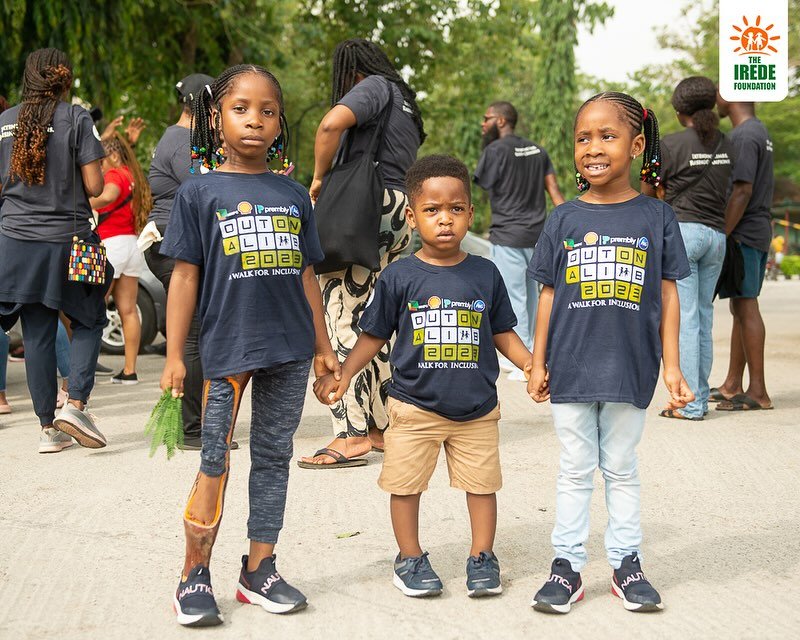
The Irede Foundation has called for stronger collective action to ensure children living with limb loss have equal access to mobility, education, transport, information and social opportunity in Nigeria. The call was made during the 2026 edition of the foundation’s flagship Out On A Limb initiative, themed “No Limits. Just Motion.”
The campaign highlighted more than a decade of advocacy by The Irede Foundation, which has worked to improve public understanding of limb loss while supporting children with prosthetic limbs, rehabilitation and inclusion-focused programmes. Founder Crystal Chigbu said the initiative encourages persons with disabilities to show their abilities and strengths, while also challenging society to build systems where children with limb loss can participate fully.
From Awareness to Inclusion
According to the report, Chigbu emphasised that inclusion must go beyond public sympathy. The foundation’s work focuses on practical access in areas such as transport, education and information, while also promoting representation across different categories of disability.
This is an important message for Nigeria’s rehabilitation and prosthetics community. For children with limb loss, receiving a prosthetic limb is only one part of the journey. A child also needs a supportive school environment, safe transport, family guidance, peer acceptance, follow-up care, growth-related refitting and opportunities to participate in sports, play and community life.
The Irede Foundation has positioned Out On A Limb as both an awareness platform and a call to action. The campaign reminds the public that children with limb loss should not be defined by limitation, but by ability, dignity and potential.
A Growing Platform for Limb Loss Advocacy
A related report from Vanguard described the 2026 Out On A Limb event as a 2-kilometre awareness walk that brought together government, private sector and civil society stakeholders in Lagos and other locations. The initiative is now in its 13th year and has reportedly reached more than 50 locations globally, with thousands of direct participants and wider awareness reach.
The 2026 edition also saw participation from Lagos State officials, including representatives connected to youth, social development and disability affairs. This kind of government engagement is important because disability inclusion cannot be delivered by charities alone. It requires public policy, school access, rehabilitation funding, transport planning, inclusive employment pathways and stronger recognition of prosthetic and orthotic services as essential healthcare.
Why Paediatric Prosthetic Access Matters
Paediatric prosthetics is different from adult prosthetics. Children grow quickly, which means prosthetic limbs must be reviewed, adjusted and replaced over time. A child may need multiple devices before adulthood, as well as physiotherapy, gait training, psychological support and school reintegration.
This creates a major affordability challenge for families. The Associated Press reported in 2024 that The Irede Foundation had provided more than 500 artificial limbs to child amputees since its founding, with prostheses that would otherwise often cost thousands of dollars. The same report highlighted the role of psychosocial support and stigma reduction in helping children return to school, family and community life.
For many families, the cost of a prosthetic limb is only one barrier. Other challenges include travel to specialist centres, lack of trained providers, limited follow-up, social stigma, school exclusion and low public awareness of what children with limb loss can achieve when properly supported.
Beyond the Device: Building a Full Support System
The most important part of The Irede Foundation’s message is that prosthetic provision must be connected to wider inclusion.
A child who receives a limb but cannot access school has not been fully supported. A child who receives a limb but cannot travel safely to appointments remains at risk of exclusion. A child who receives a limb but faces stigma in the classroom still needs advocacy. A child whose prosthesis is not adjusted as they grow may lose function, comfort and confidence.
That is why collective action matters. Families, schools, clinicians, prosthetists, orthotists, policymakers, transport providers, community leaders, donors and employers all have a role to play.
IMEA CPO Perspective
For IMEA CPO readers, The Irede Foundation’s work is a strong example of how paediatric limb loss advocacy can connect prosthetic access with disability inclusion. The campaign does not simply ask society to notice children with limb loss; it asks society to remove the barriers that prevent them from participating.
This is highly relevant across India, the Middle East and Africa, where many children with limb loss or limb difference still face delayed care, limited prosthetic access, stigma, school disruption and poor follow-up. In these settings, the O&P profession has an important role to play beyond fabrication and fitting.
Clinicians and technicians can support better outcomes by working with families, schools, rehabilitation teams and community organisations. Suppliers and donors can support sustainable access by funding replacement cycles, repairs and follow-up, not just first-time devices. Governments can help by recognising paediatric prosthetics as a long-term rehabilitation need rather than a one-off charitable intervention.
The Irede Foundation’s message is simple but powerful: children with limb loss need more than awareness. They need systems that allow them to move, learn, play and thrive.
- Original Guardian Nigeria article
- Guardian Nigeria: TIF inspires collective action towards disability inclusion
- Vanguard: Irede Foundation rallies support for children with limb loss at OOAL 2026
- The Irede Foundation
- Associated Press: Nigerian group provides prosthetic limbs to amputee children
- WHO Assistive Technology
- WHO Standards for Prosthetics and Orthotics
- International Society for Prosthetics and Orthotics