 By
By
Guinea is one of the more important rehabilitation and assistive-technology markets in francophone West Africa, not because it is already a mature orthotics and prosthetics market, but because the size of need is meaningful and the service-development opportunity is still substantial. WHO data shows Guinea had a population of 14.4 million in 2023, current health expenditure equal to 3.76% of GDP in 2021, and lower-middle-income status. For IMEA CPO readers, that points to a market where affordability, institutional partnerships, and practical delivery models are likely to matter as much as product sophistication.
What makes Guinea relevant is that demand appears to be driven by several overlapping pathways at once: rising chronic disease, trauma, paediatric lower-limb deformity care, and broader disability-inclusion efforts. The country is also part of a wider West and Central African push on disability inclusion. A UNICEF regional symposium report notes that Guinea was one of four governments in the region that made commitments at the 2022 Global Disability Summit, which suggests at least some policy momentum around disability inclusion even if implementation capacity remains uneven.
Why this market matters
One of the clearest reasons to watch Guinea is the long-term chronic disease burden that feeds orthotic, prosthetic, and mobility demand. The IDF Atlas estimates that Guinea had 244,600 adults aged 20–79 living with diabetes in 2024, up from 181,800 in 2011, with that number projected to reach 602,300 by 2050. For O&P and rehabilitation providers, that supports sustained need for diabetic foot management, pressure relief, protective footwear, insoles, lower-limb orthotics, and post-amputation rehabilitation. The Atlas also notes these estimates are extrapolated from comparable countries, so they should be read as modeled estimates rather than direct national surveillance.
Trauma is another major driver. A multicentre retrospective study of road traffic accidents in Guinea found police-recorded accident rates rose from 14.0 per 100,000 population in 2015 to 28.7 in 2017, while hospitals admitted 27,751 road traffic victims over the same three-year period. About 10% of victims sustained fractures, usually of the lower limbs, and the head and lower limbs were the most common anatomical sites of injury. For the rehabilitation market, that matters because it points to ongoing need for bracing, fracture-related orthotic support, gait rehabilitation, mobility devices, and longer-term post-trauma care.
Rehabilitation demand drivers
Paediatric lower-limb care is another clear area of relevance. MiracleFeet identifies Guinea as a country where its partnership is focused on ensuring children born with clubfoot are successfully treated using the Ponseti Method. While that is not a full picture of Guinea’s rehabilitation sector, it is a useful signal that structured paediatric orthopaedic need exists and that lower-limb correction remains a practical area of clinical demand.
The market also appears to sit within a wider regional context of still-limited rehabilitation access. WHO AFRO reported in 2023 that rehabilitation access remains inadequate across Africa, that 16 countries in the region had used the WHO guide for rehabilitation strategic planning, and that 12 national rehabilitation strategic plans were awaiting government endorsement. That source is regional rather than Guinea-specific, so it should be treated as context rather than proof of Guinea’s exact service status, but it supports the broader conclusion that Guinea is likely still in a service-building phase rather than a fully developed rehabilitation market.
Market characteristics
Guinea looks better suited to practical, value-focused O&P and rehabilitation growth than to a narrow premium-tech model. The strongest opportunities are likely to be in areas such as:
- lower-limb orthoses and mobility support
- diabetic foot protection and limb-preservation pathways
- prosthetic and orthotic support linked to trauma and fracture care
- paediatric clubfoot-related treatment pathways
- workshop consumables and core fabrication support
- institutional training and service-capacity building
This is partly an inference, but it is grounded in Guinea’s income profile, the size of its diabetes burden, the visible trauma caseload, and the evidence of active paediatric lower-limb programmes.
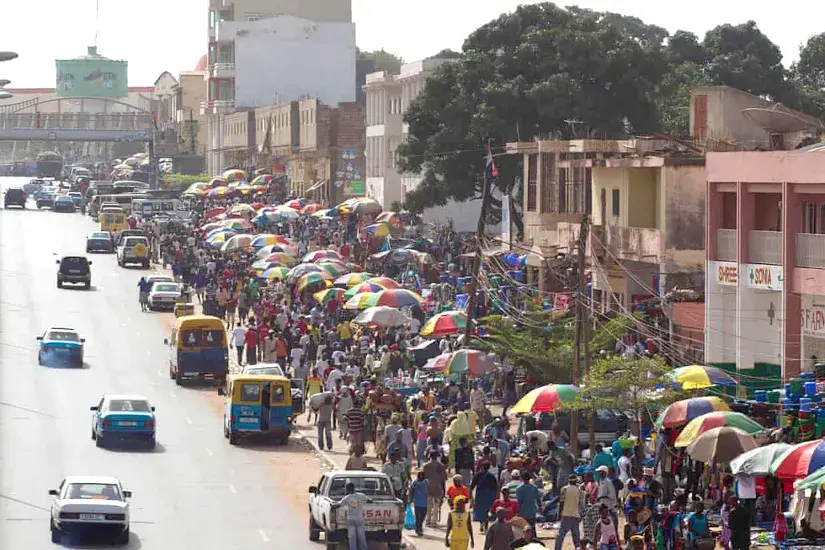
Geographically, the market is likely to remain concentrated around major hospital and urban corridors, especially around Conakry and the main referral infrastructure. The road-traffic study drew data from 20 hospitals across eight districts, which suggests that trauma-related rehabilitation need is not confined to a single facility or city, even if specialist capacity is likely concentrated. That matters for O&P businesses because demand may be geographically dispersed while higher-level fitting and follow-up capability is more limited.
Key opportunities for IMEA CPO readers
Diabetic foot and lower-limb orthotics
With 244,600 adults estimated to be living with diabetes in 2024, Guinea has a meaningful need base for offloading, protective footwear, insoles, lower-limb orthoses, and limb-preservation support. In a market where specialist access may be uneven, prevention-led services can be especially valuable.
Trauma-linked rehabilitation
The volume of road traffic injuries, including fractures and lower-limb trauma, supports demand for practical orthotic bracing, gait rehabilitation support, mobility devices, and post-injury follow-up services. This is one of the clearest immediate market drivers visible in the source base.
Paediatric corrective care
The presence of an active clubfoot treatment pathway is important because it points to continuing demand for lower-limb paediatric care, referral systems, consumables, and clinician training. For suppliers and service partners, this is a useful entry point into a broader rehabilitation ecosystem.
Institutional and policy-aligned partnerships
Guinea’s participation in the 2022 Global Disability Summit commitments suggests an opening for disability-inclusive and rehabilitation-support partnerships. That does not guarantee rapid procurement or policy execution, but it does indicate that disability inclusion is on the agenda.
Main constraints
The main constraints are likely to be affordability, uneven specialist coverage, and the gap between policy momentum and operational service delivery. Guinea’s relatively modest health expenditure and lower-middle-income status suggest that premium, high-complexity solutions will often be a harder fit than durable, maintainable, value-conscious offerings. This is an inference, but it follows from the country profile and the nature of the demand drivers visible in the evidence.
There is also a difference between need and system readiness. Guinea clearly has real trauma and chronic disease burdens, and there are signs of disability-inclusion momentum, but the stronger opportunity likely sits in practical rehabilitation development rather than in a fully formed private premium O&P market.
Bottom line
Guinea is a meaningful West African rehabilitation and assistive-products market with real relevance for orthotics and prosthetics. Its strongest opportunities appear to be in diabetic foot and lower-limb orthotics, trauma-linked rehabilitation, paediatric corrective care, and institution-backed capacity building rather than in a narrow premium-technology niche.
For IMEA CPO readers, Guinea is best understood as a practical access market with genuine clinical need and room for service expansion. The demand is real, but success is likely to depend on appropriate pricing, clinical training, dependable follow-up, and products that suit real-world system constraints.