 By
By
A new case series has reported the use of osseointegrated dental implants to anchor prosthetic fingers in three people with traumatic finger amputations, highlighting a potentially useful option for patients who cannot achieve reliable prosthetic retention through conventional methods.
The cases, summarised by The O&P EDGE, involved three patients with different levels of finger loss: a disarticulation at the proximal interphalangeal joint of the right ring finger, an amputation of the right index finger at the middle phalanx, and an amputation of the right middle finger at the level of the head of the middle phalanx.
The open-access study, published in Cureus, is titled “Functional and Aesthetic Restoration of Amputated Fingers Using Osseointegrated Dental Implants: Case Presentations.” The article was published on 15 March 2026 in Cureus 18(3), with DOI 10.7759/cureus.105273.
A Different Approach to Digital Prosthesis Retention
Finger prostheses can provide important cosmetic, psychological and functional benefits after traumatic amputation. However, retention can be difficult when the residual finger stump is short, irregular, sensitive or unable to support suction or mechanical suspension.
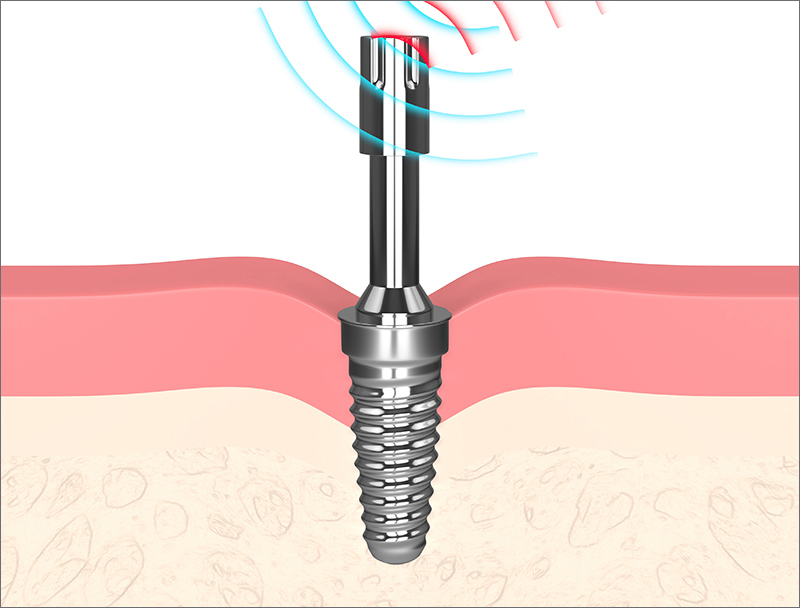
In the reported cases, the research team used dental implants as bone-anchored fixtures. Each patient underwent preoperative radiographic assessment to evaluate the quantity and quality of the remaining bone and to determine appropriate implant dimensions. The treatment followed a two-stage approach: initial implant placement, followed later by healing abutment attachment and prosthetic fitting.
This method adapts the principle of dental osseointegration to the hand. Instead of using a dental implant to retain a tooth restoration, the implant becomes a stable anchor for a custom prosthetic finger.
Reported Outcomes
According to the report, all three patients achieved favourable results, including prosthetic stability, functional improvement and acceptable cosmetic appearance. The Cureus abstract also notes that all patients achieved satisfactory osseointegration, while one patient developed a superficial infection around the abutment that resolved with oral antibiotic therapy.
The authors concluded that osseointegrated implants may be a viable alternative for digital amputees when reconstructive surgical options are contraindicated or unsuitable. They reported that the approach can provide reliable retention, improved function and a natural appearance.
Why Longer, Custom Implants May Matter
One of the most important technical lessons from the case series is the limitation of standard dental implants when transferred into finger prosthetics.
The authors recommended the use of longer, custom-made implants, noting that standard dental implants may increase the risk of loosening and periprosthetic fracture. This is because a long-retained prosthetic finger can place substantial mechanical load on a relatively short implant stem.
For clinicians and technicians, this is a key point. Finger prostheses are small, but they are exposed to repeated bending, gripping, accidental knocks and daily functional loading. Implant length, residual bone quality, lever arm forces, abutment design and prosthesis weight all become clinically relevant.
Relevance for Upper-Limb Prosthetic Practice
This research is not likely to replace conventional silicone finger prostheses, socket-retained designs or reconstructive surgery. Instead, it adds another option for carefully selected patients.
The technique may be most relevant when:
- The residual finger segment is too short for secure conventional suspension.
- Aesthetic restoration is important to the patient.
- Reconstruction is not possible, not desired or contraindicated.
- Bone stock is sufficient for implant placement.
- The patient can commit to hygiene, follow-up and long-term maintenance.
- A multidisciplinary team is available, including surgery, prosthetics, dentistry or maxillofacial expertise.
For O&P professionals, the study reinforces the importance of collaboration between hand surgeons, prosthetists, dental implant specialists, rehabilitation teams and silicone prosthetic technicians.
Clinical Caution: Small Case Series, Early Evidence
Although the results are promising, the evidence remains limited. This was a three-patient case series rather than a large comparative study. It shows feasibility and early clinical outcomes, but it does not yet answer broader questions about long-term durability, complication rates, cost-effectiveness, implant survival, prosthesis replacement cycles or patient-reported outcomes.
Important follow-up questions include:
- How long do these implants remain stable under daily use?
- What are the rates of infection or skin complications around the abutment?
- How often do prosthetic fingers need repair or replacement?
- How does function compare with conventional silicone prostheses?
- Which amputation levels are most suitable?
- What implant designs are best for digital loading?
- Can this approach be delivered affordably in lower-resource settings?
These questions are particularly relevant for IMEA regions where traumatic hand injuries are common, but access to advanced reconstructive and prosthetic services can be uneven.
IMEA CPO Perspective
For the IMEA prosthetics and orthotics community, this case series is a useful reminder that innovation in upper-limb prosthetics does not always mean electronics, robotics or myoelectric control. Sometimes innovation comes from adapting an established technology from another field.
Dental implants are widely used in oral rehabilitation. Applying that same osseointegration concept to finger prosthetics may offer selected patients a more stable and aesthetically acceptable solution when conventional retention is inadequate.
However, this approach also highlights the need for careful case selection and multidisciplinary service design. It is not simply a matter of placing an implant and attaching a silicone finger. The process requires imaging, surgical planning, implant selection, prosthetic design, skin-abutment management, hygiene education and long-term review.
For countries across the Middle East, India and Africa, the potential value lies in specialist centres that already combine hand surgery, rehabilitation and prosthetic fabrication. In such settings, dental implant-based digital prostheses could become a niche but meaningful option for patients with traumatic finger amputations, especially where appearance, work function and social confidence are major rehabilitation goals.
The wider message is clear: upper-limb prosthetics should continue to explore cross-disciplinary solutions. The hand is both functional and deeply personal. Even a single finger prosthesis can influence confidence, employment, social interaction and quality of life.
- Original O&P EDGE article
- Cureus study: Functional and Aesthetic Restoration of Amputated Fingers Using Osseointegrated Dental Implants
- PubMed Central version of the study
- International Society for Prosthetics and Orthotics
- WHO Standards for Prosthetics and Orthotics
- Cureus Journal of Medical Science