 By
By
Liberia is a low-income West African country with a small but significant need for prosthetic, orthotic and wider assistive technology services. Its O&P landscape is shaped by the long-term effects of civil conflict, road trauma, diabetes, childhood disability, limited rehabilitation workforce capacity and a health system still rebuilding from repeated shocks, including Ebola and COVID-19.
For the prosthetics and orthotics sector, Liberia represents a country where the need is visible, but the formal service infrastructure remains limited. National data now provides a clearer picture of disability and functional difficulty, while the country’s National Priority Assistive Products List offers a practical platform for improving procurement, training, service standards and access to essential assistive products.
Country Snapshot
Liberia had an estimated population of 5.61 million in 2024, with life expectancy at birth of around 62 years and GDP per capita of approximately US$851.5. The World Bank classifies Liberia as a low-income economy, and its development context remains marked by poverty, infrastructure gaps and limited public service reach outside major urban centres.
The country’s rehabilitation and O&P needs should be viewed within this broader context. Many patients face long travel distances, out-of-pocket costs, limited specialist referral pathways and inconsistent availability of devices, materials and trained personnel. For people requiring prostheses, orthoses, wheelchairs, postural support, therapeutic footwear or mobility aids, access is often determined by geography, affordability and the availability of NGO-supported or public-sector services.
Disability and Functional Need
Liberia’s 2022 Population and Housing Census provides one of the most useful recent data points for understanding disability in the country. According to the census policy brief on persons with disabilities, 534,316 people in Liberia live with a functional disability. Among people aged five years and above, 8.7% report some difficulty in at least one functional domain, while 2.7% report a lot of difficulty or inability to perform an activity in at least one domain.
The census used the Washington Group Short Set questions, covering seeing, hearing, walking, cognition, self-care and communication. This is important because it moves disability measurement beyond visible impairment alone and allows Liberia to better plan services around functional need.
For O&P planning, the mobility-related findings are particularly relevant. The census policy brief reports that 0.8% of the population experience a lot of difficulty walking, the highest rate among the severe functional difficulty categories listed in the brief. It also notes that rural residents report higher disability levels than urban residents, which has direct implications for outreach, transport, follow-up and device maintenance.
Main Drivers of O&P Need
Liberia’s prosthetic and orthotic demand appears to be driven by several overlapping factors.
First, the country’s civil wars left a legacy of trauma-related disability, including limb loss, musculoskeletal injury and long-term mobility impairment. While the conflict has ended, its impact remains visible in communities, rehabilitation centres and amputee support networks.
Second, road traffic injuries, particularly motorbike accidents, are an important current source of limb trauma. STAND, an organisation supporting rehabilitation work in Liberia, describes an orthopaedic workshop providing prostheses and orthoses for people who have lost legs due to ulcers, gunshot wounds from the civil war and, increasingly, motorbike accidents.
Third, diabetes and vascular disease are emerging concerns for future prosthetic and foot-care demand. Although Liberia does not yet have the highly documented diabetic foot burden seen in larger middle-income countries, diabetes-related amputation risk should be considered in planning for therapeutic footwear, diabetic foot screening, pressure-relief devices and early intervention.
Fourth, children with cerebral palsy, clubfoot, developmental delay and other mobility-related conditions require early identification, postural support, standing frames, orthoses, wheelchairs and community-based rehabilitation. Recent assistive technology work in Liberia has placed particular emphasis on children with disabilities, locally produced supportive devices and community-led identification.
O&P and Rehabilitation Infrastructure
Liberia’s rehabilitation service base remains concentrated, with Monrovia playing a central role. The Monrovia Rehabilitation Center, part of John F. Kennedy Medical Center, is described by JFK Medical Center as its physical rehabilitation department, serving inpatients, outpatients and referrals from medical, paramedical and social institutions. The centre works in partnership with Handicap International and provides patient aids and rehabilitation support.
The importance of the Monrovia Rehabilitation Center is also reflected in Liberia’s National Priority Assistive Products List, where it is listed among the key stakeholders involved in national assistive technology planning alongside the Ministry of Health, National Commission on Disabilities, Ministry of Education and Ministry of Gender, Children and Social Protection.
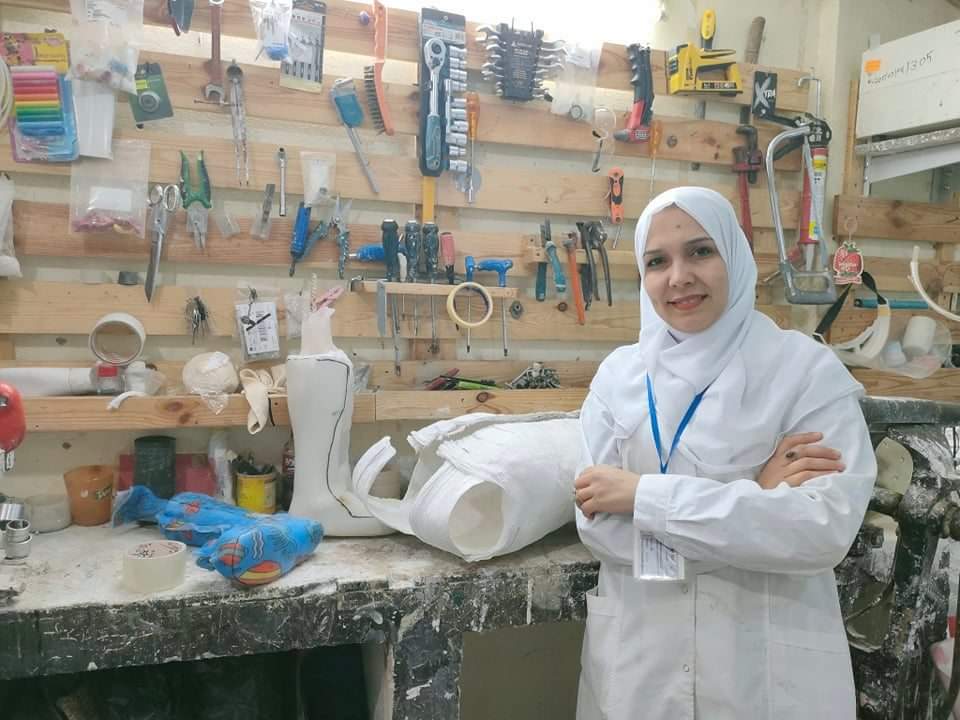
Outside Monrovia, services appear more fragmented and often dependent on mission, NGO, community or locally led initiatives. STAND’s description of the Ganta rehabilitation setting highlights an orthopaedic workshop supporting prosthetic and orthotic users and notes the role of long-serving local personnel in maintaining services.
This points to one of Liberia’s biggest O&P challenges: the country needs not only devices, but also sustainable systems for assessment, fabrication, fitting, gait training, repairs, follow-up and referral.
Assistive Technology Policy and Planning
A major strength in Liberia’s current rehabilitation landscape is the existence of a National Priority Assistive Products List, published in December 2021. The document describes Liberia’s first national APL as evidence of the government’s commitment to improving access to assistive technology by strengthening governance and coordination. It is designed to guide procurement, donations, provider training, technical standards, service delivery guidelines, advocacy and resource mobilisation.
The APL was developed with support from the World Health Organization and Clinton Health Access Initiative under the AT2030 programme, and included input from government ministries, the National Commission on Disabilities, Monrovia Rehabilitation Center, organisations of persons with disabilities and other stakeholders.
For O&P specifically, the list includes several products directly relevant to prosthetic and orthotic service delivery, including:
- Lower-limb prostheses
- Upper-limb prostheses
- Lower-limb orthoses
- Upper-limb orthoses
- Spinal orthoses
- Clubfoot braces
- Therapeutic footwear
- Crutches
- Walking frames
- Manual wheelchairs
- Manual wheelchairs with postural support
- Pressure relief cushions and mattresses
This makes Liberia one of the countries in the region with a clear assistive products framework that can be used by government, NGOs, donors, clinics and suppliers to align procurement and service development around priority needs.
Workforce and Training Gaps
The most significant constraint in Liberia’s O&P sector is likely workforce capacity. Available public information suggests that rehabilitation professionals are few, specialist services are concentrated, and community access remains limited.
CHAI reported in 2025 that Liberia had “just one physiotherapist for the entire country,” noting that families often have to travel long distances for rehabilitation if they are able to access it at all. The same report described efforts to shift support away from centralised facilities and into homes and neighbourhoods through community volunteers, local makers and referral networks.
For prosthetics and orthotics, this points to several training needs:
- More trained prosthetists and orthotists
- More orthopaedic technologists and workshop technicians
- Basic repair and maintenance capacity outside Monrovia
- Training in paediatric orthotics and postural support
- Training in diabetic foot protection and therapeutic footwear
- Better integration between surgery, rehabilitation, physiotherapy and O&P
- Community-level referral pathways for children and adults with mobility limitations
Liberia’s long-term O&P development will depend on whether it can build a practical workforce model that combines formal professional training, technician-level skills, community-based rehabilitation and supervised local production.
Local Production and Community-Led Assistive Technology
One encouraging development is the emergence of locally led assistive technology production for children. CHAI reported that two local carpenters in Liberia were trained to build standing frames, corner seats, splints, 90-degree chairs and commodes using standardised designs under rehabilitation specialist guidance. In one month, they produced 82 devices for 25 children, with each device costing US$30–50, significantly less than imported equipment.
This is highly relevant for Liberia’s O&P future. While prosthetic and orthotic components often require specialised materials, alignment systems and technical quality control, many supportive rehabilitation products can be made locally if designs, training, supervision and referral systems are in place.
Local production is not a substitute for professional O&P services. However, it can reduce waiting times, improve repairs, support children closer to home and create a bridge between community identification and specialist rehabilitation.
Paediatric Rehabilitation and Early Intervention
Children with disabilities are one of the most important groups for Liberia’s rehabilitation planning. CHAI’s Liberia work describes a model where community volunteers are trained to identify children with disabilities, make referrals and run therapeutic play sessions close to home. This approach is intended to reduce pressure on the country’s central rehabilitation services while reaching children earlier.
For O&P providers, this creates opportunities to strengthen early orthotic intervention for children with clubfoot, cerebral palsy, developmental delay, lower-limb deformity and postural needs. The inclusion of clubfoot braces, lower-limb orthoses, postural wheelchairs and standing frames in Liberia’s assistive products framework supports this direction.
A strong paediatric pathway would require:
- Early screening in communities and schools
- Referral from primary care and maternal-child health services
- Access to paediatric AFOs and KAFOs where appropriate
- Clubfoot bracing continuity after correction
- Standing and seating solutions for children with cerebral palsy
- Parent and caregiver training
- Follow-up systems for growth-related refitting
Amputee Rehabilitation and Social Reintegration
Amputee rehabilitation in Liberia should be viewed as both a medical and social reintegration issue. STAND’s field account highlights not only prosthetic fitting, but also self-determination, entrepreneurship, income-generating activities and amputee football.
This is an important point for IMEA CPO readers. In countries with limited formal rehabilitation systems, the success of a prosthetic intervention often depends on much more than the device. Patients may need transport, housing support, livelihood support, peer mentoring, physiotherapy, repairs, mental health support and community acceptance.
For Liberia, practical amputee rehabilitation priorities include:
- Reliable access to durable lower-limb prosthetic components
- Socket-making capacity and repair services
- Gait training and follow-up
- Peer support and amputee-led organisations
- Vocational reintegration
- Sports and community participation
- Improved trauma-to-rehabilitation referral pathways
Market and Procurement Considerations
Liberia is not a large commercial O&P market by population or purchasing power, but it is a high-need market for essential and durable products. The strongest near-term demand is likely to be in basic and mid-range devices rather than high-cost microprocessor systems.
Priority product areas include:
- Modular lower-limb prosthetic components
- Durable prosthetic feet suitable for rough terrain
- Prosthetic knees and adapters for low-resource environments
- Polypropylene and EVA materials
- Orthotic joints, uprights and straps
- AFO and KAFO fabrication materials
- Clubfoot braces
- Wheelchairs and postural support systems
- Crutches, walking frames and canes
- Pressure-relief cushions
- Therapeutic footwear and diabetic foot protection
- Workshop tools and consumables
Because Liberia’s APL is intended to guide procurement, donations, standards and service delivery, suppliers entering the market should align with the products and functional priorities already identified nationally.
Key Challenges
Liberia’s O&P sector faces several structural challenges.
The first is limited workforce capacity. Without enough trained prosthetists, orthotists, technicians and rehabilitation professionals, device access cannot scale safely.
The second is geographic concentration. Services centred in Monrovia leave rural patients facing travel, accommodation and follow-up barriers.
The third is affordability. Many patients cannot pay for devices, transport or repeated visits, which makes donor support, government procurement and social protection important.
The fourth is supply chain fragility. O&P workshops require consistent access to components, thermoplastics, EVA, plaster, resins, adhesives, straps, tools and spare parts.
The fifth is follow-up. Prosthetic and orthotic devices require adjustment, repair and replacement. Without follow-up, users may abandon devices or develop secondary complications.
The sixth is data. Liberia has improved its disability data through the 2022 census, but service-level data on O&P demand, waiting lists, device outcomes and repair needs remains essential for planning.
Opportunities for O&P Development
Liberia also has clear opportunities.
The National Priority Assistive Products List provides a strong policy foundation for coordinated action. It can help align government, NGOs, donors and suppliers around a defined set of priority products rather than disconnected donation streams.
Community-based models are also promising. CHAI’s work with local makers and volunteers shows how assistive technology can begin closer to the home, especially for children who might otherwise remain invisible to the health system.
There is also an opportunity to build regional training partnerships. Liberia may benefit from links with established O&P training centres in West Africa and wider Africa, including pathways for technician training, short courses, visiting faculty and supervised clinical mentorship.
Private-sector and social-enterprise models may also play a role, particularly in Monrovia, where demand for orthopaedic supports, foot care, spinal braces, rehabilitation products and basic mobility aids is likely to grow.
What Liberia Needs Next
Liberia’s next phase of O&P development should focus on practical system building rather than isolated donations. The most important steps include:
- Develop a national rehabilitation and O&P service map
- Strengthen Monrovia Rehabilitation Center as a national referral and training hub
- Build satellite outreach capacity in major counties
- Train more prosthetists, orthotists, technicians and rehabilitation assistants
- Integrate O&P into trauma, diabetes, paediatrics and disability services
- Use the National Priority Assistive Products List to guide procurement
- Create repair and maintenance pathways for devices outside Monrovia
- Support local production of appropriate paediatric and postural devices
- Improve data collection on device need, delivery, outcomes and abandonment
- Build partnerships with organisations of persons with disabilities
IMEA CPO Perspective
Liberia’s O&P sector is at an early but important stage of development. The country has clear rehabilitation needs, a documented disability burden, an established national assistive products framework and examples of community-led innovation. At the same time, workforce shortages, limited service coverage and affordability barriers continue to restrict access.
For suppliers, NGOs, educators and rehabilitation partners, Liberia should be seen as a country where durable, appropriate, repairable and affordable solutions matter most. Imported products must be matched with training, follow-up and local maintenance. Donations should align with Liberia’s National Priority Assistive Products List. Technology should be introduced only where there is capacity to fit, service and sustain it.
The most important opportunity is not simply to supply more devices. It is to help Liberia build a stronger rehabilitation ecosystem: trained people, reliable products, local workshops, community referrals, patient follow-up and national coordination.
If Liberia can connect its national assistive technology planning with practical O&P service expansion, it has the potential to improve mobility and independence for thousands of people living with limb loss, musculoskeletal impairment, childhood disability and functional mobility limitations.
- Liberia National Priority Assistive Products List
- Liberia 2022 Census Policy Brief on Persons with Disabilities
- World Bank Liberia Data
- John F. Kennedy Medical Center Liberia
- Monrovia Rehabilitation Center
- CHAI: Assistive Technology Innovation in Liberia and Kenya
- STAND: Prosthetic Rehabilitation in Liberia
- WHO Assistive Technology
- WHO Standards for Prosthetics and Orthotics
- International Society for Prosthetics and Orthotics