 By
By
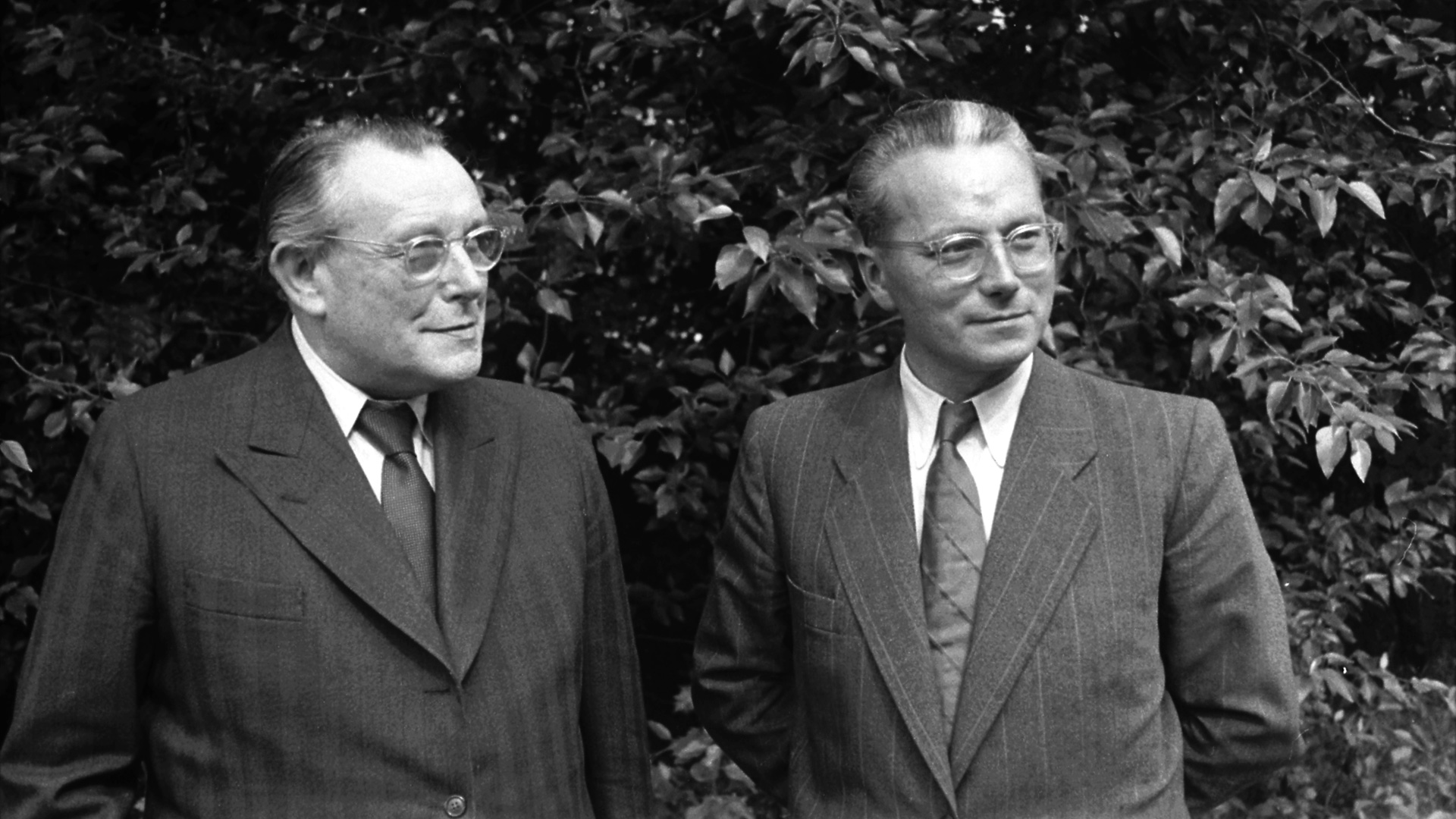
Ottobock is one of the most important companies in the history of modern prosthetics and orthotics. Founded in Germany in 1919, it helped industrialise prosthetic component manufacturing after the First World War and later became a global leader in prosthetics, neuro-orthotics, wheelchairs, exoskeletons and digital rehabilitation technologies. Today, Ottobock describes itself as a global market leader in “human bionics,” with 2025 core revenue of around €1.6 billion, nearly 9,300 employees across 45 countries, and around 400 patient care centres worldwide.
But Ottobock’s story is not only a story of medical innovation. It is also a story shaped by war, state systems, industrial power, moral responsibility and the difficult position of healthcare companies operating in authoritarian or conflict-linked markets.
Two chapters stand out. The first is the company’s role during the Nazi era and the Second World War. The second is its continuing business in Russia over the past decade, especially after Russia’s full-scale invasion of Ukraine in February 2022.
Together, these chapters raise a difficult question for the O&P industry: when a company’s products restore mobility and dignity, how should we judge their use in political systems or wars that create the very injuries those products are designed to treat?
From Berlin Start-Up to Prosthetic Industrialisation
Otto Bock founded Orthopädische Industrie GmbH in Berlin’s Kreuzberg district in 1919. The timing was significant. Germany was emerging from the devastation of the First World War, and large numbers of injured soldiers needed prosthetic and orthopaedic care. Traditional craft-based prosthetic production could not meet the scale of demand. Ottobock’s early contribution was to produce prosthetic components in series, allowing prostheses to be assembled more quickly and consistently for individual patients.
This shift helped shape the modern O&P supply model. Instead of every limb being carved and built entirely from scratch, standardised components could be combined, adapted and fitted to the individual. That model remains central to the global prosthetics industry today.
Because of political unrest in Berlin, the young company relocated to Königsee in Thuringia in the same year it was founded. Over the following decades, the company grew substantially, with Ottobock’s official history stating that its workforce eventually exceeded 600 employees at the Königsee site.
From the beginning, therefore, Ottobock’s growth was connected to war-related disability. The company’s founding mission was humanitarian and practical: to help restore mobility to people who had lost limbs or function. Yet that same connection to mass injury would later place the company inside the industrial machinery of another, far darker war.
Ottobock During the Nazi Era and World War II
Ottobock’s own account of its history now identifies the period from 1933 to 1945 as part of the company’s history that required independent examination. In April 2026, Ottobock published a dedicated page on its Nazi-era history and referenced an independently researched study, Ottobock under National Socialism: the Orthopädische Industrie Otto Bock between 1933 and 1945.
The company’s summary is unusually direct by corporate standards. It states that during the National Socialist era, Orthopädische Industrie Otto Bock was based in Königsee and was a member of the Wirtschaftsgruppe Feinmechanik und Optik, or Precision Engineering and Optics Economic Group. This placed the company within the organisational structures of the Nazi state. Ottobock says the business primarily produced orthopaedic components and supports that were supplied indirectly to the Wehrmacht.
Ottobock also states that the company did not manufacture armaments in the narrow sense, but acknowledges that it was nevertheless integrated into the National Socialist wartime economy. That distinction matters, but it does not remove the ethical weight of the period. A company making medical and orthopaedic products may not be building weapons, but in a total war economy, even medical supply can become part of the state’s military capacity.
The company also confirms that Otto Bock joined the NSDAP in 1933. According to Ottobock’s summary of the independent study, surviving sources do not show evidence of an ideologically driven affinity with National Socialism. The study instead portrays him as an entrepreneur who adapted to the political circumstances in order to secure the survival and development of his company.
That explanation is historically important, but it should be read carefully. “Adaptation” was a common pattern among German industrialists and business owners during the Nazi period. It can describe practical survival, opportunism, compliance, self-protection or a mixture of all of these. It does not automatically imply ideological commitment, but neither does it absolve participation in the system.
Forced Labour at Königsee
The most serious element of Ottobock’s WWII history is its use of forced labour.
Ottobock states that from 1942, Orthopädische Industrie Otto Bock employed foreign forced labourers, predominantly young women from the Soviet Union. They worked in various areas of production and were housed in accommodation rented by Otto Bock. Toward the end of the war, forced labourers made up more than one-third of the company’s workforce.
This point is central to any honest history of the company. Forced labour was not an incidental detail of the Nazi economy; it was one of its defining features. Millions of people from occupied Europe, including the Soviet Union, Poland and other territories, were forced into work for German industry, agriculture, construction and military supply. In Ottobock’s case, the company’s own published history now recognises that its wartime production depended, at least in part, on coerced labour.
For the O&P field, this is especially uncomfortable. The company’s purpose was linked to restoring mobility, dignity and function. Yet during the war, the production of orthopaedic components at Königsee took place within a state system that denied dignity and freedom to those forced to work there.
This contradiction is not unique to Ottobock. Many German companies with long histories have had to confront their role in the Nazi economy. But Ottobock’s field makes the tension particularly sharp: a business dedicated to human mobility became part of a wartime economy built on conquest, coercion and mass violence.
Post-War Disruption and the Move to Duderstadt
The end of the Second World War reshaped the company. Königsee was located in the Soviet occupation zone, later East Germany. Ottobock’s official history says the family decided to establish a second site near Königsee but across the border in the British zone, in order to keep supplying customers by trading materials for finished products. Dr Max Näder, Otto Bock’s son-in-law, founded the new branch in Duderstadt in 1947. Duderstadt later became the company’s headquarters.
This post-war relocation is a major turning point. Ottobock’s identity became tied to West Germany’s reconstruction, export economy and later the globalisation of medical technology. The company’s origins in war injury remained, but the post-war narrative shifted toward rehabilitation, innovation and international expansion.
Over time, Ottobock became associated with several major technological developments in prosthetics and orthotics, including microprocessor-controlled knees, advanced orthotic systems, bionic hands, wheelchairs and exoskeletons. Its modern corporate profile includes prosthetics, orthotics, exoskeletons and patient care services across a global network.
The Moral Thread: Prosthetics, War and Industrial Power
Ottobock’s 20th-century history shows a recurring tension. War creates enormous rehabilitation needs. Companies that can meet those needs often grow. Yet growth in such contexts can produce uncomfortable proximity to state violence.
After World War I, Ottobock’s industrial model helped treat large numbers of injured veterans. During World War II, the company’s orthopaedic production was integrated into the Nazi wartime economy and supplied indirectly to the Wehrmacht. After the war, the company rebuilt itself as a civilian medical technology leader.
That same tension has returned in a different form in the Russia-Ukraine context. Prosthetic and orthotic products are medically necessary. They help civilians, children, workers, older people and people with disabilities. They may also be used to rehabilitate wounded soldiers, veterans or people injured by the military actions of their own state. The product does not change, but the ethical context does.
Ottobock in Russia: The Last Decade
Ottobock’s Russian business over the past ten years needs to be understood in three phases: pre-invasion healthcare market activity, the shock of 2022, and the post-2022 controversy around continued sales.
Russia has long been a significant market for rehabilitation technology. The country has large public procurement systems for assistive devices and a state-linked structure for funding prosthetic and orthotic provision. For a global prosthetics company, Russia was not a peripheral market; it was a large, medically relevant and commercially important territory.
The picture became more complicated after February 2022.
Reuters reported in October 2025 that Ottobock had faced scrutiny over its continued operations in Russia, while noting that medical products are not subject to Western sanctions, making the business legally permissible. Reuters also reported that more than 8% of Ottobock’s sales in the first half of 2025 were generated in Russia.
This is one of the most important facts in the current debate. Ottobock’s Russian business was not simply maintained at a minimal humanitarian level. By 2025, it represented a meaningful share of group sales.
Russia, Ukraine and Rising Prosthetic Demand
The war in Ukraine has created major prosthetic demand on both sides of the conflict. Ukraine’s needs are visible through military hospitals, civilian trauma centres, rehabilitation projects and international donor programmes. Russia’s needs are harder to document independently, but multiple reports indicate a sharp rise in amputations, disability registrations and state spending on technical rehabilitation equipment.
One report citing German export data stated that German prosthetic exports to Russia reached €47.8 million in 2024, nearly double the approximate €25 million level reported for both 2022 and 2023, and above the pre-war average of €15–20 million annually. The same report stated that exports reached €53 million in the first nine months of 2025. It also reported that Russia’s Ministry of Labor and Social Protection recorded 152,500 prosthetics issued to Russian citizens with disabilities in 2024, up from 99,200 in 2023.
These figures should be treated with caution because wartime data is politically sensitive and sometimes incomplete. However, the broader trend is clear: the war has increased demand for prosthetics and rehabilitation technologies.
Reuters also reported that Ottobock’s CEO Oliver Jakobi said in 2022 that the war in Ukraine had driven rising demand for the company’s products, with the company selling roughly twice as many foot prosthetics in the second half of that year as it had in all of 2021.
For Ottobock, this created a difficult commercial and ethical environment. Prosthetic supply can be defended as humanitarian. But in a war economy, rehabilitation also has political and military implications.
Ottobock’s Position: Civilian Medical Supply
Ottobock’s position has been that its Russian activity is limited to civilian medical supply. A report discussing Ottobock’s IPO prospectus quoted the company as saying that its Russian business was limited to the distribution of prostheses, orthoses, components, wheelchairs and consumables for civilian patient care, wheelchair assembly and sale for civilian purposes, and individual adaptation of medical aids in orthopaedic workshops for civilian patients. It also stated that Ottobock said it checks external clinics or workshops against sanctions lists and does not supply facilities connected to the military, paramilitary units, police or intelligence services.
This distinction is central to Ottobock’s defence. Under current sanctions regimes, medical products are generally treated differently from military goods. A prosthetic foot, knee, socket component or wheelchair is not a weapon. It may be required by civilians, including people with congenital limb differences, diabetes-related amputations, trauma injuries, older adults and people with disabilities unrelated to war.
The difficulty is not the product category itself. The difficulty is end use.
The same report noted that Ottobock’s investor materials acknowledged the company could not completely exclude that some of its products might be used in civilian facilities for the treatment of war invalids or veterans.
That admission is important. It recognises a practical limit: once products enter a complex state-funded healthcare or rehabilitation system, a manufacturer may not always know the final patient, the exact injury context or the patient’s military history.
The Criticism: Civilian Channel or War-Linked Rehabilitation?
Critics argue that the civilian/military distinction may be too narrow in Russia’s current system. Wounded soldiers may be demobilised, reclassified or treated through social insurance and rehabilitation structures that are formally civilian but functionally connected to the consequences of war. In such a system, a company can avoid direct military tenders while still supplying a rehabilitation ecosystem that treats war veterans.
This is where the ethical question becomes more complicated than the legal one.
Legally, medical devices may be exempt from sanctions, provided they are not supplied for prohibited military end uses. Ethically, however, critics ask whether a company should continue to expand sales in a country whose state is waging a war of aggression, particularly when the demand for prosthetics may be partly driven by that war.
Ottobock has denied supplying the Russian military. According to one report, CEO Oliver Jakobi stated that the company does not participate in Russian Defence Ministry tenders or supply military hospitals, and said Ottobock’s products do not contribute to maintaining the combat capability of the Russian army.
That denial is significant. But it does not fully end the debate, because the debate is not only about active-duty military hospitals. It is also about veterans, demobilised soldiers, state reimbursement routes, third-party workshops and the extent to which any supplier can control final use.
Sanctions Risk and Reported Compliance Concerns
The Russia question also involves compliance risk. Reports around Ottobock’s IPO noted that the company’s continued Russia business had become a point of investor scrutiny. Reuters reported that the business was legally permissible because medical products are not subject to Western sanctions, but also stated that Ottobock had faced scrutiny over its continued operations in Russia.
A separate report, citing a suspicious activity report reportedly filed with Germany’s Federal Office for Economic Affairs and Export Control, alleged that there were indications Ottobock entities exported several hundred goods sanctioned under EU Russia sanctions to Russian-linked entities between January 2023 and October 2024. The same report said Ottobock stated it was not aware of such a suspicious activity report, and that BAFA itself did not comment. No known consequences were reported in that article.
This should be handled carefully in any published article. Allegations are not findings. A suspicious activity report is not a conviction, and no public enforcement outcome has been cited here. But the existence of such reporting illustrates the heightened scrutiny facing any European medtech company continuing to trade with Russia.
German media summaries around the IPO also reported that Ottobock had acknowledged a sanctions breach involving three exports of a medical device without the required BAFA approval. The company reportedly self-disclosed the issue. Again, the important point for readers is not to treat this as proof of systematic wrongdoing, but as evidence of the compliance complexity surrounding Russian medical device supply after 2022.
Business Performance and Investor Context
The Russia debate unfolded as Ottobock prepared for and completed a major IPO. In October 2025, Reuters reported that Ottobock began trading on the Frankfurt Stock Exchange in Germany’s largest IPO in more than a year. The offer valued the company at around €4.2 billion, with the IPO raising about €808 million.
The same Reuters report stated that Ottobock had shelved an earlier attempt to go public in 2022 following Russia’s invasion of Ukraine. By 2025, however, the IPO went ahead, supported by strong growth, acquisitions and new product launches.
Ottobock’s own 2025 reporting showed strong performance. The company said core revenue for 2025 reached €1.5997 billion, up 11.7% from 2024, while underlying core EBITDA rose to €415.3 million. The company also reported growth in its EMEA, Americas and APAC segments.
This makes the Russia question even more sensitive. Ottobock is not a small humanitarian supplier operating at the margins. It is a highly profitable, publicly listed medtech leader whose decisions influence how the O&P industry thinks about markets, sanctions, access and responsibility.
A Historical Echo
The comparison between Ottobock’s WWII history and its Russia business should be made carefully. Nazi Germany and contemporary Russia are not the same historical context. The company’s role in the Nazi economy, including forced labour, is a documented historical chapter of a different order.
However, there is a meaningful echo.
In both cases, Ottobock’s products existed at the intersection of human rehabilitation and state violence. During WWII, the company was part of the Nazi wartime economy and supplied orthopaedic products indirectly to the Wehrmacht. In today’s Russia context, the company says it supplies civilian medical needs, but it operates in a country where war has sharply increased demand for prosthetic rehabilitation and where the boundary between civilian and war-related patient pathways can be difficult to verify.
The moral challenge is therefore not identical, but it is structurally familiar: medical technology can restore human function while also becoming entangled with the consequences of militarised state systems.
What the O&P Industry Should Learn
For clinicians, technicians, distributors, educators and manufacturers, Ottobock’s history offers several lessons.
First, O&P companies do not operate outside history. Prosthetics and orthotics are deeply human disciplines, but they are also industries shaped by war, state procurement, insurance systems, labour conditions and political power.
Second, “medical” does not automatically mean ethically neutral. Prostheses, orthoses and wheelchairs are essential medical products. They should not be casually restricted when civilians need them. But companies supplying them in conflict-linked markets must be able to show robust end-use controls, transparent compliance systems and credible public accountability.
Third, historical transparency matters. Ottobock’s publication of an independent Nazi-era study is important because it brings difficult facts into the open: integration into the Nazi wartime economy, indirect supply to the Wehrmacht and the use of forced labour. That transparency should not be seen as reputational damage alone. It is a necessary act of corporate memory.
Fourth, the Russia case shows that modern medtech companies need ethical frameworks that go beyond minimum legal compliance. A sanctions exemption may make a shipment legal. It does not necessarily settle whether a company should expand, maintain, reduce or restructure its business in a war-linked market.
IMEA CPO Perspective
For the IMEA region, Ottobock’s history is more than a European corporate story. Many countries across the Middle East, India and Africa depend on imported prosthetic and orthotic components from global manufacturers. These products serve civilians injured by diabetes, road trauma, congenital conditions, workplace accidents, conflict and humanitarian crises.
The Ottobock case forces the O&P sector to ask difficult questions about supplier responsibility:
Can a global manufacturer maintain humanitarian access while avoiding support for military systems?
How much visibility should companies have over end users in state-funded rehabilitation systems?
Should companies publish country-level revenue exposure in high-risk markets?
How should distributors and clinicians assess the ethics of supply chains when medical products are exempt from sanctions?
What responsibilities do O&P companies have when their products are used in countries where war itself is generating prosthetic demand?
These questions matter because the O&P profession is built on trust. Patients trust clinicians. Clinicians trust components. Governments and insurers trust suppliers. And societies trust that rehabilitation exists to restore dignity, not to obscure the human cost of war.
Ottobock remains one of the most influential companies in the global O&P industry. Its innovations have improved mobility for countless people. But its history also shows that leadership in rehabilitation technology carries a responsibility to confront uncomfortable truths.
From Königsee during the Nazi era to Russia after 2022, Ottobock’s story reminds the industry that prosthetics is never only about technology. It is also about power, accountability and the moral choices made around human mobility.